

REVIEW · KIBERA COMMUNITY TOURS
Nairobi: Chocolate City Kibera Slum Walking Tour
Stepping into Kibera changes how you see the city. This 2-hour Nairobi walking tour pairs real street context with visits to community projects, including Agape Hope for Kibera. I love how the day is guided by local people, so the story you hear feels grounded, not rehearsed.
Two things I like a lot: the guides are community residents and the tour keeps a strong focus on supporting local initiatives directly. You’ll also get a practical mix of walking and route time that helps you see more without turning it into a rushed sprint.
One consideration: this is not a light, carefree outing. You’ll be moving around in an informal settlement, and the experience can feel emotional, especially around the children’s centre and home visit.
In This Review
- Quick take: what makes this tour special
- Why Kibera is called Chocolate City, and what your ticket supports
- Meeting points near Prestige Plaza or Agape Hope, then the Kibera start
- Safety briefing and navigating confidently in the streets
- The Kibera route: photo stops, guided walking, and short self-guided time
- Agape Hope Children Centre: respect, connection, and purpose
- Toi Market: seeing everyday commerce without feeling pushed
- Beadwork factory and the community beadwork project
- Home visit: why it’s included, and how to handle it with care
- Price and time value for a 2-hour Chocolate City visit
- Group comfort, clothing rules, and language expectations
- Who should book this Kibera tour, and who should skip it
- Should you book this Kibera Chocolate City tour?
- FAQ
- How long is the Nairobi Kibera Chocolate City walking tour?
- Where can I meet for the tour?
- What stops are included during the experience?
- Is there a bus portion during the tour?
- What is included in the price?
- What should I bring?
- Is the tour wheelchair accessible?
- What is the cancellation policy?
Quick take: what makes this tour special

- Resident guides guide the route and explain daily life from firsthand experience
- Agape Hope Children Centre visit ties your visit to education and care work
- Beadwork factory and community beadwork project show how skills can create income
- Safety briefing and guide-led navigation keep the pace organized
- Toi Market stop gives you a chance to see everyday commerce without pressure
Kibera walks guided by residents of the settlement
Why Kibera is called Chocolate City, and what your ticket supports

Kibera is often called the Chocolate City for the contrast between the city’s stereotypes and the real people living real lives here. This tour gives you a way to see past the postcard version and understand the community through places, routines, and local initiatives.
What makes this feel like real value is that your money is not just paying for a walk. The tour includes stops tied to ongoing support, including Agape Hope for Kibera and involvement with a community beadwork project. That means you’re seeing where help goes, instead of only hearing abstract statements.
I also appreciate the practical tone of the whole experience. Even when the topic is heavy, the guides keep things organized, give you time to take photos where appropriate, and keep you moving with purpose.
Meeting points near Prestige Plaza or Agape Hope, then the Kibera start
This tour has a couple of starting options, and that matters because Nairobi traffic can change your timing fast. You can meet at Agape Hope for Kibera or at Prestige Plaza Shopping Mall, depending on what you book.
Once you’re in the flow of the day, the tour begins at Ayany Equity Bank in Kibera. Think of it as a familiar local anchor point where the guide can get everyone oriented before you head deeper into the settlement.
If you’re coming in from outside Nairobi, you’ll feel less stress if you give yourself extra cushion for getting to the meeting point. Even with a smooth start, you are dealing with real streets and real schedules.
Safety briefing and navigating confidently in the streets
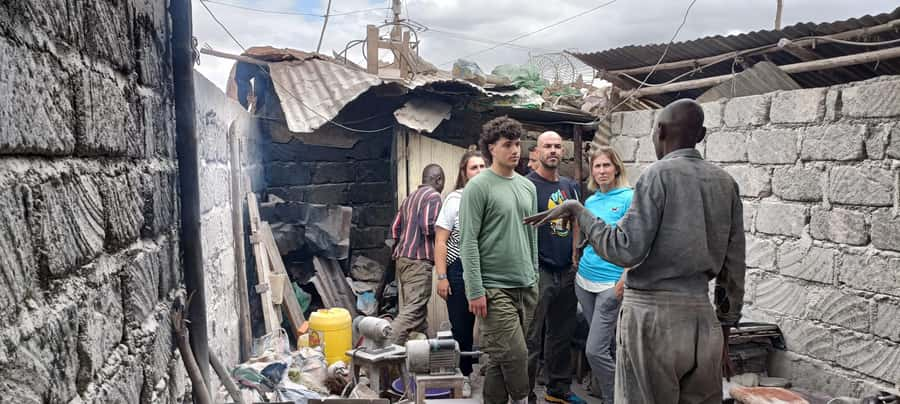
The tour is built around a safety briefing and guide-led navigation. You’re not left to wander on your own or figure out the route by trial and error. That’s a big deal in any dense urban area, and especially one where narrow paths and crowd patterns can be hard to read.
You’ll also see a mix of movement styles, including walking plus a bus tour during part of the Kibera experience. For you, that balance helps. You get street context without spending the entire time on foot, and you’re less likely to feel drained by the end of the 2-hour experience.
I liked that the guides keep control of the timing. One guide, Collins, stood out for how he answered questions throughout and helped visitors feel comfortable. That kind of calm leadership makes a difference when you’re seeing everyday life up close.
The Kibera route: photo stops, guided walking, and short self-guided time

Inside Kibera, the day is structured around a guided tour with opportunities for a photo stop and a short self-guided moment. This is where you can start building your own mental map, since you’re not always just looking where someone else tells you to look.
A guided walk matters because it turns scenes into understanding. Your guide can explain what you’re seeing, why certain areas feel the way they do, and how daily routines work. That turns random buildings and pathways into something you can actually interpret.
At the same time, the self-guided portion is worth taking seriously. Keep your eyes on your guide and your group, and follow the boundaries they set. If you want a different angle for a photo, ask first instead of trying to squeeze past people.
Other Nairobi bookings that survived the same scrutiny
Agape Hope Children Centre: respect, connection, and purpose
A major stop is Agape Hope Children Centre. This is where the tour shifts from “seeing” to “understanding,” because you’re meeting a part of the community’s support system directly rather than only observing from the street.
The core value here is the focus on education, healthcare support, and economic empowerment work connected to the centre’s mission. You might not know what that looks like until you’re standing in the space, listening to explanations, and seeing how the centre fits into the bigger picture.
In terms of how you should behave, I’d keep it simple: be polite, stay attentive to your guide’s instructions, and treat interactions as real human moments, not “tour photo ops.” If you’re emotionally sensitive, it helps to mentally prepare that this part can hit hard.
Toi Market: seeing everyday commerce without feeling pushed

You’ll also pass through Toi Market, where colors, sounds, and smells come with the territory of daily trading. This stop is useful because it shows how people earn, buy, and sell in a place often discussed by outsiders but lived in by insiders.
One of the strongest practical benefits from guide-led tours like this is control of visitor pressure. In this case, I heard clear confirmation that there was no forced shopping. That means you can look around, ask questions, and decide calmly if you want to buy something from artisans later.
If you do plan to shop, consider keeping your budget ready. Even small purchases can make a meaningful difference when linked to community projects, and it lets you carry home something with a story.
Beadwork factory and the community beadwork project

One of the most tangible parts of the tour is the visit connected to beadwork: you’ll see a beadwork factory and also participate in a community based beadwork project.
This is where your visit becomes skill-focused. Instead of only learning about hardship, you get a view of work that builds income and confidence. Beadwork is detailed, time-consuming, and often requires practice, so watching it made lets you respect the effort more than you would from a quick glance at finished products.
If you want to get the most out of this stop, ask your guide what role the beadwork plays locally. You can also observe how artisans organize their work, since that gives you real context for why this type of community project can matter long-term.
Home visit: why it’s included, and how to handle it with care
A home visit is included, which is a serious add-on compared with tours that only show public spaces. You’re getting closer to daily life, and that can be meaningful, even if it’s brief.
Because details of what you’ll see are not the same for every group, I’d treat the home visit as a respectful interaction moment, not a performance. Follow your guide’s pace. Keep your questions thoughtful and avoid anything that feels intrusive.
This is also the part where you should be extra mindful of your emotions. It’s easy to feel overwhelmed comparing lives. If you notice that happening, return to what the guide is telling you about community projects and practical support, since that helps the experience stay grounded.
Price and time value for a 2-hour Chocolate City visit
At $15 per person, this isn’t a big-spend Nairobi tour. The value comes from what it includes: a professional guide, bottled water, visits to Agape Hope, the beadwork factory, participation in a community beadwork project, and a home visit. Many short city tours charge far more for far fewer stops.
You’re also getting guided navigation rather than DIY wandering. That matters in a settlement environment where context is everything. When you pay for someone who can safely lead the route and explain what you’re seeing, the money shifts from “time purchase” to “understanding purchase.”
The 2-hour length is also realistic for many schedules in Nairobi. If you’re doing a safari later or you have other city plans, this gives you depth without swallowing the entire day.
Group comfort, clothing rules, and language expectations
Comfort rules are clear, and they affect your experience immediately. Wear comfortable closed-toe shoes and avoid high-heeled shoes. Your day will involve uneven ground and close quarters, so shoes that protect your feet are the smart move.
You should also note the tour restrictions: weapons or sharp objects, explosive substances, nudity, and bare feet are not allowed. Not suitable for wheelchair users, people with mobility impairments, and people with epilepsy is also listed, along with pregnant women and children at certain ages.
Language is another practical factor. The tour offers multiple languages, including English, French, German, Japanese, Italian, and Spanish. Still, I’d treat language choice as something to confirm. One Japanese booking ended up with English service, even though Japanese was selected. If Japanese is important to you, double-check your guide assignment ahead of time.
Guides also seem to go beyond the script. One guide, Allan, was praised for being attentive at the end and waiting until a taxi arrived. That kind of care makes the difference between a tour that ends abruptly and one that feels handled.
Who should book this Kibera tour, and who should skip it
This tour is a good fit if you want more than a photo stop in Nairobi. You’re likely to enjoy it if you care about how local community work operates, and you want to see the links between education support and practical income programs like beadwork.
It may not be your best option if you need high physical mobility. The tour is not suitable for wheelchair users and people with mobility impairments. If you get motion sickness, it may also be rough since a bus segment is part of the route.
If you’re traveling with very young children, pay close attention to the age limits listed. Children under 2, under 3, under 4, and babies under 1 are not included, which makes this a tour to plan carefully for families.
Should you book this Kibera Chocolate City tour?
Yes, I think you should book it if you want a short, structured introduction to Kibera with real community touchpoints. For $15, you’re not just buying a walk. You’re funding a resident-led experience that includes Agape Hope, beadwork projects, and a home visit.
You might want to skip it if your body needs barrier-free routes, if you’re not comfortable with the emotional weight of seeing poverty up close, or if language service alignment is a must for your trip.
If you do book, go in with the right mindset. Wear closed-toe shoes, keep your expectations realistic, and let your guide set the tone. With guides like Collins and Allan leading the way, you’ll likely come away with a better understanding of Kibera and how local support systems connect to daily life.
FAQ
How long is the Nairobi Kibera Chocolate City walking tour?
The duration is 2 hours.
Where can I meet for the tour?
The meeting point may vary depending on the option booked. Options listed include Agape Hope for Kibera and Prestige Plaza Shopping Mall. The tour description also references starting at Ayany Equity Bank in Kibera.
What stops are included during the experience?
The tour includes a Kibera slum experience plus visits to Agape Hope Children Centre, a beadwork factory, and a community beadwork project. A home visit is also included.
Is there a bus portion during the tour?
Yes, the Kibera segment includes a bus tour as part of the overall experience.
What is included in the price?
Included items are a professional guide (English speaking service), bottled water, the Kibera slums walking tour, a visit to Agape Children Centre, participation in a community beadwork project, a beadwork factory visit, and a home visit.
What should I bring?
Bring comfortable shoes and closed-toe shoes.
Is the tour wheelchair accessible?
No. It is not suitable for wheelchair users and people with mobility impairments.
What is the cancellation policy?
Free cancellation is available up to 24 hours in advance for a full refund.
More Tours in Nairobi






More Tour Reviews in Nairobi


Walking Kibera Again






Everything else we hold on Nairobi
- 7 Days Private 4 star lodges Safari by LandCruiser from Nairobi★ 5.0 · 3 reviews
- 5 Days/4 Nights Kenya Safari★ 4.5 · 3 reviews
- Safari Park Hotel Show & Dinner Experience In Nairobi Tour★ 3.6 · 3 reviews
- Day safari to Olpejeta Rhino conservancy★ 5.0 · 3 reviews
- 7 Days Breathtaking Kenya Wildlife Private Safari★ 5.0 · 3 reviews
- Overnight Amboseli National Park Safari from Nairobi★ 5.0 · 3 reviews
Kibera Community Tours, compared.
 ★ 4.9Nairobi: Explore Kibera Slum with Local GuidesFrom $15365 reviews
 ★ 5.0Kevins Kibera Slum ToursFrom $65213 reviews
 ★ 5.0Nairobi: Kibera Slum storytelling tour with a LocalFrom $20185 reviews
 ★ 5.0Kibera Slum Tour with LucasFrom $35119 reviews
 ★ 5.0Nairobi: Kibera Slum Tour with Local Social EntrepreneursFrom $40107 reviews
 ★ 4.5See Kibera with a Non-Profit LeaderFrom $30107 reviews
 ★ 5.0Private Tour in Kibera the Largest SlumFrom $1554 reviews
 ★ 5.0Ismael’s Kibera Slum TourFrom $6542 reviews
Appears in these lists