

REVIEW · KIBERA COMMUNITY TOURS
Private Tour in Kibera the Largest Slum
Kibera hits fast, and teaches fast. This private 4-hour tour takes you into everyday life in Kenya’s largest slum with a local guide, including Raily, who keeps the experience respectful and clear from start to finish. You also get bottled water and an admission ticket as part of the deal, which is rare at this price.
I especially love the hands-on stops that show how people live, not just how people struggle, from an old railway area to a real homestead conversation. I also like the school-based edutainment, including traditional dance, plus time for football and interaction with children.
The main drawback to plan for is that you’re moving through real neighborhoods and the tour depends on good weather, so come prepared to adjust your mindset and your schedule.
In This Review
- Key highlights worth knowing before you go
- Why this Kibera tour feels more like real life than sightseeing
- Price and value: what $15 really buys you
- Private pickup, flexible meeting points, and a 4-hour time box
- Old Railway and the 1805 connection you can see in the neighborhood
- Homestead time: talking inside the space, not outside it
- Bones recycling and ornament work: seeing jobs created from waste
- School for orphans and Agape Hope for Kibera, with learning through dance
- Football with the local team and how matatu transport changes the feeling
- Toi Main Market at the end: where souvenirs and daily shopping meet
- Who should book this Kibera tour, and who should reconsider
- Should you book this Kibera tour?
- FAQ
- How much does the Kibera private tour cost?
- How long is the tour?
- Is pickup included?
- Where does the tour start and end?
- What is included in the price?
- What is not included?
- Is this tour private?
- What ages are allowed for children?
- Do I need good weather?
- What is the cancellation policy?
Key highlights worth knowing before you go

- A local guide named Raily, with deep roots in Kibera and a teacher’s perspective on what matters
- Old Railway, linked to 1805, where the British-built rail history shows up in daily life
- Homestead interaction, including what homes are made from and how materials shape space
- Bones recycling and ornament making, a visible way work turns waste into income
- Agape Hope for Kibera support, centered on the school and the children it serves
- Football and matatu transportation, for a more complete feel of community life beyond walking
Kibera walks guided by residents of the settlement
Why this Kibera tour feels more like real life than sightseeing
I like slum tours best when they do two things well: they explain context, and they treat people like people. This one leans hard into that approach. Instead of making poverty the headline, it frames what you see as resilience, with your visit tied to support for the Agape Hope for Kibera school.
You’ll also notice the tone right away. The goal is understanding, not staring. The guide’s role is to connect the dots in simple, human language, so you come away with a clearer sense of how the community works and why it keeps going.
Price and value: what $15 really buys you

At $15 per person for about 4 hours, this tour is positioned as one of the cheapest ways to visit Kibera. The value comes from the mix of experiences you get for that price: a private format, direct community interactions, and multiple activity stops, not just a quick walk-by.
Included items matter too. You get admission ticket and bottled water. Coffee or tea is not included, so plan to budget a little extra if you want it, especially if your route ends in the market.
Also, this is booked in advance fairly often (around 17 days on average). If you’re traveling at a busy time, it’s smart to lock it in early so you can match it to your Nairobi schedule.
Private pickup, flexible meeting points, and a 4-hour time box
The tour is private, meaning only your group goes along. That matters because Kibera is busy and personal questions come up naturally. Having your own guide time helps you ask, listen, and move at a pace that feels workable.
Pickup is offered, and the meeting setup is flexible between both sides. The tour starts at Olympic Primary School in Nairobi and ends at Toi Main Market. The experience runs for about 4 hours, and the operator lists opening hours daily from 7:00 AM to 8:00 PM, so you should be able to choose a time that fits your day.
One more practical note: the experience uses a mobile ticket, and confirmation is sent at booking. If your phone battery is unreliable, bring a power bank so you are not stressed when it’s time to check in.
Old Railway and the 1805 connection you can see in the neighborhood
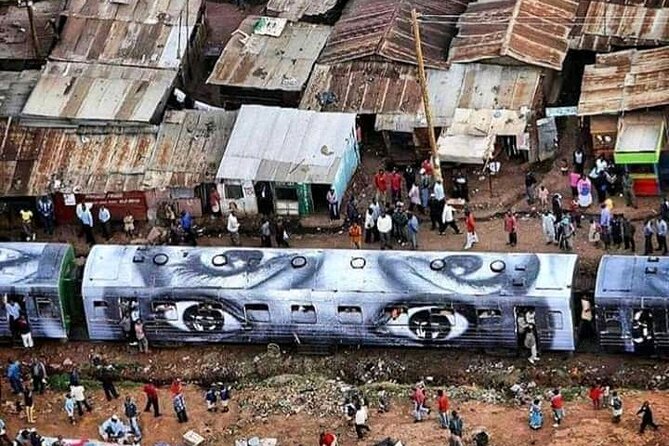
You begin at the railway area tied to the earliest rail brought by the British in 1805. Even if you do not know the full history, you’ll likely feel the time depth immediately. Rail lines and the way they shaped movement tend to leave long traces, and here that effect shows up in daily geography.
What I like about starting here is that it gives you a framework before the tour becomes intimate. You get a sense of where infrastructure meets human life. It’s easier to understand later stops, like the homesteads and workshops, once you’ve seen the larger structure that influenced the area.
A consideration: this is not a quiet museum moment. You’re in an active community, and you may experience more noise and foot traffic than you expect from a “tour.” Wear your patience like a hat.
Other Nairobi bookings that survived the same scrutiny
Homestead time: talking inside the space, not outside it

One of the most valuable parts is the chance to interact in a homestead, including learning about the local materials used. This is where you often stop thinking in stereotypes and start noticing details, like how people adapt building choices to what is available and workable.
This kind of visit also changes your questions. Instead of asking only whether life is hard, you start noticing what life is made of: practical choices, household routines, and the small systems that keep a family going.
Practical tip: go in with a listening mindset. If you’re asked something, answer honestly but keep it simple. The goal is connection, not performance.
Bones recycling and ornament work: seeing jobs created from waste

At the bones recycling stop, you get a view into how recycled materials are turned into ornaments, creating employment. This is the part that often surprises first-time visitors, because it makes work visible in a way that feels real, not theoretical.
It helps you understand the local economy beyond the obvious. Yes, many people face major challenges, but there is also effort, skill, and income generation happening right now. Seeing the process, even briefly, gives you something concrete to remember.
Possible drawback: if you are sensitive to the idea of recycling materials, you should know what to expect before you go. The tour presents it as part of daily life and work, so it may not be an experience that feels “pleasant,” but it is informative.
School for orphans and Agape Hope for Kibera, with learning through dance

A huge reason people recommend this tour is the school connection. You’ll visit a school for orphans and have time in a learning environment where children are engaged. The tour is also described as supporting Agape Hope for Kibera, which helps keep the visit grounded in purpose.
This is not just a look from outside. You also get traditional dances as part of the edutainment element, and you may even take part. For me, that’s one of the best ways to break the ice. Movement and music cut through language barriers fast.
Raily is repeatedly praised in the feedback for being professional and kind, and for the way he explains what you’re seeing. One review even notes that he grew up in the slums and became a teacher, which helps explain why the school part feels thoughtful rather than rushed.
Consideration: remember this is a school context. Keep your interactions calm and respectful, and let your guide lead the tone.
Football with the local team and how matatu transport changes the feeling

Two activities that make this tour more than a walk are football and the chance to use matatu transport. Football is simple, universal, and usually a strong equalizer. If you can move a ball, you can connect, and that shared play tends to shift the energy from observer to participant.
Then comes matatu transportation, which is described as the means of transport in the area. Riding matatu is one of those “you learn by feeling” experiences. It tells you how movement happens in everyday life, not how someone planned it for visitors.
Practical consideration: matatu routes and crowding can change based on the time of day and local flow. You might not get the same smooth experience you expect in a private car. That said, it’s part of why this tour feels authentic.
Toi Main Market at the end: where souvenirs and daily shopping meet
The tour ends at Toi Main Market, in an area where people sell everyday items. This is a smart ending point because it gives you a natural transition from the community encounters into a more open market setting.
In at least one guide-led account, there’s also mention of a souvenir factory or workshop style stop where items are made. Even if you skip shopping, the best move here is to treat it like a real marketplace: look carefully, ask prices if you want something, and remember that direct purchases can support local work.
If you want to buy, bring small bills and keep it simple. Big spending arguments are rarely helpful. A friendly request and a fair transaction are enough.
Who should book this Kibera tour, and who should reconsider
This tour is listed as suitable for most travelers, and the minimum age for children is 5 years. If you like meeting guides who explain what you see and you’re comfortable with an experience that focuses on daily life, you’ll probably enjoy it.
It’s also a strong choice if you want something affordable and structured, with multiple stops packed into 4 hours. The private format helps a lot, especially for first-time visitors who have questions.
Who might want a different option: if you are looking for a polished, low-contact “safe and distant” tour, this probably won’t feel like that. You’re going into real spaces where people live, work, learn, and play. If that level of closeness makes you uncomfortable, you may prefer a different kind of Nairobi experience.
Should you book this Kibera tour?
I think you should book it if you want a meaningful, budget-friendly introduction to Kibera that focuses on resilience and real interactions, supported through the Agape Hope for Kibera school. Raily’s name comes up repeatedly for a reason: the experience is described as safe, professional, and informative, without losing heart.
You should reconsider if you dislike weather-dependent outdoor plans, or if you know you get anxious in crowded public spaces. Also be honest with yourself about expectations. This is not a theme park. It’s a human community, and your job is to show up respectfully, ask questions, and let the day change your perspective.
If you go with that mindset, this is the kind of tour that can stick with you longer than Nairobi’s usual highlights.
FAQ
How much does the Kibera private tour cost?
The price is $15.00 per person.
How long is the tour?
It runs about 4 hours.
Is pickup included?
Pickup is offered, and the pick-up point is flexible between both parties.
Where does the tour start and end?
It starts at Olympic Primary School, Nairobi, Kenya and ends at Toi Main Market, Nairobi, Kenya.
What is included in the price?
Included items are an admission ticket and bottled water.
What is not included?
Coffee and/or tea is not included.
Is this tour private?
Yes. It is a private tour or activity, so only your group participates.
What ages are allowed for children?
The age for children is from 5 years.
Do I need good weather?
Yes. The experience requires good weather. If it’s canceled due to poor weather, you’ll be offered a different date or a full refund.
What is the cancellation policy?
Free cancellation is available. You can cancel up to 24 hours in advance for a full refund, and cancellations within 24 hours are not refunded.
More Tours in Nairobi





More Tour Reviews in Nairobi


Walking Kibera Again






Everything else we hold on Nairobi
- 7 Days Private 4 star lodges Safari by LandCruiser from Nairobi★ 5.0 · 3 reviews
- 5 Days/4 Nights Kenya Safari★ 4.5 · 3 reviews
- Safari Park Hotel Show & Dinner Experience In Nairobi Tour★ 3.6 · 3 reviews
- Day safari to Olpejeta Rhino conservancy★ 5.0 · 3 reviews
- 7 Days Breathtaking Kenya Wildlife Private Safari★ 5.0 · 3 reviews
- Overnight Amboseli National Park Safari from Nairobi★ 5.0 · 3 reviews
Kibera Community Tours, compared.
 ★ 4.9Nairobi: Explore Kibera Slum with Local GuidesFrom $15365 reviews
 ★ 5.0Kevins Kibera Slum ToursFrom $65213 reviews
 ★ 5.0Nairobi: Kibera Slum storytelling tour with a LocalFrom $20185 reviews
 ★ 5.0Kibera Slum Tour with LucasFrom $35119 reviews
 ★ 5.0Nairobi: Kibera Slum Tour with Local Social EntrepreneursFrom $40107 reviews
 ★ 4.5See Kibera with a Non-Profit LeaderFrom $30107 reviews
 ★ 5.0Ismael’s Kibera Slum TourFrom $6542 reviews
 ★ 4.9vibrant kibera slum tourFrom $2240 reviews
Appears in these lists