
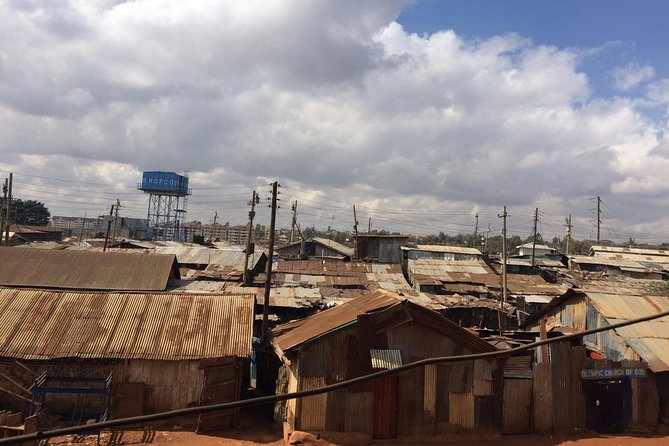
REVIEW · KIBERA COMMUNITY TOURS
Kevins Kibera Slum Tours
Kibera shows Nairobi in real human scale. This half-day tour is interesting because you walk with Kibera-born guides and see everyday places up close, including a family home visit. I love that the route mixes landmarks with real life (market, school, and craft work), but one big consideration is the footing, since parts of the walk can be uneven and slippery after rain.
This is the kind of Nairobi experience that changes how you see the city. The company has an excellent track record, with a 4.9 rating and 98% recommending the tour, which lines up with what the itinerary is designed to do: show you Kibera as a living community, not a photo stop.
If you’re looking for an easy stroll, this might not be your best match. If you can handle a rough walk for a few hours and you come with an open mind, it can be a powerful, respectful way to understand Nairobi beyond the usual viewpoints.
In This Review
- Key things I’d plan around before you go
- Kibera in four hours: why this tour matters in Nairobi
- Price and what you get for $65 per person
- Your morning schedule: 8:00am start and how the day flows
- Stop 1: Kibera, crafts, school, and the Kevin family home
- African bone workshop
- Orphanage school
- Kevin’s house and family
- Landfill and train track areas
- Main street market
- Walking in Kibera: safety feels personal, but the terrain is real
- Guides make the difference: Kevin and Ismael’s role on the route
- What to ask and how to be a respectful guest
- Who should book this tour, and who should pass
- Final verdict: should you book Kevins Kibera Slum Tours?
- FAQ
- What is the price of Kevins Kibera Slum Tours?
- How long is the tour?
- What time does the tour start?
- Is hotel pickup and drop-off included?
- Is this tour private?
- What is included in the tour?
- Are food and drinks included?
- What places does the tour cover?
- Do I need good weather to go?
- What is the cancellation window?
Key things I’d plan around before you go

- Private, half-day format with hotel pickup so you do not waste time finding transport or introductions
- Front-door access to daily life, including stops like a main street market and a school setting
- Craft and work sites such as an African bone workshop, where your questions make a difference
- A personal family stop that turns the tour from sightseeing into human context
- Weather matters, since the experience requires good conditions for safer walking
Kibera walks guided by residents of the settlement

Kibera in four hours: why this tour matters in Nairobi

Nairobi is often described through wildlife parks and skyline hotels, but the city is also shaped by where people live, work, and raise families. Kibera is Africa’s largest urban informal settlement, and this tour is built to give you a clear sense of daily life inside it.
The biggest value is the guide connection. Names like Kevin and Ismael show up again and again in the feedback, and that matters because you are not just receiving facts. You’re being introduced to places through someone who grew up there and still belongs to the community. That alone changes the tone of your visit.
I also like that the tour includes more than one kind of stop. You get a crafts workshop and marketplace moments, but you also get a school setting and a family home. That mix helps you understand that Kibera is not just hardship. It is also resilience, organization, and community effort.
Price and what you get for $65 per person
At $65 per person, this tour sits in the “worth it or not” zone for most travelers. The reason it can feel like good value is that you are not paying only for a guide’s time.
You are also paying for:
- Private, half-day service (not a crowded group shuffle)
- Hotel pickup and drop-off around the city, which is huge in Nairobi where timing and traffic can be unpredictable
- A local guide who can explain what you are seeing in context, including personal stories
- Admission ticket listed as free for the main stop, which keeps your costs predictable
You should also plan around what is not included. Food and drinks are not part of the price, so you need to bring water or budget for a meal on either end of the tour. I recommend treating this like a morning outing where you eat before you go and then refuel after.
Your morning schedule: 8:00am start and how the day flows
The tour runs about 4 hours and starts at 8:00am. That morning start is practical. You avoid the hottest part of the day, and you get more comfortable light for photos if you take them.
In the time you’re there, the main on-the-ground portion totals about 3 hours within Kibera. The remaining time is used for getting you from your hotel and back, plus short transitions between stops. Because the schedule is tight, you’ll want to arrive rested and ready to walk.
Also, confirmation happens at booking time, which usually means you can plan without a long waiting period. And it is private, so it’s only your group.
Stop 1: Kibera, crafts, school, and the Kevin family home

Everything important happens in Kibera during the tour, and Stop 1 is the heart of the experience. The listed route includes several key places, and they work together to build a bigger picture.
African bone workshop
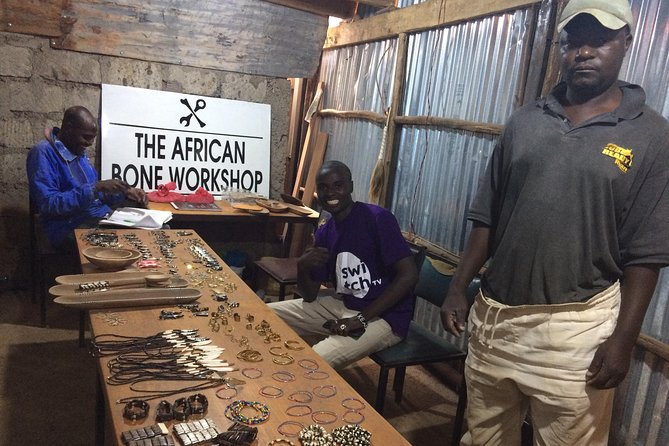
One stop is an African bone workshop. In practice, this is often where you can see how local work turns raw materials into market-ready goods. Bone craft is one of those topics that is easy to look at as an object, but much more meaningful when you hear how it supports income and skills.
This is also a good place to slow down and ask questions. If you do not speak, you can still listen. If you want to support the work, do it respectfully and within whatever boundaries the guide sets.
Orphanage school
Next comes the orphanage school. This is one of the stops that hits emotionally, because it brings learning and daily routine into view.
The practical takeaway for you: be ready for the contrast between what you see at a school setting and what you see outside of it. The contrast is not there to shock you, it’s there to help you understand how the community tries to create opportunity even when resources are limited.
Kevin’s house and family
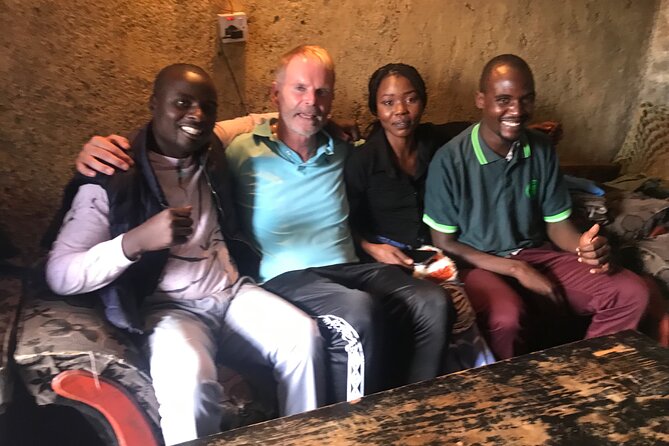
The tour also includes Kevin’s house and family. This is the stop that most strongly changes how a visitor thinks about the place. A family home visit is not “just another attraction.” It’s where you realize these are not “sites,” they are someone’s normal life.
The best mindset here is humility. You are entering a private space. Keep your questions kind and simple. If you can, ask about what daily life looks like, not only what problems exist.
Landfill and train track areas
After the school and home, the route includes a landfill and train track area. These stops are difficult to see, and they can feel heavy. But they matter because they connect daily living to larger systems and constraints.
This is also where your comfort level matters most. You will likely be walking through irregular paths near infrastructure and waste areas. Keep your eyes on your footing and follow your guide’s pace.
Main street market
You finish Stop 1 at the main street market. This is a relief point in many ways, because you see commerce, social energy, and how people move through the day.
Markets also give you a final context boost. You can compare what you learned from the school and family stop with what you see in everyday buying and selling. That end-of-tour framing helps you digest what you experienced instead of leaving with only one emotional note.
Walking in Kibera: safety feels personal, but the terrain is real
The walk is a major factor in whether you’ll enjoy the tour. Several pieces of feedback emphasize that the walking can be treacherous, especially if it has rained recently. Uneven surfaces and obstacles are part of the reality.
What you should do with that information:
- Wear close-toed shoes that you do not mind getting dirty
- Expect uneven ground and watch your step constantly
- If you have balance issues or limited mobility, you should think carefully before booking
On the safety question, the feedback is reassuring. People mention feeling safe because the guide is known locally and you are moving with him. One solo woman also said she never felt unsafe. So the issue is not usually “danger from strangers,” it is “terrain challenges,” plus the fact that this is a working community, not a curated walkway.
In other words, go if you can handle the physical part and stay alert. Skip if you want comfortable, flat ground.
Guides make the difference: Kevin and Ismael’s role on the route

This tour is led by locals, and names like Kevin and Ismael come up repeatedly in the feedback. That is more than trivia. It tells you something about the experience structure.
First, a lifelong resident can translate what you are seeing in plain terms. You do not get stuck on generic explanations. You hear how life works in specific places: how people study, shop, and spend time at home.
Second, guides can also handle the social side. In a place like Kibera, being welcomed is not automatic. A local guide helps set respectful boundaries and helps you move with confidence.
Third, the tour seems to be guided by ongoing community involvement. Comments reference important work and real impact. Even if you do not buy anything, your questions and attention support the human side of the visit.
What to ask and how to be a respectful guest

You cannot “fix” Kibera in four hours. But you can make your visit respectful and useful to the people who host you.
Here are good questions based on the kinds of stops you will see:
- How does the school support children day to day?
- What role does the bone workshop play in family income?
- What is the hardest part of living here, and what keeps people moving forward?
- What do you want visitors to understand that photos miss?
Also, keep your behavior calm and grounded. This is not a theme park. You are walking through homes, learning spaces, markets, and working areas. If you treat it like that, you’ll get more out of the day.
Who should book this tour, and who should pass
This is a strong fit for you if:
- You want more than the usual Nairobi sights
- You like human-scale stories and community context
- You can walk on uneven ground for a few hours
- You are traveling with a mindset of learning, not collecting stories for bragging rights
It may not be the best fit if:
- You need a fully accessible route with flat surfaces
- You have significant mobility or balance limitations
- You are sensitive to difficult scenes, like landfill and infrastructure areas
One more check: the experience requires good weather. If conditions are poor, you will be offered a different date or a full refund. That also supports safety and comfort, since mud and rain can make footing worse.
Final verdict: should you book Kevins Kibera Slum Tours?
I think this is a book-worthy tour for the right traveler. The private setup, the hotel pickup and drop-off, and the chance to visit an orphanage school and a local family home make it feel like a real introduction, not a drive-by. Add in the consistent rating of 4.9 and 98% recommending, and it’s easy to see why this is a top choice for people who want Nairobi with substance.
But be honest about two things before you commit: your comfort with uneven walking and your willingness to see a tough reality. If you can handle the terrain and you come with respect, this tour can be a life-changing perspective shift. If you cannot handle the walking, look for an alternative that fits your mobility needs.
FAQ
What is the price of Kevins Kibera Slum Tours?
The tour costs $65.00 per person.
How long is the tour?
The tour lasts about 4 hours.
What time does the tour start?
The start time is 8:00am.
Is hotel pickup and drop-off included?
Yes. Round-trip transfers are provided from your hotel accommodation, and the tour includes front-door pickup and drop-off from any hotel in the city.
Is this tour private?
Yes. It is a private tour, and only your group participates.
What is included in the tour?
The tour includes a Kibera guide.
Are food and drinks included?
No. Food and drinks are not included.
What places does the tour cover?
The route includes Kibera highlights such as an African bone workshop, orphanage school, Kevin’s house and family, landfill, train track, and the main street market.
Do I need good weather to go?
Yes. The experience requires good weather, and if it is canceled due to poor weather, you will be offered another date or a full refund.
What is the cancellation window?
You can cancel for a full refund up to 24 hours in advance of the experience start time. If you cancel less than 24 hours before, the amount paid is not refunded.
More Tours in Nairobi






More Tour Reviews in Nairobi


Walking Kibera Again






Everything else we hold on Nairobi
- 7 Days Private 4 star lodges Safari by LandCruiser from Nairobi★ 5.0 · 3 reviews
- 5 Days/4 Nights Kenya Safari★ 4.5 · 3 reviews
- Safari Park Hotel Show & Dinner Experience In Nairobi Tour★ 3.6 · 3 reviews
- Day safari to Olpejeta Rhino conservancy★ 5.0 · 3 reviews
- 7 Days Breathtaking Kenya Wildlife Private Safari★ 5.0 · 3 reviews
- Overnight Amboseli National Park Safari from Nairobi★ 5.0 · 3 reviews
Kibera Community Tours, compared.
 ★ 4.9Nairobi: Explore Kibera Slum with Local GuidesFrom $15365 reviews
 ★ 5.0Nairobi: Kibera Slum storytelling tour with a LocalFrom $20185 reviews
 ★ 5.0Kibera Slum Tour with LucasFrom $35119 reviews
 ★ 5.0Nairobi: Kibera Slum Tour with Local Social EntrepreneursFrom $40107 reviews
 ★ 4.5See Kibera with a Non-Profit LeaderFrom $30107 reviews
 ★ 5.0Private Tour in Kibera the Largest SlumFrom $1554 reviews
 ★ 5.0Ismael’s Kibera Slum TourFrom $6542 reviews
 ★ 4.9vibrant kibera slum tourFrom $2240 reviews
Appears in these lists