

REVIEW · HISTORICAL TOURS
Historical City Walk Tour in Nairobi
Two hours, and Nairobi starts making sense. This is a focused Nairobi historical city walk with a private guide, built around local landmarks like Jeevanjee Gardens and the City Market, then a big skyline moment at KICC. I like how the stops connect history to what you can actually see on the street, and I like the quick orientation you get for navigating Nairobi later. The one catch to plan for is that admission tickets for Nairobi Gallery and the KICC are not included, so your total cost may run a bit higher.
If you want a smooth introduction without overstuffing your day, this hits the sweet spot. I also appreciate the small practical touches, like a bottle of water included and free entry at the garden and city market, so you can spend more time looking and less time budgeting. From the guide names shared in feedback, like Michael and Alex, the level of explanation seems strong, which matters a lot when you only have about two hours.
In This Review
- Key Highlights You Should Know
- Why This Nairobi Walking Tour Works as a First Stop
- Jeevanjee Gardens: A Park Donated to the People
- City Market and the Old Rail Line Story
- Jamia Mosque in Nairobi’s Central Business District
- Nairobi Gallery, Point Zero, and the Old Civil Service Building
- KICC Tower: Rooftop Views and Post-Independence Landmark Energy
- Price and Value: What You Get for $29
- The Pace, the Guide, and How to Get More Out of It
- Should You Book This Nairobi Historical City Walk Tour?
- FAQ
- How long is the Nairobi historical city walk tour?
- What is included in the tour price?
- Which major stops are part of the tour?
- Is admission included for Nairobi Gallery and KICC?
- Is the tour private?
- What is the cancellation policy?
Key Highlights You Should Know

- Jeevanjee Gardens is city-owned in trust, a rare story you can walk through right in the middle of Nairobi
- City Market brings you back to the railway era, with context around how the neighborhood functioned before the rail moved
- Jamia Mosque anchors the Central Business District’s Islamic heritage, including its founding and construction timeline
- Nairobi Gallery is Kenya’s Point Zero, and the building’s old civil service purpose adds an extra layer
- KICC delivers 360-degree Nairobi views from the rooftop tower, plus a major national landmark feel
- Private guide pace fits real questions, especially helpful if this is your first time in Nairobi
Other Nairobi bookings that survived the same scrutiny


Why This Nairobi Walking Tour Works as a First Stop

A good city tour should do two things fast: give you context, then help you read the place on your own. This one keeps the pace tight at about two hours, so it feels like a real walk-through of key sights rather than a long day of transport and waiting. You get a professional guide with you the whole time, which is a huge advantage in Nairobi, where street-level history is easy to miss if you are just moving from photo to photo.
I also like that the tour mixes three types of stops. First, you get civic and cultural spaces where people gather, like Jeevanjee Gardens and City Market. Second, you pass through an important religious landmark area with Jamia Mosque. Third, you end with a “big picture” view from KICC, which helps your brain map Nairobi’s layout.
One more practical point: this route is designed for short visits, not marathon sightseeing. It is listed as near public transportation, and the experience notes that most travelers can participate. For you, that means fewer logistics headaches and a plan that still leaves room for the rest of your day.
Jeevanjee Gardens: A Park Donated to the People
The tour starts at Jeevanjee Gardens, and this is not just a convenient green spot. It has a deeper ownership story that your guide can explain as you walk in. The park is linked to A.M. Jeevanjee, an entrepreneur born in Asia who became an important figure in Kenya. What makes the gardens stand out is the claim that it is the only park in Nairobi directly owned by the people, held in trust and donated for public rest.
In practical terms, this means you are visiting a place shaped by more than landscaping. You are seeing a civic idea in motion: someone set aside land as a resting area, and that intention still shows up in the way locals use the space. Even if you only have time to enjoy it for about 35 minutes, the setting gives your walk a different tone. You go from city noise to a calmer pause, then you keep moving.
Two things to watch for. First, it is a garden, so give yourself a moment for shade and a quick reset before you hit the markets. Second, since this stop has free admission, it is one of the best value moments early in the tour.
Potential drawback: because you are visiting a small civic space within a short schedule, it is easy to feel like you are passing through quickly if you are the type who likes slow garden wandering. If that is you, just treat this stop as a brief orientation point, then plan a longer revisit later.
City Market and the Old Rail Line Story

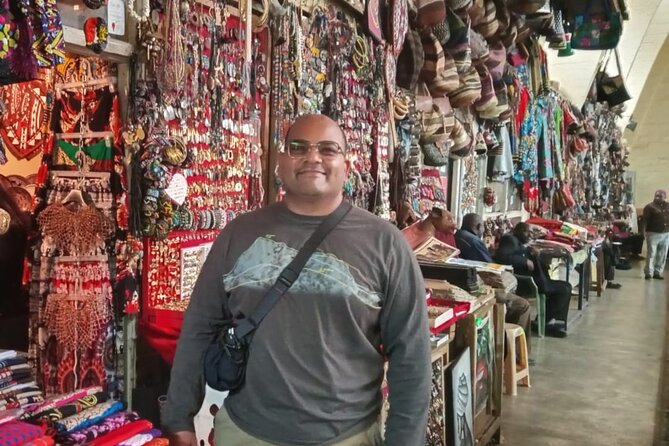
Next is City Market, which you will recognize as a classic Nairobi shopping stop, but it also carries a time machine feeling. The current monumental building dates to 1930, and it is closely tied to the railway line that once ran near what is now Loita Street. Before the railway line was relocated in the 1940s, the market served as a main retail outlet for cultural souvenirs and fresh produce like fruits and vegetables.
This matters because it changes how you view the market. It is not just where people buy things today. It is a place where Nairobi’s trade patterns once concentrated, and your guide can help you connect the dots between the street grid, the old transport route, and why this area became a hub.
You get about 25 minutes here, and admission is free. For your budget, that is a win. For your experience, it means you can browse without feeling rushed into a transaction. If you want souvenirs, clothing, or snacks, this is the time to do it, and it is also a good stop if you want fresh food options during your walk day.
A practical note: markets are social and fast-moving. If you prefer calm shopping, be ready for the energy. If you are there with your guide, ask for shopping advice, such as what items are most “local” and what makes sense to buy now versus later.
Jamia Mosque in Nairobi’s Central Business District

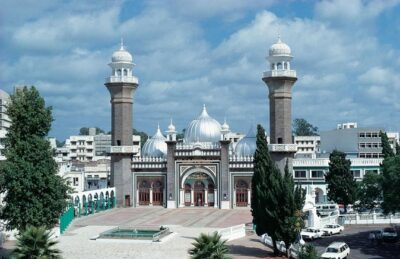
The walk then heads into Nairobi’s Central Business District area for Jamia Mosque, a major Islamic center in East and Central Africa. The mosque is associated with Syed Maulana Abdullah Shah, who founded it in 1902 in Nairobi. The building itself was constructed between 1925 and 1933, and it became an important center for Muslim religious organization in both the pre-independence and independence years.
Even if your time here is not long, this stop can be powerful because it is a living place of practice, not just a historic monument. Your guide can help you understand what you are seeing and why it mattered, and that context is what turns an architectural stop into a cultural one.
A consideration for you: religious sites require extra awareness and respectful behavior. Plan to dress appropriately and keep your tone respectful around worshippers. If you want photos, the tour includes no specific photo package, and it only lists souvenir photos as something you can purchase. For personal photos, rules can vary, so follow your guide’s cues and watch what others do.
Because Jamia Mosque is included as a listed stop without a timed window, expect it to be part of the flow between other points. The value is in understanding the role of the mosque in the city’s broader story, not in treating it like a long museum visit.
Other Nairobi bookings that survived the same scrutiny
Nairobi Gallery, Point Zero, and the Old Civil Service Building

After the mosque, the tour moves to Nairobi Gallery, and this is where you get a clear “Kenya map” moment. The building dates to 1913, and it previously served as a civil service building. It was nicknamed Hatches, Matches, and Dispatches, because it recorded births, marriages, and deaths. Today, Nairobi Gallery functions as a museum and a national monument.
That nickname is more than trivia. It helps you understand how colonial-era administration worked in real life, tracking major life events. When you hear that explanation while standing inside or around the building, you get a sense of how government and identity were linked in the past.
The other big reason this stop matters is that Nairobi Gallery is described as Point Zero of Kenya, where distances were calculated from. If you have ever wished someone would explain why a city’s geography feels important, this is the kind of place that fixes that for you. Even if you are not a math person, it gives you a framework for thinking about Nairobi’s place in the country.
This stop is about 20 minutes, and admission is not included. You will want to plan a little extra money for entry. Even so, the short time makes it realistic within the tour’s overall pacing.
Also, the tour includes a pass by the resting place of Mzee Jomo Kenyatta. That kind of stop adds weight to the walk. It reminds you that Nairobi is not only a modern city, it is also a political and national landmark point.
Potential drawback: because entry is not included, some visitors prefer a tour with everything bundled. If you want strict budget control, you will need to account for museum and monument fees separately.
KICC Tower: Rooftop Views and Post-Independence Landmark Energy
The final major stop is Kenyatta International Conference Centre, known locally as KICC. This is the skyline payoff, and it is not subtle. The tower is said to offer 360-degree views of Nairobi from the rooftop.
KICC was commissioned by Mzee Jomo Kenyatta, Kenya’s first President, in 1967, and it is described as one of the first buildings constructed after independence. There is also a great statue of the first President on site, which anchors the building as a national symbol, not just an office or conference center.
The tour sets aside about 40 minutes for this stop, which is good because rooftop views take time. You will want moments to look in different directions and understand how the city spreads out. When you have that map in your head, it makes your next days of exploring easier, whether you are heading to neighborhoods for markets, cultural stops, or viewpoints.
Admission for KICC is also not included, so you will likely pay for entry separately. If you are sensitive to added costs, check your total before you book. That said, if you are coming to Nairobi for the first time, the “see it from above” payoff is worth budgeting for.
Practical tip: take your time with the rooftop. Even in a short visit, you can walk to different vantage angles and watch light and cloud changes move across the city. The tour gives you a chance to do that within a controlled schedule.
Price and Value: What You Get for $29

At $29 per person, this tour sits in the category of affordable, time-efficient sightseeing. The biggest reason it feels like good value is that you are paying for a professional guide and a structured route across several high-impact sites in a short window.
Here is how the math typically works in your favor:
- Two stops have free admission: Jevangee Gardens and City Market
- You get bottle of water included
- You get a private tour, meaning only your group participates, not a random mix of strangers
What might not be ideal is the cost add-ons from admission tickets not included for Nairobi Gallery and KICC. If you are traveling on a tight budget, those tickets can shift the perceived value. Still, since the tour is only about two hours, you are paying for efficiency, not a slow half-day.
If you want the best match, this tour is ideal if:
- You are doing Nairobi as part of a bigger Kenya itinerary and need a fast orientation
- You like history explained in plain language while you walk between real places
- You want a “first Nairobi day” plan you can build the rest of your trip around
If you already know Nairobi well, and you want to spend more time at just one place, you might prefer a self-guided route or longer guided time at fewer stops.
The Pace, the Guide, and How to Get More Out of It
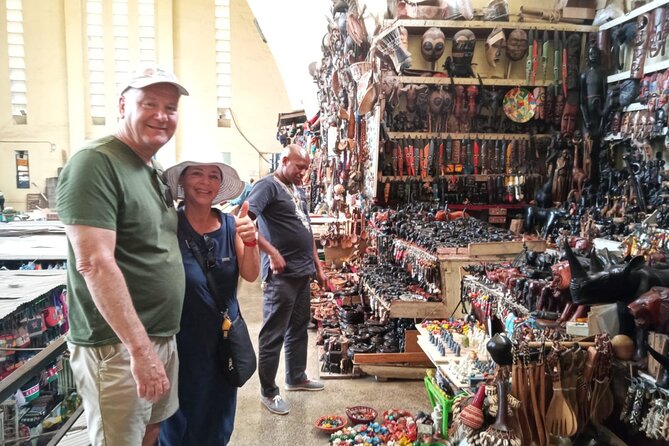
This is a guided city walk with a 2-hour target duration, plus short visit windows at each stop. That means you should come ready with questions. Ask about why the market developed where it did. Ask about how the park’s trust ownership works in practice, and what that means to locals today. Ask why Point Zero matters and what the sites symbolize in Kenya’s national story.
The guides named in feedback, including Michael and Alex, were praised for strong city and Kenyan history knowledge and for making a short tour feel like a real crash course. For you, that suggests the guide is not just escorting you, they are shaping your understanding.
Two practical behaviors will make your day smoother:
- Wear comfortable shoes. This is a walk tour, and you will be moving throughout the route.
- Keep an eye on timing at the indoor or ticketed areas. Nairobi Gallery and KICC have extra entry steps since admission is not included.
Also, remember that this experience requires good weather. If Nairobi’s weather turns, the tour may be rescheduled or you may be offered a full refund. If you are planning near rain season, I would keep some flexibility in your calendar.
Should You Book This Nairobi Historical City Walk Tour?
Book it if you want a compact Nairobi introduction that mixes civic spaces, Islamic heritage, museum context, and a proper skyline finish at KICC. The private guide and short schedule make it a smart value for first-time visitors who want history explained on foot.
Skip it or adjust expectations if you hate extra ticket costs. Since admission for Nairobi Gallery and KICC is not included, your final spending will depend on entry fees. Also, if you prefer long lingering visits rather than quick stopovers, this tour’s tight timing may feel short.
For most people, though, this is a solid “get your bearings fast” plan, especially if you want your first Nairobi day to feel meaningful, not random.
FAQ
How long is the Nairobi historical city walk tour?
The tour is listed as about 2 hours.
What is included in the tour price?
The tour includes a professional guide and a bottle of water.
Which major stops are part of the tour?
You visit Jevannjee Gardens, City Market, Jamia Mosque, Nairobi Gallery, and you also go to Kenyatta International Conference Centre (KICC) for rooftop views, plus a pass by the resting place of Mzee Jomo Kenyatta.
Is admission included for Nairobi Gallery and KICC?
No. Admission tickets for Nairobi Gallery and KICC are not included.
Is the tour private?
Yes. This is a private tour or activity, and only your group participates.
What is the cancellation policy?
You can cancel for a full refund if you cancel up to 24 hours before the experience starts. If you cancel within 24 hours of the start time, the amount paid is not refunded. The experience also requires good weather, and if it is canceled due to poor weather, you are offered a different date or a full refund.
More Walking Tours in Nairobi






More Tours in Nairobi





More Tour Reviews in Nairobi


Everything else we hold on Nairobi
- 7 Days Private 4 star lodges Safari by LandCruiser from Nairobi★ 5.0 · 3 reviews
- 5 Days/4 Nights Kenya Safari★ 4.5 · 3 reviews
- Safari Park Hotel Show & Dinner Experience In Nairobi Tour★ 3.6 · 3 reviews
- Day safari to Olpejeta Rhino conservancy★ 5.0 · 3 reviews
- 7 Days Breathtaking Kenya Wildlife Private Safari★ 5.0 · 3 reviews
- Overnight Amboseli National Park Safari from Nairobi★ 5.0 · 3 reviews
Historical Tours, compared.
 ★ 4.8Nairobi: Historic and Modern Highlights Walking TourFrom $23703 reviews
 ★ 5.0Nairobi Historical Walking City TourFrom $35258 reviews
 ★ 4.8Nairobi Walking tour:Explore History Culture and TraditionsFrom $22222 reviews
 ★ 5.0Full Day Nairobi Cultural and Historical TourFrom $85153 reviews
 ★ 5.0Nairobi Cultural and Historical City Tour with a LocalFrom $9567 reviews
 ★ 5.0Nairobi souvenir Shopping and Historical Half day TourFrom $7061 reviews
 ★ 4.5Nairobi History and Modern Culture 3 Hours TourFrom $3031 reviews
 ★ 4.5Half-Day Cultural Tour to Bomas of Kenya in NairobiFrom $9523 reviews
Appears in these lists