
REVIEW · KIBERA COMMUNITY TOURS
A Visit To KIBERA The Chocolate City.
Chocolate City in Kibera reshapes your mental map. The Chocolate City stop and the local guide stories make this a real Nairobi lesson, not a photo-only outing. I like how you walk through everyday places and hear how people build community life with limited resources. The one catch is this is a walking tour on uneven paths, so it is not set up for wheelchair users or very young kids.
You start at Olympic Primary School, then move around Nairobi by public transport before the main walking portion. Expect a safety briefing and lots of time on foot as your guide points out key spots you would likely miss on your own.
At $20 per person for about three hours, it feels like strong value because you get a local-led route, public transport, and even local snacks plus a food market stop. And since there is no entry fee needed to access the area, you are not paying for a ticketed attraction, you are paying for the guided understanding.
In This Review
- Key things to know before you go
- Kibera and Nairobi context you should keep in mind
- Price and logistics: $20 for a 3-hour guided walking tour
- Meeting at Olympic Primary School, then getting oriented fast
- The walking part: what you will actually see in Kibera
- Chocolate City: a creative stop with real meaning
- Local snacks and a food market visit that grounds everything
- How the guide really changes the tour (Moses, Musa, and the difference that matters)
- What this experience does well, and what to watch for
- Who should book this Kibera Explorer tour
- Should you book this Kibera walking tour?
Key things to know before you go

- Chocolate City visit adds a creative, human angle to the Kibera story
- Walking route with a local guide helps you connect real names and places to daily life
- Public transport included so you see Nairobi the way locals move around
- Snacks and a food market stop give context beyond sightseeing
- Homes and workspaces you can actually see add weight to the resilience story
- Safety briefing and guide instructions keep the visit respectful and practical
Kibera walks guided by residents of the settlement
Kibera and Nairobi context you should keep in mind

Kibera is one of Nairobi’s best-known informal settlements, and it is also one of the fastest ways to make Nairobi feel real. This tour’s big promise is not to “shock” you, but to explain what life looks like where most people do not have the option of leaving.
What makes this experience worthwhile is the way it’s framed. You are not being treated like a passing spectator. Your guide gives context on Kibera’s past and present, and you also learn what local initiatives and government efforts are trying to change.
I also like that the tour is built around walking. It means you notice the details, like how people organize daily routines in tight spaces, and how the neighborhood functions like a neighborhood, not a set. That is the heart of the tour: the real identity of Kibera, not a stereotype.
Price and logistics: $20 for a 3-hour guided walking tour
Let’s talk value. $20 for a three-hour, live-guide experience in Nairobi is not expensive in a city where “small tours” can turn into long transfers and overpriced drivers. Here, the price covers a guide-led route plus public transport as part of getting to Kibera.
It also matters that no entry is needed to access the area. You are not paying to pass through gates or into a fenced attraction. You are paying for someone who can translate the neighborhood for you, safely and respectfully, while you walk and watch how daily life is already happening.
Duration is listed as 3 hours, and the on-the-ground portion includes a combination of walking, sightseeing, a break, a guided tour, local snacks, a food market visit, and a safety briefing (listed as about 2.5 hours). Translation: you should plan for a half-day mindset, even if the clock says three hours.
Meeting at Olympic Primary School, then getting oriented fast
You meet at the main gate of Olympic Primary School. That is a smart choice because it gives you a clear, fixed point in a city where directions can get messy fast.
From there, you use public transport as part of the tour. This is one of the practical strengths of the experience. Instead of being shuttled straight into a “tour zone,” you get a taste of normal Nairobi movement, and you start building context immediately.
Before you go too far, there is a safety briefing. This is not a “scare you into compliance” type of talk. It is about keeping the group together, being aware of your surroundings, and acting in a way that is comfortable for the community you are visiting.
The walking part: what you will actually see in Kibera
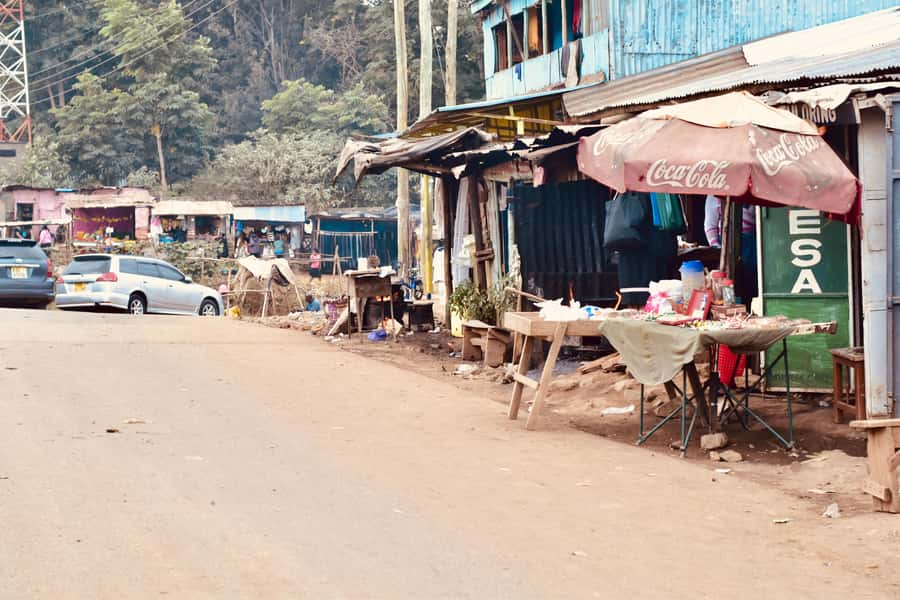
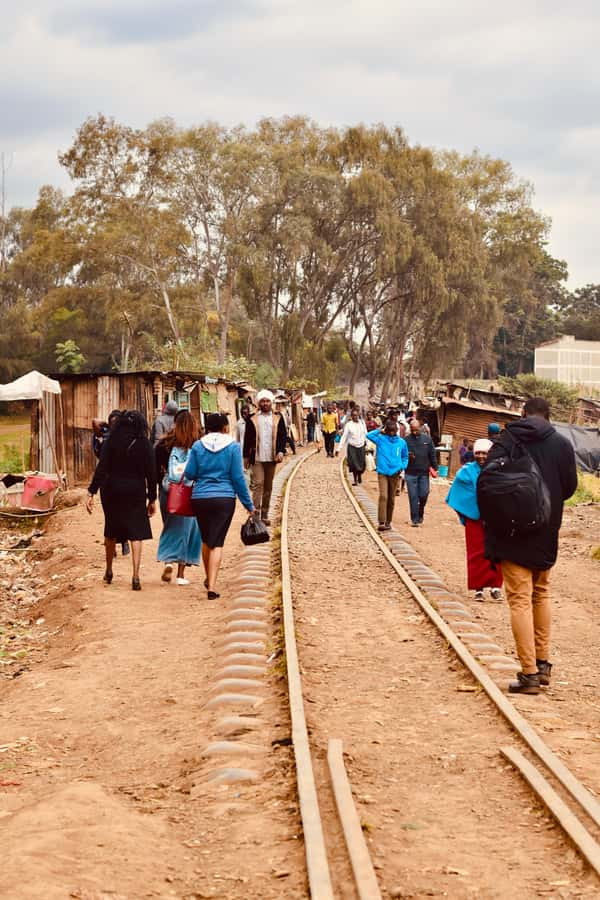
The tour is a Kibera walking slum tour, so the pacing is mostly foot travel. That changes how you experience the place. Vehicles can flatten a neighborhood into a quick pass. Walking slows everything down, and your guide can point out details as you encounter them.
As you move along narrow paths, you visit landmarks tied into Kibera’s story. The intent is to show Kibera as a lived-in community with history and systems, not just a collection of buildings. You also spend time engaging with resilient residents as your guide shares what daily life can look like.
One of the most useful ideas here is that the tour does not just describe problems. It also highlights the innovation happening right there. You get a sense of how people work around limited resources, how community networks support daily survival, and how improvements are being tested locally.
You should also be ready for the emotional side. A slum tour can feel heavy even when it is respectful. The goal is understanding, not entertainment. If you keep that in mind, the experience lands better.
Other Nairobi bookings that survived the same scrutiny
Chocolate City: a creative stop with real meaning

The headline highlight is the visit to the Chocolate City. Even if you arrive expecting a named attraction, this stop works best when you treat it like a window into local creativity and organization.
This is where the tour’s tone often shifts. Instead of only thinking about constraints, you also see people creating culture, jobs, and identity in the same space that faces daily challenges. That combination is exactly why “Chocolate City” matters to the larger Kibera story.
I recommend going in with curiosity and a low volume on assumptions. If you only look for poverty, you will miss the point. If you only look for inspiration, you will miss the context. The best version of this stop is the one that holds both realities at once.
Local snacks and a food market visit that grounds everything

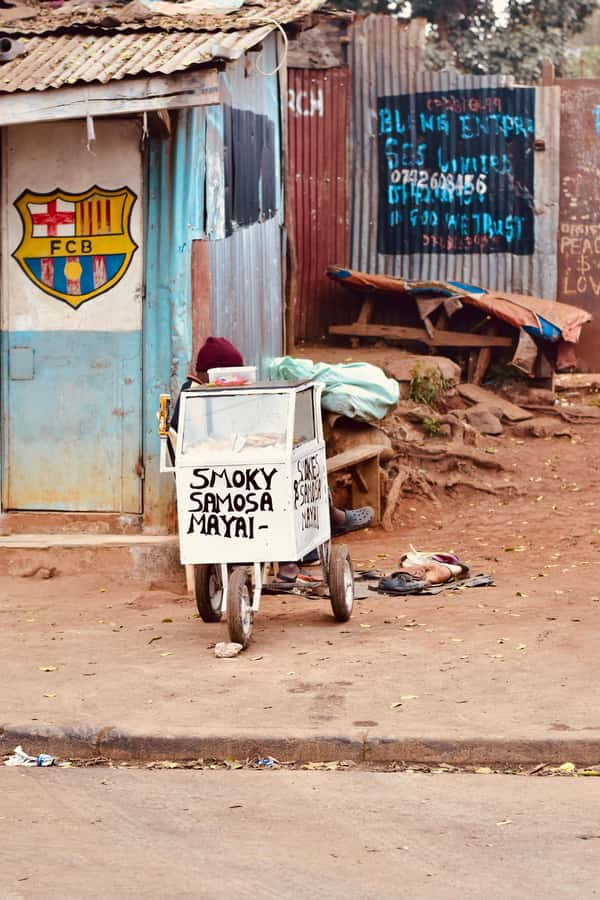
About halfway through, you get local snacks and a food market visit. This is more than a break. Food is a fast, practical way to understand daily rhythms.
A market stop helps you see what people buy, what they prioritize, and how commerce works in tight spaces. It also gives your guide natural conversation points, so you learn more through normal questions rather than a forced lecture.
Snacks also make the tour feel human. It turns the day from a sightseeing checklist into a shared routine. Bring your appetite and expect the guide to steer you toward what makes sense on the route.
How the guide really changes the tour (Moses, Musa, and the difference that matters)
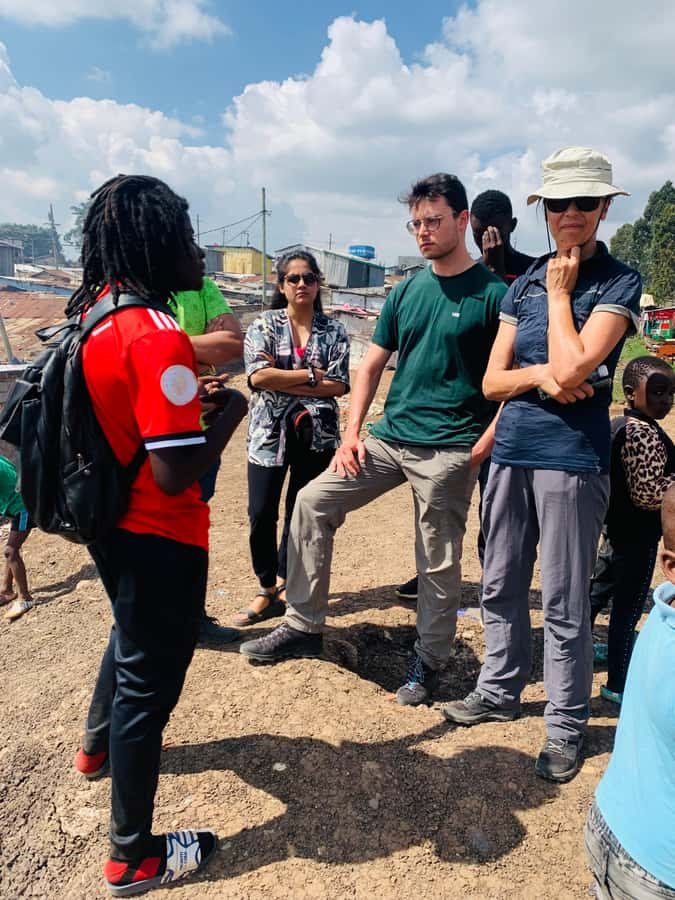
A tour like this lives or dies by the guide. The best part here is that you are not hearing generic facts. You get insider context because the guides are closely connected to the community.
Names you may hear include Moses and Musa. Either way, what stands out is how they explain what you’re seeing and how they connect it to daily life back home. That includes references to personal experiences and the surrounding areas your route passes through.
In some cases, your route can include stops such as a pub, a house, or a factory-like workspace. These types of stops matter because they show the full spectrum of neighborhood life: social spaces, homes, and work.
If you care about authenticity, this is a major reason the tour earns such strong praise. It helps you move past surface impressions and makes the visit feel like an education shaped around respect.
What this experience does well, and what to watch for
This tour’s strengths are consistent: a knowledgeable, English-speaking guide, a walking route that prioritizes real visibility, and key stops like Chocolate City plus market time. You also get built-in structure, including a safety briefing.
Here is the main consideration: the tour is not designed for everyone. It is marked as not suitable for wheelchair users, people visually impaired, and children under 5. It also excludes babies under 1 and anyone over 95, which tells you clearly that the physical demands and pacing are part of the model.
Even for people who can walk, come with realistic expectations. The environment can be crowded, paths can be uneven, and your attention will need to stay on your guide’s instructions. If you treat this like a normal city stroll, you may feel stressed. If you treat it like a guided neighborhood walk with safety rules, you will likely feel comfortable.
Who should book this Kibera Explorer tour
This is a great fit if you want:
- A walking orientation to Kibera that goes beyond stereotypes
- A local guide who can explain what you’re seeing in plain language
- A short, focused 3-hour window that still feels structured
- Stops that include Chocolate City, snacks, and a food market element
It is less ideal if you:
- Need wheelchair access or have mobility limits
- Rely on visual accessibility tools in a way that would make narrow paths difficult
- Are traveling with very young children or anyone who needs a slower pace
Should you book this Kibera walking tour?
If you want a respectful, guide-led way to understand Kibera in a few hours, I think this tour is worth booking. The value comes from what you are actually buying: a local perspective, a walking route, public transport context, and key stops like Chocolate City plus market time.
Book it if you’re the kind of traveler who likes details and conversations, not just scenery. Skip it if your priority is comfort over learning, or if mobility needs make walking difficult.
If you do book, go in with the mindset that you are visiting a real community. Ask your guide your questions, follow the safety guidance, and treat the day like education through lived reality, not a box to check off Nairobi.
Guided Kenyan City Days






More Tour Reviews in Nairobi






Walking Kibera Again






Everything else we hold on Nairobi
- 7 Days Private 4 star lodges Safari by LandCruiser from Nairobi★ 5.0 · 3 reviews
- 5 Days/4 Nights Kenya Safari★ 4.5 · 3 reviews
- Safari Park Hotel Show & Dinner Experience In Nairobi Tour★ 3.6 · 3 reviews
- Day safari to Olpejeta Rhino conservancy★ 5.0 · 3 reviews
- 7 Days Breathtaking Kenya Wildlife Private Safari★ 5.0 · 3 reviews
- Overnight Amboseli National Park Safari from Nairobi★ 5.0 · 3 reviews
Kibera Community Tours, compared.
 ★ 4.9Nairobi: Explore Kibera Slum with Local GuidesFrom $15365 reviews
 ★ 5.0Kevins Kibera Slum ToursFrom $65213 reviews
 ★ 5.0Nairobi: Kibera Slum storytelling tour with a LocalFrom $20185 reviews
 ★ 5.0Kibera Slum Tour with LucasFrom $35119 reviews
 ★ 5.0Nairobi: Kibera Slum Tour with Local Social EntrepreneursFrom $40107 reviews
 ★ 4.5See Kibera with a Non-Profit LeaderFrom $30107 reviews
 ★ 5.0Private Tour in Kibera the Largest SlumFrom $1554 reviews
 ★ 5.0Ismael’s Kibera Slum TourFrom $6542 reviews
Appears in these lists