

REVIEW · NAIROBI CITY TOURS
Nairobi City: Walking tour with Lifestyle and History.
Nairobi reveals itself fast on foot. This Nairobi City walking tour with Allan strings together landmarks, local stories, and culture in about three hours. I especially like the way Allan turns big-city history into something personal, with conversation that feels natural and not scripted.
I also love the practical stops: a relaxed coffee break at Java House and real time to shop with a local guide in the city markets. It is not just looking, you get help choosing what to buy and how to talk to vendors.
One consideration: you will walk outside in Nairobi daytime sun, so wear comfortable shoes and come ready for heat.
In This Review
- Key highlights worth your attention
- The Route: Nairobi’s Central Business District, Explained in Real Time
- Meeting at CJ’s, Then a Safety Brief That Sets the Tone
- Jeevanjee Gardens and McMillan Library: The Calm Before the Big Landmarks
- Jamia Mosque and the City’s Signature Architecture Moments
- City Market and Kencom House: Where Nairobi’s Everyday Life Shows
- Masai Market: Souvenir Hunting With Real Negotiation Advice
- Supreme Court to Parliament: Power Buildings, Explained Simply
- KICC Photo Stop and Visit: The View You’ll Remember
- Coffee Break at Java House, Mama Ngina Street
- Price and Value: What $35 Actually Buys You in Nairobi
- What the Walking Time Feels Like, and Who Might Want to Adjust
- Beyond the Tour: Extras Allan Can Help You With
- Should You Book This Nairobi City Walking Tour?
- FAQ
- Where does the tour start and end?
- How long is the Nairobi City walking tour?
- What is included in the $35 price?
- Do I need to pay anything for KICC?
- What should I bring for the tour?
- Is the tour wheelchair accessible, and is it suitable for everyone?
Key highlights worth your attention

- Allan’s city storytelling, with personal insights that make the CBD feel human
- Landmarks on a tight loop, from Jamia Mosque to Kenya’s government buildings
- Market time with help negotiating, especially in places like Masai Market
- Java House coffee tasting break, with a chance to try different types of coffee
- KICC included in the route, plus time for views and photos (entry fee is separate)
Nairobi covered at street level and by minivan
The Route: Nairobi’s Central Business District, Explained in Real Time

This tour works because it targets the place where Nairobi’s past and present collide. You move through the CBD, seeing government, places of worship, libraries, gardens, and coffee all in one walk. The result is a quick orientation to how the city thinks, not just what it looks like.
I like that you get both sides of Nairobi. There are obvious landmarks for photos, yes, but Allan also connects what you’re seeing to how daily life and Kenyan culture operate. If you want a first-day overview that helps you understand what you will see later on, this is a smart way to start.
The price is also easier to justify than many city tours. At $35 per person for about 3 hours with a live local guide, you are paying for guided walking, explanations, and market support. Coffee and tea tastings cost extra at the restaurants, but you are not locked into a fixed menu.
Meeting at CJ’s, Then a Safety Brief That Sets the Tone
The tour begins and ends at CJ’s on Koinange Street. It is a convenient meetup because you can wait outside, or grab coffee or something to eat inside while you check in.
Before you start walking, you get a short safety briefing (around five minutes). It is not heavy-handed, it is just the basics you need for a relaxed walk through central Nairobi.
If you are nervous about being in a new city, this part matters. A smooth start helps you feel calm, and the rest of the tour stays focused on seeing and learning rather than worrying about logistics.
Jeevanjee Gardens and McMillan Library: The Calm Before the Big Landmarks
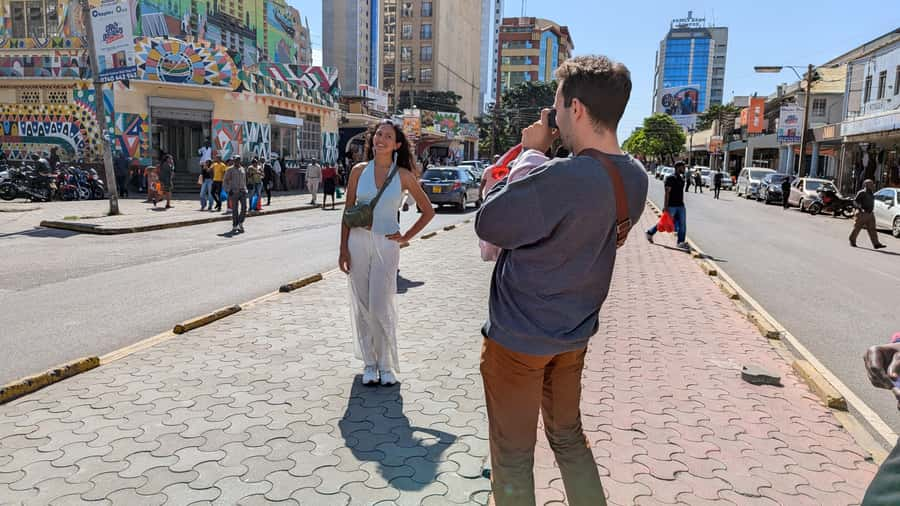
Your first quick stop is Jeevanjee Gardens. Even though it is a short guided look, it gives you a breather and a feel for how Nairobi uses public space near the government and commercial core. Think of it as a reset button before the more formal buildings appear.
Next comes McMillan Memorial Library. The best value here is the guide’s framing. Instead of treating the building like a photo spot only, Allan connects it to Nairobi’s identity and growth. You will pass by and walk through the area just long enough to get oriented, and then move on while the energy stays high.
In short, these early stops help you settle in. You start the walk with context, not random sightseeing.
Jamia Mosque and the City’s Signature Architecture Moments
Then the route shifts to Jamia Mosque. You get a photo stop plus sightseeing and walking by. Even in a quick moment, you can read the structure and location as part of the wider Nairobi story, where different communities live side by side.
This is one of those stops where timing is everything. If you are the type who likes to look, take photos, and ask questions, you will appreciate the built-in time for a proper glance rather than a rushed snap.
A practical tip: bring your phone fully charged. Several stops are quick photo opportunities, and you will want clean shots around the mosque area and the nearby streets.
Other Nairobi bookings that survived the same scrutiny
City Market and Kencom House: Where Nairobi’s Everyday Life Shows
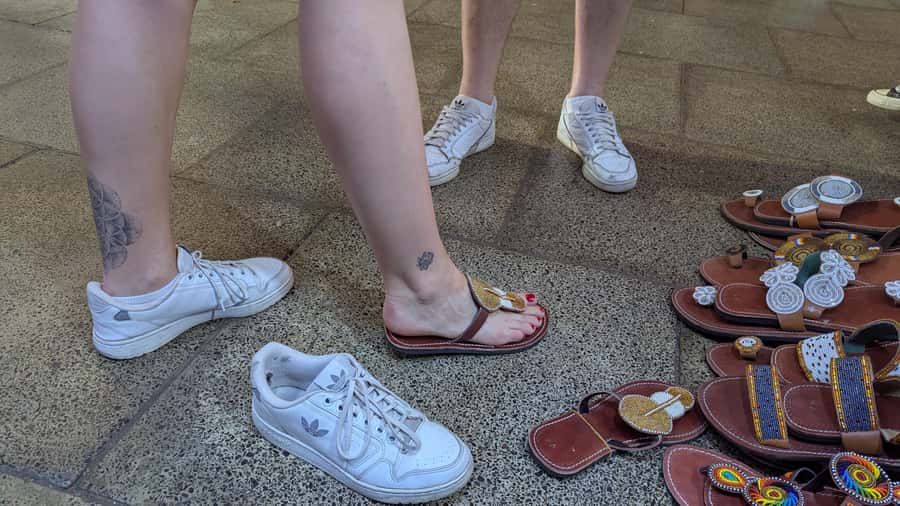
The first real shopping and browsing chunk is City Market. You spend about 35 minutes there with guided help, and this is where the tour shifts from sightseeing to interaction. You are not just passing storefronts, you are learning how to approach vendors, what to look for, and how to compare items.
After that, you pass by Kencom House for sightseeing and a short guided walk-by. This is more about seeing the shape of the CBD than buying anything. You get the kind of architecture context that helps you recognize important buildings later, even when you are on your own.
If you care about value, the market stops matter more than the buildings sometimes. A good guide changes the whole shopping experience from guessing to understanding.
Masai Market: Souvenir Hunting With Real Negotiation Advice

Next is Masai Market, where you get around 40 minutes for shopping and guided time. This is one of the most hands-on parts of the tour because you can browse Kenyan handicrafts and pick out handmade artifacts.
Here is practical advice drawn from actual shopping experiences: negotiate. One helpful strategy shared by a previous guest is to do the negotiation yourself in Masai Market, because you can sometimes get a much better price than an opening ask. Allan can translate and help you get started, but you still control your comfort level and your final decision.
Bring a clear budget before you arrive. Markets can be fun, but you do not want to overspend just because the choices are tempting.
Supreme Court to Parliament: Power Buildings, Explained Simply
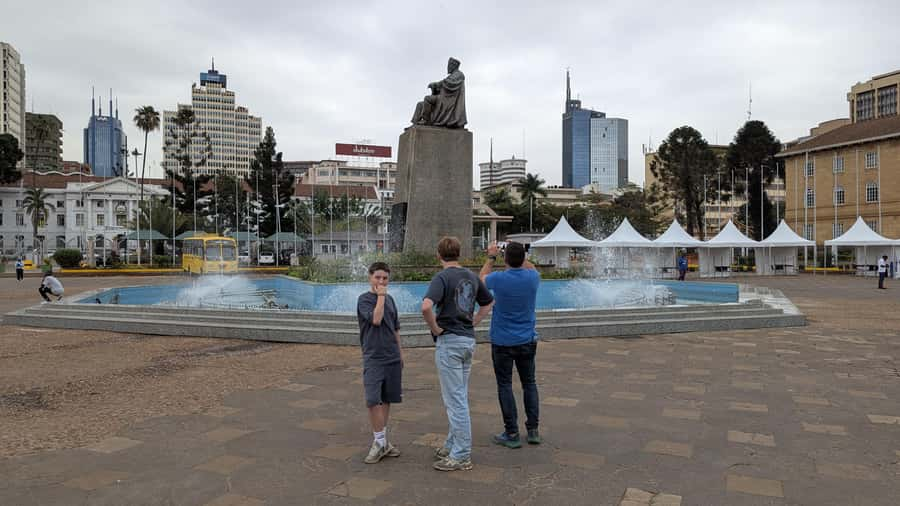
You then reach Supreme Court building for a guided look and short sightseeing walk-by. The point is not to memorize legal history. It is to understand how major institutions show up in public space, and how that shapes everyday city movement.
After that, you visit Parliament of Kenya with sightseeing and a pass-by segment. You also have time later for other landmark areas connected to government presence, including time at major conference and landmark buildings in the CBD.
What I like here is the tone. It stays plain and understandable. You are not trapped in long speeches or lectures, just enough background to make the architecture meaningful.
KICC Photo Stop and Visit: The View You’ll Remember

One of the biggest “wow” moments is at Kenyatta International Conference Centre (KICC). You get a photo stop, a visit, guided time, and then free time for about 45 minutes.
There is a reason KICC is often recommended in Nairobi CBD walks: the views can really reset your understanding of the city. One past guest specifically mentioned a 360 view from the top, which is exactly the kind of payoff you want when you are spending a mid-day chunk walking around busy streets.
One note for your budget: KICC entry costs $3, and it must be paid via card or MPESA. Cash is not accepted for that entry.
If you want the view, plan your payment method before you reach KICC. It is the easiest way to avoid last-minute stress.
Coffee Break at Java House, Mama Ngina Street
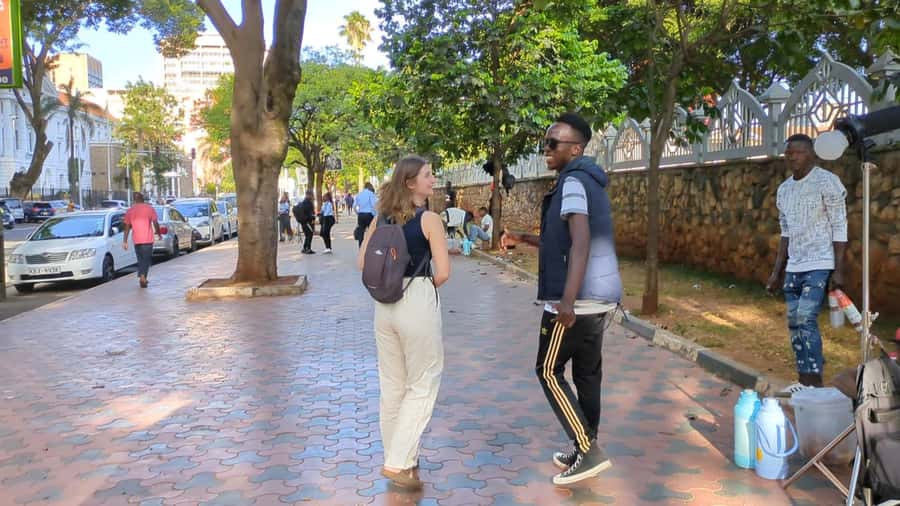
Your mid-tour break happens at Java House on Mama Ngina Street. You get about 40 minutes here.
This is more than a caffeine pause. Java House is described as the most popular Kenyan coffee house in the route, and the tour includes time to sample different types of coffee. If you do not drink coffee, you might still want chai or tea options, but the tour data makes it clear that coffee, tea, or chai tastings are charged separately by the restaurants.
I like this stop because it slows the pace without letting the tour drift. You get a clear mental break, you can rest your feet, and then you rejoin the walk with better focus.
Price and Value: What $35 Actually Buys You in Nairobi
At $35 per person for 3 hours, you are paying for more than “being taken to places.” You are buying access to guided interpretation, language help, and market support in central Nairobi.
Here is what is included:
- A local guide fee
- Live guiding in English and Swahili
- The walking route through the main CBD landmarks and markets
- Help with practical interactions, especially shopping
What costs extra:
- Coffee, tea, or chai tasting charges at the restaurant
- KICC entry fee ($3) paid via card or MPESA only
When this tour feels like good value is when you want context and confidence. If you only want a photo checklist, you could technically do a self-walk. But if you care about understanding Nairobi while also shopping smart, having a guide is where your money turns into real convenience.
What the Walking Time Feels Like, and Who Might Want to Adjust
This tour is about walking in the sun, with breaks timed into the route. It is not described as a relaxed stroll where you never feel the heat. It is designed to cover several major CBD stops in a short window.
Two types of travelers will especially like it:
- First-time visitors who want a quick orientation to Nairobi’s center
- People who want a local guide for culture and shopping, not just photos
Two groups should think carefully before booking:
- It is not suitable for pregnant women
- It is not suitable for people with heart problems
And regardless of your situation, your “do the basics right” checklist is simple: comfortable shoes, comfortable clothes, sunscreen, and sunglasses.
Beyond the Tour: Extras Allan Can Help You With
One reason this guide gets repeated praise is that he is not limited to the walk. The tour information notes he can help you with practical things like getting an E-SIM or SIM card (you need your passport for registration) and even booking SGR train tickets to Mombasa.
Also, some travelers mention he can help with MPESA and Safaricom navigation. That is genuinely useful in Kenya because it affects how easily you handle purchases and services.
If you are trying to keep your first days organized, these “offline” helpers can make your trip smoother even if you are not thinking about them when you book.
Should You Book This Nairobi City Walking Tour?
Book it if you want a compact Nairobi CBD experience that mixes landmark architecture, culture conversation, and market time. The strong 4.9 rating from 17 verified bookings also matches what the tour promises: safety, thoughtful explanations, and help with shopping and language.
Skip or choose another format if your main goal is a slow, fully relaxed pace with minimal walking. This one is built around moving. And it is not positioned for everyone health-wise, given the stated limits.
My practical advice: if you bring sunscreen, plan for extra costs like KICC entry and coffee tastings, and go into markets ready to browse and negotiate, you will leave with Nairobi that feels understood, not just seen.
FAQ
Where does the tour start and end?
It starts and ends at CJ’s on Koinange Street. You meet at CJ’s and then return there at the end of the tour.
How long is the Nairobi City walking tour?
The duration is 3 hours.
What is included in the $35 price?
The price includes the local guide fee. The coffee or tea tastings are not included, since restaurants charge separately.
Do I need to pay anything for KICC?
Yes. Entry into KICC costs $3 and is paid via card or MPESA. Cash is not accepted.
What should I bring for the tour?
Bring comfortable shoes and comfortable clothes. You should also bring sunscreen and sunglasses, since the tour involves walking in sunny weather. Bring some cash if you want to buy artifacts and souvenirs.
Is the tour wheelchair accessible, and is it suitable for everyone?
The tour is listed as wheelchair accessible, but it is also stated that it is not suitable for pregnant women and people with heart problems.
More Tours in Nairobi






More Tour Reviews in Nairobi


Nairobi at Street Level






Everything else we hold on Nairobi
- 7 Days Private 4 star lodges Safari by LandCruiser from Nairobi★ 5.0 · 3 reviews
- 5 Days/4 Nights Kenya Safari★ 4.5 · 3 reviews
- Safari Park Hotel Show & Dinner Experience In Nairobi Tour★ 3.6 · 3 reviews
- Day safari to Olpejeta Rhino conservancy★ 5.0 · 3 reviews
- 7 Days Breathtaking Kenya Wildlife Private Safari★ 5.0 · 3 reviews
- Overnight Amboseli National Park Safari from Nairobi★ 5.0 · 3 reviews
Nairobi City Tours, compared.
 ★ 5.0Nairobi Historical Walking City TourFrom $35258 reviews
 ★ 4.8Nairobi Walking tour:Explore History Culture and TraditionsFrom $22222 reviews
 ★ 4.7Nairobi Downtown Walking TourFrom $27208 reviews
 ★ 5.0Nairobi City Walking Tour with Traditional Kenyan LunchFrom $45106 reviews
 ★ 4.8Nairobi Walking Tour: Downtown & City TourFrom $2032 reviews
 ★ 4.0vibrant nairobi city tourFrom $3522 reviews
 ★ 4.6Nairobi City Orientation Guided Tour with Lunch at CarnivoreFrom $15020 reviews
 ★ 5.0Nairobi city sights, Giraffe Encounters and Bomas Kenya TourFrom $9519 reviews
Appears in these lists