

REVIEW · KIBERA COMMUNITY TOURS
Kibera Slum Tour with a Local
Real Nairobi starts with a local guide. This Kibera Slum Tour with a Local shows everyday life through the eyes of OAC Kenya Tours guides who were born and raised in Kibera, the largest slum in Africa. I especially like the direct school-fee impact built into the price, with half of the booking fees going to help pay school fees for needy kids, and how guides like Erick and Sammy answer questions with real context. The main thing to weigh is emotional heaviness, because you are walking through a living community, not a staged attraction.
You also get a structured visit that makes it easier to take it all in: about 3 hours, 5 stops, and a small group size (up to 30). You’ll start at Prestige Plaza Shopping Mall on Ngong Road, get a mobile ticket, and move through key areas like an office briefing, a crafts recycling center, and a home visit.
One more consideration: the tour runs best when the weather behaves. It requires good weather, and if it is canceled due to poor weather, you’ll be offered a different date or a full refund.
In This Review
- Key things to know before you go
- Why this Kibera tour feels different than a typical city walk
- Price and impact: what your $25 buys (beyond the tour)
- Getting started at Prestige Plaza, then easing into the community
- Stop 1, the office briefing: Wi-Fi, washrooms, and real orientation
- Stop 2, the crafts centre: recycling into income and pride
- Stop 3, meeting children: curiosity, kindness, and how to interact
- Stop 4, a home visit: learning inside someone’s everyday space
- Stop 5, the cafeteria break: soft drinks, local food, and a chance to ask more
- Guides, safety, and what “comfortable” really means here
- Customizing the tour: letting your curiosity steer the day
- Who should book this tour, and who should think twice
- Practical tips so you get the most out of it
- Should you book this Kibera Slum Tour with a Local?
- FAQ
- How long is the Kibera Slum Tour with a Local?
- How much does the tour cost?
- Where does the tour start and end?
- What is included in the price?
- Do I get a ticket electronically?
- How many people are in the group?
- Is there food or drinks during the tour?
- Can the tour be changed to fit my interests?
- What happens if the weather is bad?
- Is cancellation free?
Key things to know before you go

- Half your fee supports school fees: 50% of booking fees go back to the community for needy kids’ education.
- Local guides with real ties: OAC Kenya Tours is run by locals still living in Kibera, so the explanations are grounded.
- Five meaningful stops: office briefing, crafts, meeting children, a home visit, and a final cafeteria stop.
- Comfort touches are included: bottled water or soda, plus a rest with soft drinks or local food.
- Small-group feel: capped at 30 travelers, which helps keep the experience manageable.
Kibera walks guided by residents of the settlement
Why this Kibera tour feels different than a typical city walk
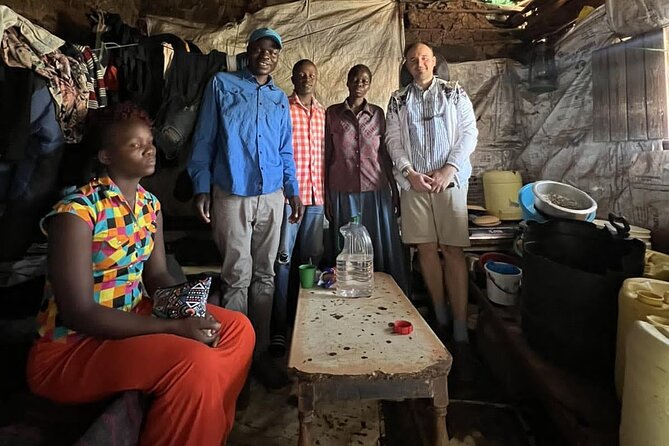
Kibera is often talked about from far away. This tour brings you closer to how people actually live day to day, with a guide who can explain what you are seeing without turning it into a lecture.
The biggest difference is ownership. The guides are not performing from a script. They live in Kibera, know the streets and routines, and build the path around a community conversation. That matters, because questions do not feel awkward. They get answered, and you get straight talk about the struggles people face and the ways the community is trying to respond.
You also get a clear structure. This is not random wandering. You move through five stops, and each one adds a piece: how the tour team operates, how people earn income, how children fit into the social fabric, what home life looks like, and how the day ends with a shared break.
Price and impact: what your $25 buys (beyond the tour)
The tour cost is $25 per person, and for many people, that is the point. You are not just paying for interpretation. You are paying for a community benefit.
Here is the key math: 50% of the booking fees goes back to the community to help pay school fees for needy kids in Kibera. That is a direct link between your participation and support for education. The tour is also described as a vehicle for positive change, with a social impact model run through OAC Kenya Tours and its related operations.
What I like about this setup is clarity. You can see the goal and the flow of funds as part of the experience. It also means the guides and organizations have an ongoing reason to keep the program respectful and ongoing, since it is tied to long-term community support.
The value question is really this: do you want a visit that tries to create impact while you learn? If yes, this price is easier to justify. If what you want is a purely sightseeing outing, you might find the emotional content more than you bargained for.
Getting started at Prestige Plaza, then easing into the community

The tour begins at Prestige Plaza Shopping Mall on Ngong Road in Nairobi. It ends back at the same meeting point. That round-trip structure is practical. It also helps you avoid the stress of navigating back on your own after a few hours in a busy area.
You’ll also get a mobile ticket, and confirmation comes at booking. There is bottled water (or soda) included, which is a small but real comfort when you are moving around.
The tour runs around 3 hours, which is a sweet spot. Long enough to cover several stops with context, short enough that you are not stuck for an entire half day once emotions start running high.
Stop 1, the office briefing: Wi-Fi, washrooms, and real orientation

The first stop is the tour’s office inside Kibera. This is not just a check-in desk. It is where you get introductions and a briefing about how the visit will work.
Two details make this first stop feel like you’re being looked after:
- The office has free Wi-Fi.
- It has super clean and nice washrooms.
That combination sounds small, but it reduces friction. When you arrive, you want to get your bearings fast, not spend the first hour hunting for basics.
There is also mention of a safe and secure guest room for those interested in exploring Kibera at night and possibly spending a night there for an extra cost. That is not part of the standard tour, but it is good to know the provider thinks about safety and boundaries.
Stop 2, the crafts centre: recycling into income and pride

Next comes the crafts centre. This is where you see locals recycle materials to make jewelry and other handmade items.
This stop works because it turns your attention to work and skill, not only need. It helps you understand that Kibera is not only defined by hardship. People build income through practical creativity, and the crafts show what can come from repurposing materials.
A subtle benefit here is pacing. After the briefing, the crafts area is easier to absorb. You can look, ask questions, and get comfortable with the setting before you move into more personal spaces.
If you want a simple way to be respectful, this is the place. It is a good moment to ask how items are made, and how selling crafts helps families.
Stop 3, meeting children: curiosity, kindness, and how to interact

You then meet children as part of the tour. Based on the tone from the guides, this is not treated like a photo opportunity. It is more like a social connection point, where you see how the community relates to visitors and how children respond to familiar faces who belong here.
The reviews highlight friendliness and warmth. You might notice kids hanging around, following along, and reacting with joy. In one piece of advice that keeps coming up, people recommend bringing something small like a lolly pop. The point is not to buy attention. It’s to show gentle kindness in a way that fits the moment.
Still, keep your approach calm and guided by your hosts. If a guide says to pause or move on, follow that. In a community where space and privacy matter, your behavior has more impact than you might think.
This is also where your emotional readiness matters. Seeing kids in any context can hit hard. Give yourself permission to feel it, then keep listening.
Stop 4, a home visit: learning inside someone’s everyday space

The next step is a home visit. You are welcomed into one of the local houses.
This is the most personal part of the tour, because it brings you into the rhythm of everyday domestic life. You get to see how people organize their spaces, how daily routines shape what a home looks like, and how the community frames hospitality.
The practical takeaway for you is this: behave like a respectful visitor inside someone’s real home. Keep your questions thoughtful, avoid turning the place into a set, and let the guide set the tempo.
The home visit also helps connect the dots. You start to understand that the crafts, the neighborhood routines, and school support are not separate stories. They are linked by family life, community networks, and the everyday need to make things work.
Stop 5, the cafeteria break: soft drinks, local food, and a chance to ask more

The final stop is a cafeteria for a short rest. You’ll have soft drinks and local food.
This stop matters because it gives you time to process. After home life and crafts, you want a reset. Sitting down also makes it easier to ask follow-up questions, like how OAC Kenya Tours and the related efforts work day to day, or what changes the community is pushing for next.
It is also a good place to reflect on what you’ve learned about resilience. Some reviews describe the experience as humbling and as a reminder that people can keep going with strength and humor even when life is tough.
Guides, safety, and what “comfortable” really means here
The tour team is described as a group of 4 local guides, all born and raised in Kibera and still living there. That local knowledge is a safety asset, because they know where people move, what feels normal, and how to manage the group respectfully.
Reviews strongly emphasize feeling safe. People mention the guides being passionate, kind, welcoming, and full of compassion, and they also point out that questions get answered in detail. That combination, professionalism plus empathy, is what makes the experience feel more grounded than chaotic.
You should still understand the tradeoffs. This is a slum neighborhood. Even with guides, you can expect uneven conditions and a setting that is not designed for tourism comfort. The difference is that you are not going in blind, and you have water and breaks built into the schedule.
Customizing the tour: letting your curiosity steer the day
The tour is described as flexible and can be customized to match your interests. That can be a big deal, because different visitors focus on different things.
If you care about education, you can ask how the school-fee support is prioritized. If you care about livelihoods, focus on the crafts and recycling angle. If you care about community life, ask how neighbors manage daily routines and challenges.
The practical tip: come with a few questions ready. Open-ended questions help. For example, ask what a typical day is like for the guide, or what people in Kibera want people outside the community to understand.
Who should book this tour, and who should think twice
This experience suits you best if you want:
- A local-led view of daily life in Kibera
- A tour tied to school-fee impact
- Real conversations, guided by people who live there
- A structured route with time to rest and reset
It may be less suitable if:
- You want a light, quick photo walk with minimal emotional weight
- You dislike hearing direct talk about struggles and realities
- You need a highly polished, tourist-only environment
A big plus for most people is that most can participate, and service animals are allowed. The tour is also near public transportation, which helps with arrival and departure.
Practical tips so you get the most out of it
Bring a respectful mindset, not just curiosity. In a community visit, your attitude is part of the experience.
A few practical pointers based on what is described:
- Expect five stops and plan to walk and listen.
- Bring small kindness if your guide suggests it, since kids can be very friendly and happy to receive something small like a lolly pop.
- Wear something comfortable and ready for real street conditions.
- Ask questions early. The office briefing helps set the tone.
- Use the cafeteria break to decompress and talk things through with your guide.
And one smart expectation-setter: this tour can be customized, so if you feel strongly about one topic, tell your guide at the start. They can often shape the emphasis.
Should you book this Kibera Slum Tour with a Local?
Book it if you want a short, structured experience that blends learning with a clear community benefit. The biggest reasons to say yes are the half-price-to-school-fees impact, the local guides living in Kibera, and the overall sense that the tour is run with care, professionalism, and compassion. If you like asking questions and you can handle the emotional weight that comes with seeing real life, this is a meaningful choice.
Skip it or choose another style if you need comfort-first tourism or you are looking for purely scenic sights. This tour is about people, daily realities, and dignity. That is exactly why it works.
If weather looks iffy, consider that the tour requires good weather. If a change happens, the policy offers a different date or a full refund.
If you’re ready to learn with humility and support a program that funds education, this is one of the more direct ways to do it in Nairobi.
FAQ
How long is the Kibera Slum Tour with a Local?
The tour lasts about 3 hours.
How much does the tour cost?
It costs $25.00 per person.
Where does the tour start and end?
It starts at Prestige Plaza Shopping Mall on Ngong Road, and it ends back at the same meeting point.
What is included in the price?
The tour includes bottled water (or soda) and all fees and taxes.
Do I get a ticket electronically?
Yes. It uses a mobile ticket.
How many people are in the group?
The tour has a maximum of 30 travelers.
Is there food or drinks during the tour?
Yes. You are provided bottled water or soda, and there is also a cafeteria stop with soft drinks and local food.
Can the tour be changed to fit my interests?
Yes. The experience is flexible and can be customized to match your interests.
What happens if the weather is bad?
The tour requires good weather. If it is canceled due to poor weather, you will be offered a different date or a full refund.
Is cancellation free?
You can cancel for free up to 24 hours in advance for a full refund. If you cancel less than 24 hours before the start time, the amount paid is not refunded.
More Tours in Nairobi






More Tour Reviews in Nairobi


Walking Kibera Again






Everything else we hold on Nairobi
- 7 Days Private 4 star lodges Safari by LandCruiser from Nairobi★ 5.0 · 3 reviews
- 5 Days/4 Nights Kenya Safari★ 4.5 · 3 reviews
- Safari Park Hotel Show & Dinner Experience In Nairobi Tour★ 3.6 · 3 reviews
- Day safari to Olpejeta Rhino conservancy★ 5.0 · 3 reviews
- 7 Days Breathtaking Kenya Wildlife Private Safari★ 5.0 · 3 reviews
- Overnight Amboseli National Park Safari from Nairobi★ 5.0 · 3 reviews
Kibera Community Tours, compared.
 ★ 4.9Nairobi: Explore Kibera Slum with Local GuidesFrom $15365 reviews
 ★ 5.0Kevins Kibera Slum ToursFrom $65213 reviews
 ★ 5.0Nairobi: Kibera Slum storytelling tour with a LocalFrom $20185 reviews
 ★ 5.0Kibera Slum Tour with LucasFrom $35119 reviews
 ★ 5.0Nairobi: Kibera Slum Tour with Local Social EntrepreneursFrom $40107 reviews
 ★ 4.5See Kibera with a Non-Profit LeaderFrom $30107 reviews
 ★ 5.0Private Tour in Kibera the Largest SlumFrom $1554 reviews
 ★ 5.0Ismael’s Kibera Slum TourFrom $6542 reviews
Appears in these lists