
REVIEW · SHOPPING TOURS
Nairobi cultural souvenir shopping tour with a local
Shopping in Nairobi can be a little intimidating. This 6-hour, door-to-door private tour turns it into a clear plan, with a guide to translate, carry heavier items, and point you toward places worth your time. I especially like the mix of crafts with real people behind them, like the women-focused bead work at Kobe Tough Beads, and the chance to shop stones with explanations instead of guesswork.
One thing to keep in mind: if you plan to buy larger-ticket items (especially precious stones), you will still want to budget extra for price differences and take your time comparing options at the stone store.
In This Review
- Key things to know before you go
- A private Nairobi souvenir route that keeps you from second-guessing
- Pickup and a realistic 6-hour plan
- Kobe Tough Beads and Leather: more than pretty beads
- Utamaduni Craft Centre in Karen/Langata: a house full of options
- Golden Eagle Art Gallery: community art with craft breadth
- Aqeeq Galleria: stones and jewelry shopping with guided context
- Matbronze Wildlife Art: metal art and a silver range
- Price and value: what $60 really covers in Nairobi
- Shopping smarter: how to use a guide without losing control
- Who should book this Nairobi souvenir shopping tour?
- Should you book Rustic Nature Tours for souvenir shopping in Nairobi?
- FAQ
- How long is the Nairobi souvenir shopping tour?
- How much does the tour cost?
- Do I get hotel pickup and drop-off?
- Is this a private tour or will I be with other groups?
- How many shopping stops are included?
- Is the stone and jewelry shopping stop included?
- Are admission tickets included for the stops?
- Is lunch included?
- What is the cancellation policy?
Key things to know before you go
- Private, exclusive route: Only your group goes, with your own guide and private transport.
- Five quality stops, free admission: Each shop visit is listed as admission ticket free.
- Translation and hands-on help: Your guide can help with communication and practical shopping needs.
- A built-in stone shop option: You get dedicated time to view stones like Tanzanite, amethyst, rubies, and aquamarine.
- Karen area craft time: The tour includes a craft stop in Karen/Langata, plus related Maasai market collections in the area.
Other Nairobi bookings that survived the same scrutiny
A private Nairobi souvenir route that keeps you from second-guessing
Nairobi souvenir shopping can swing wildly, from genuinely handcrafted items to mass-produced stuff with unclear sourcing. What makes this tour feel practical is that it is built like a route, not a free-for-all. You start with structured stops, and you get a local guide who can help you understand what you are looking at, ask questions, and avoid getting stuck in conversations that go nowhere.
You also get a more comfortable pace. Souvenir shopping often turns into a walk-and-guess day, where you end up tired, hot, and unsure if you bought a good thing at a fair price. Here, your guide helps keep the day focused on specific stores known for craft and quality, so you spend your attention on buying, not navigating.
Value-wise, the biggest win is what you are paying for beyond the shops themselves. For $60 per person, you are buying time management plus guidance. Add in hotel pickup and drop-off, plus private transport, and it becomes easier to shop confidently rather than relying on luck.
Pickup and a realistic 6-hour plan
This is a 6-hour experience with hotel/residence pickup and drop-off. It typically runs as a private tour, so you are not sharing your day with strangers who move at a different speed than you do.
The day is organized around about four main shopping stops, plus a fifth creative stop that adds texture to the route. Each stop is listed around one hour, which means you get real time for browsing, asking questions, and comparing items without feeling rushed into one quick purchase.
You will have a mobile ticket, and you may also see group discounts if your booking qualifies. Confirmation comes at the time of booking, and the tour notes that most travelers can participate. If you want to shop but still keep it manageable, this length is a sweet spot.
Kobe Tough Beads and Leather: more than pretty beads
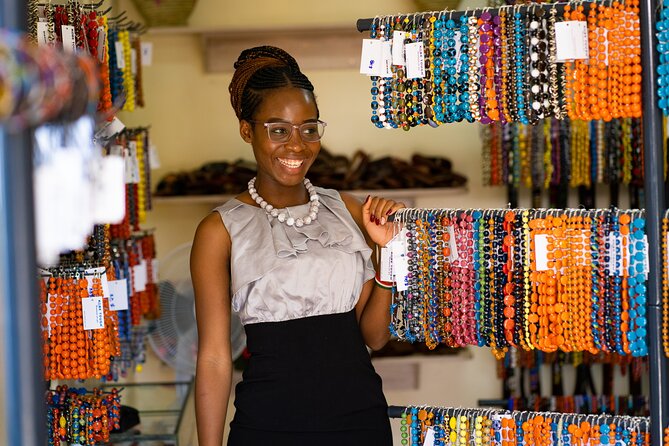
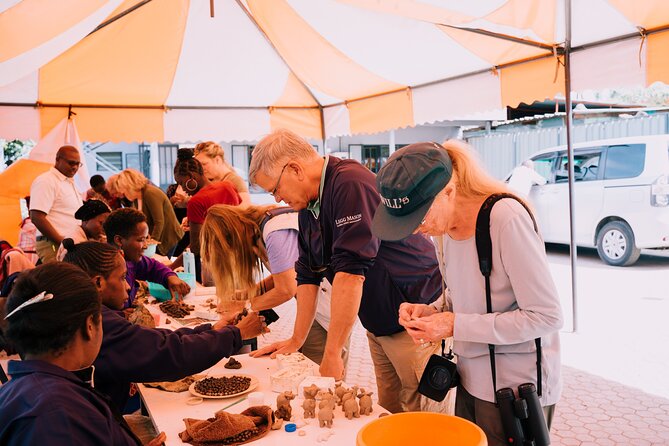
You kick off at Kobe Tough Beads and Leather. This is a pottery company that makes beads, and you get the chance to see how the process goes from start to finish. Even if you are not a jewelry person, watching production helps you understand what you are paying for. It is the difference between buying something that just looks nice and buying something that took real work to make.
What I love here is the human story behind the craft. The center employs single mothers from a poor neighborhood, with the goal of supporting families through steady income. It was started by women who previously worked for Kazuri Beads Factory when it shut down during the pandemic. In other words, you are not just buying souvenirs, you are supporting a local model that helps people stay afloat.
This stop is also listed with free admission, so the visit does not feel like an added cost. The only practical consideration is simple: if you are sensitive to strong opinions in sales conversations, you might want your guide to handle any heavier negotiation for you. That is exactly what the guide is for.
Utamaduni Craft Centre in Karen/Langata: a house full of options
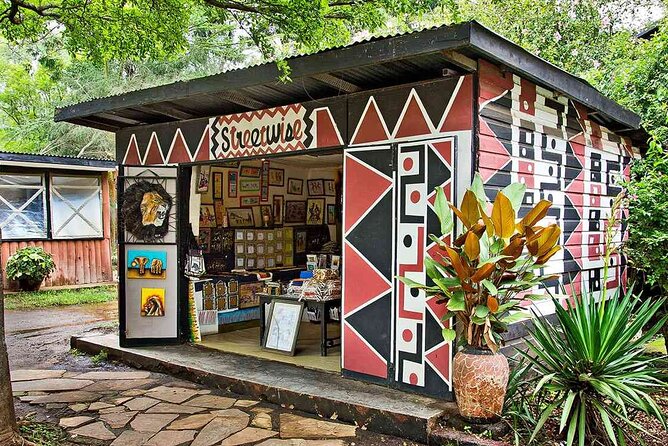
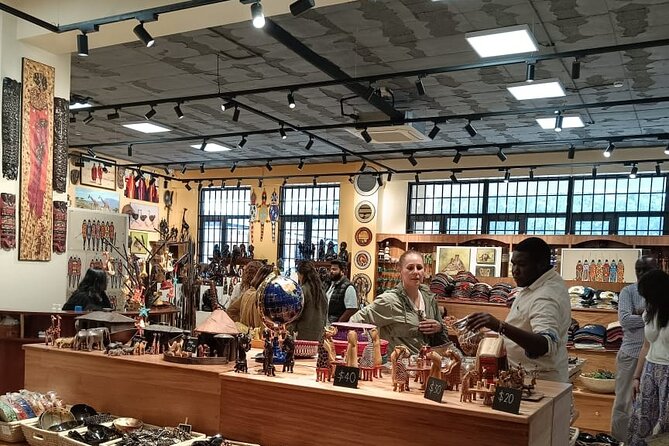
Next up is Utamaduni Craft Centre, often associated with the Karen and Langata side of Nairobi. The setting is a converted Kikuyu house that has been turned into a craft space with many smaller shops inside. That layout matters because you can browse at your own speed. Instead of fighting your way through one crowded stall, you can step between spaces and compare pieces more calmly.
Utamaduni is described as a go-to spot for African crafts, antiques, and art. You also get staff support, including help packing and even shipping if needed. That is a real quality-of-life feature if you end up with heavy carved items, fragile glasswork, or gifts you want to send safely.
Food-wise, there is a large garden restaurant where you can take refreshments during or after your shopping. Lunch is not listed as included in the tour cost, so treat the restaurant as a chance to refuel without expecting it to be covered.
This stop also earns points for variety. If you want something besides jewelry, you can often find crafts and artworks that feel more personal than the usual mass market souvenirs. If you prefer your purchases to look handmade and story-driven, this is the place to slow down.
Golden Eagle Art Gallery: community art with craft breadth
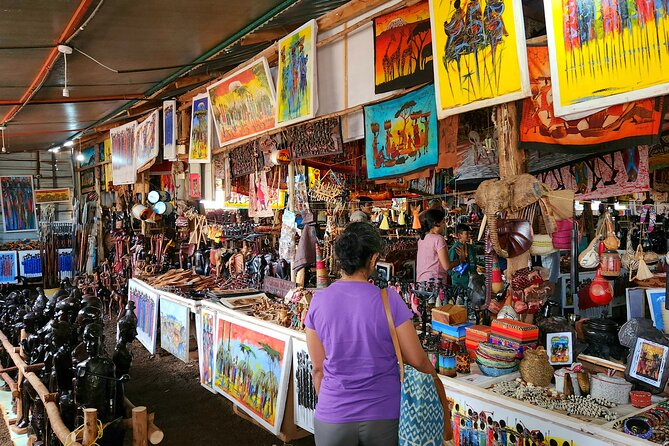
After Utamaduni, the tour moves to the Golden Eagle Art Gallery. This is a community-based art gallery with a focus on providing customers with artistic products and promoting authentic artwork. It is also a place where you can branch out, because you are not limited to one type of souvenir.
You can look for paintings and drawings, jewelry, African attire, crafts and carvings, and even items like antiquities. The description also includes materials such as malachite and soapstone, which is useful if you are shopping for stone-based decor or wearable pieces.
One drawback to know: with a gallery, selection can be wider than you expect, and that can lead to decision fatigue. If you are on a budget, tell your guide early what you want your day to deliver, like one or two statement items plus a few smaller gifts. You will spend less time hovering between similar items.
The Golden Eagle stop is listed with free admission, so your money stays where it counts: on the items you choose.
Aqeeq Galleria: stones and jewelry shopping with guided context
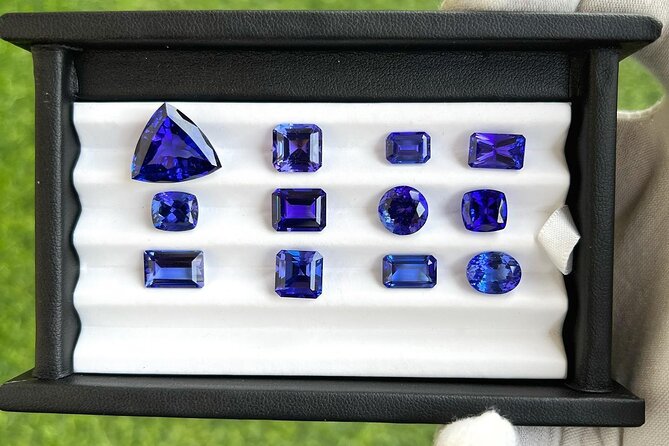
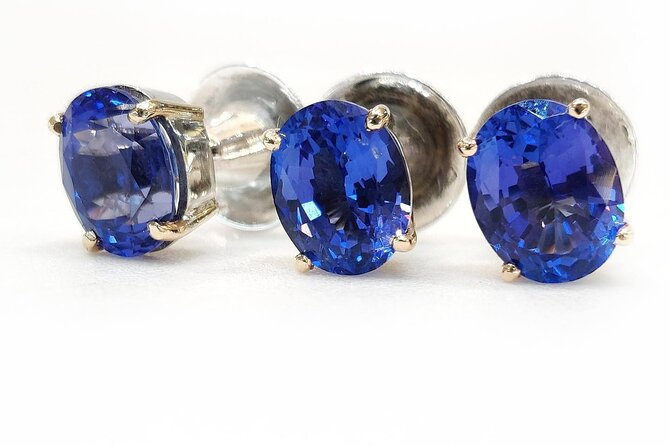
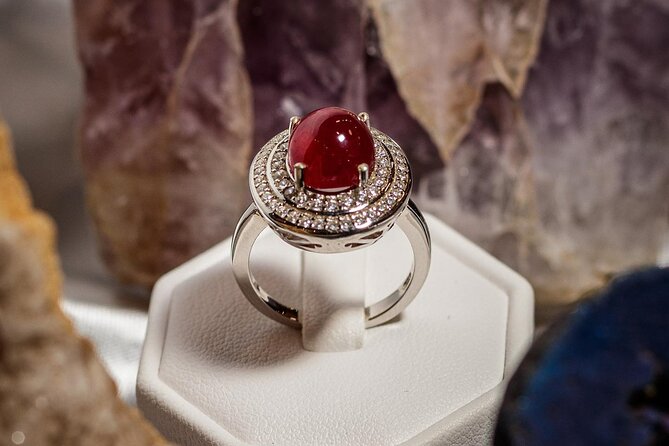
Then comes the stone store stop at Aqeeq Galleria. This is the stop designed for higher-value shopping. The tour description says they deal in authentic sustainably sourced gemstones and jewelry, and they offer a massive selection of both precious and semi-precious stones.
The specific stones mentioned include Tanzanite, garnet, amethyst, rubies, red garnets, and aquamarine. The tour also notes that these stones are mined in Kenya and East Africa. That matters because you are not only browsing. You have a chance to ask what you are looking at, compare options, and decide if something feels right for your budget.
Because this stop is where most people spend their bigger money, I treat it like an evaluation window. Ask questions. Compare similar stones. Look at workmanship in the jewelry setting if you are buying something mounted. Your guide can help translate and carry items, but you should still do the slow part yourself, like checking clarity, color consistency, and how the piece feels in your hands.
Also, remember that the tour is designed to help you avoid low-quality buys. That does not mean every item is automatically a perfect choice, but it does mean you are shopping in a place that is part of the route rather than getting pulled into random stalls.
Matbronze Wildlife Art: metal art and a silver range
You end at Matbronze Wildlife Art, a gallery and foundry for bronze works. This is a good final stop because it shifts the focus from small items to sculptural pieces. The description says you can see everything from small jewelry pieces to large wildlife creations that you really have to see in person to understand the scale.
The bronze art is handmade by the founder and artist, Denis Mathews, and his daughter, Esenya, has started a silver range called SAFARIA. That includes handmade pure silver jewelry, as well as bronze art with a silver touch. If you like pieces that look like they belong to the place you visited, this is where you can find that sense of Nairobi in an object, not just in the design theme.
The stop is also listed with free admission. The gallery and foundry setting makes it feel more like a craft workspace than just a retail counter. If you are buying gifts, this is often where you can get something that looks special even when it is wrapped for someone else.
There is also a restaurant on site, but lunch is not included in the tour cost, so treat it as optional depending on the day’s schedule and your appetite.
Price and value: what $60 really covers in Nairobi
At $60 per person, this tour is priced like a mid-range shopping outing, not a budget hop. The value comes from what is packaged into that price:
- Hotel pickup and drop-off: You lose less time dealing with taxis and directions.
- Private transport: You are not stopping and starting based on other groups.
- Professional guide: Translation, advice, and practical help with shopping needs.
- Multiple specialized stores: You get a sequence of shops rather than random market wandering.
- Free admission at each stop: You are not paying entry fees just to browse.
If you were to do this on your own, you would likely spend time figuring out where to go and you might pay more in transport. You might also have to work harder to understand what you are buying, especially for stones. Here, your guide makes those unknowns feel smaller, which is often the hidden cost of shopping alone.
Just note what is not included. Tips and gratuities are not included, and lunch is available for purchase. That is normal, but I suggest planning a bit of cash or card for food and for anything you decide to buy.
Shopping smarter: how to use a guide without losing control
A local shopping tour is only good if it helps you feel in charge. The best approach is to set your shopping goal before the day gets going.
Think in categories:
- One centerpiece item: Something you genuinely want to keep.
- 2-4 gifts: Smaller items that are easy to wrap and transport.
- Optional stone or jewelry: For people who know what they like, or want to learn.
Then use the guide for the stuff that slows you down when you are on your own. Ask them to explain differences between pieces. Tell them what budget you want to stay near. Let them handle some of the back-and-forth so you can focus on selecting.
When it comes to negotiating, the tour is set up to reduce the risk of being pushed around in less regulated areas. Still, you should expect price talk, especially for higher-value items. If you want to avoid surprises, decide on a rough maximum price range before you fall in love with a piece.
Also, plan your day’s physical comfort. Shopping tours can mean carrying bags. The tour explicitly mentions that the guide can help carry heavy items, which is great. Still, wear comfortable shoes and expect you may take longer in places that catch your eye.
Who should book this Nairobi souvenir shopping tour?
Book this if you want practical Nairobi shopping with a guide who can translate and help you stay focused on quality stores. It is also a great fit if you are buying gifts and you want your day to feel like a planned experience rather than random market time.
You might skip it if:
- You only want to browse casually with no intention to buy.
- You are already confident navigating markets and prefer to handle everything solo.
- You want a very long time in just one store rather than a multi-stop day.
For most people, though, this tour hits a strong balance. You get enough stops to find variety, enough guidance to feel comfortable, and enough time to make real decisions.
Should you book Rustic Nature Tours for souvenir shopping in Nairobi?
Yes, if you want a smoother, safer way to shop and you like crafts with real backstories. The route gives you serious selection across beads and leather, craft and antiques in Karen/Langata, community art, stone and jewelry options at Aqeeq Galleria, and wildlife metal art at Matbronze.
It is not just shopping for shopping’s sake. It is shopping with context, help, and a plan. If you treat the stone store as your budget decision point and keep the rest of the day for gifts and craft pieces, you will come away feeling like you spent your time well.
FAQ
How long is the Nairobi souvenir shopping tour?
It runs for about 6 hours.
How much does the tour cost?
The price is $60 per person.
Do I get hotel pickup and drop-off?
Yes, pickup and drop-off at your hotel or residence are included.
Is this a private tour or will I be with other groups?
It is private, meaning only your group participates.
How many shopping stops are included?
The tour includes visits to Kobe Beads Factory, Utamaduni Crafts Centre, Golden Eagle Art Gallery, Aqeeq Galleria, and Matbronze Wildlife Art.
Is the stone and jewelry shopping stop included?
Yes. The tour includes a visit to Aqeeq Galleria, where they offer stones and jewelry, including Tanzanite, amethyst, rubies, red garnets, and aquamarine.
Are admission tickets included for the stops?
Admission tickets are listed as free at the stops.
Is lunch included?
Lunch is not included. You can purchase food during the day.
What is the cancellation policy?
You can cancel for free up to 24 hours in advance for a full refund. If you cancel less than 24 hours before the start time, the amount paid will not be refunded.
More Shopping Tours in Nairobi


More Tours in Nairobi





More Tour Reviews in Nairobi


Everything else we hold on Nairobi
- 7 Days Private 4 star lodges Safari by LandCruiser from Nairobi★ 5.0 · 3 reviews
- 5 Days/4 Nights Kenya Safari★ 4.5 · 3 reviews
- Safari Park Hotel Show & Dinner Experience In Nairobi Tour★ 3.6 · 3 reviews
- Day safari to Olpejeta Rhino conservancy★ 5.0 · 3 reviews
- 7 Days Breathtaking Kenya Wildlife Private Safari★ 5.0 · 3 reviews
- Overnight Amboseli National Park Safari from Nairobi★ 5.0 · 3 reviews
Shopping Tours, compared.
 ★ 5.0Traditional Kenyan Cooking Class & Local Market TourFrom $50129 reviews
 ★ 5.0Nairobi souvenir Shopping and Historical Half day TourFrom $7061 reviews
 ★ 5.0Memorable Daily KIBERA Slums/Toi Market Tour with Locals (2 hours)From $2529 reviews
 ★ 5.0Nairobi Cultural Shopping ExperienceFrom $2521 reviews
 ★ 4.8Mombasa City Tour,Fortjesus,Oldtown,Tusks and Spice Market.From $4519 reviews
 ★ 5.0Half-Day Nairobi National Park and Maasai Market with Pick upFrom $18016 reviews
 ★ 4.0Nairobi Guided Cultural Shopping Experience Day TourFrom $9012 reviews
 ★ 5.0Authentic Kenyan Cooking Class & Market Tour in NairobiFrom $6412 reviews
Appears in these lists