
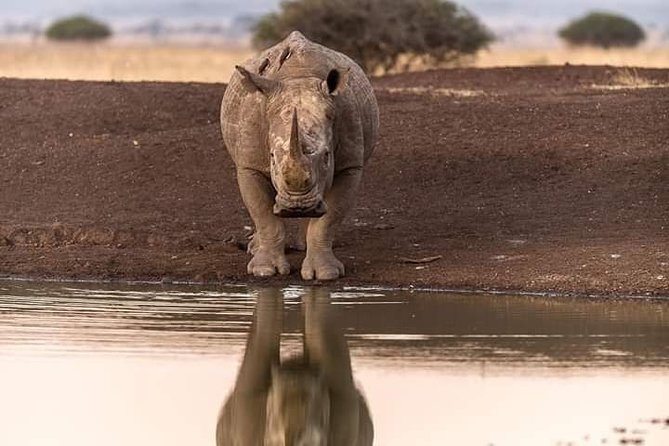
REVIEW · NAIROBI CITY TOURS
Nairobi city tour
Nairobi packs a lot into one day. You’ll see how a safari day feels in the morning with an early game drive, then continue into animal centers and major landmarks later in the day. It’s a focused loop around Nairobi that also includes the social fabric of the city, so you get more than just wildlife.
Two things I really like are the small group size (up to 8) and the smooth, no-fuss setup with private transportation and bottled water. You’ll also get a clear, timed flow that helps you fit a lot into about 1 day without constantly wondering where to go next.
The main thing to consider is the early start. Beginning at 6:00am means you’ll want to be ready and comfortable with a long day, and the Kibera area pass-by can feel emotional for some people.
In This Review
- Key things that make this Nairobi day tour worth it
- One-day Nairobi route, timed right for real life
- Nairobi National Park morning game drive for big cats and photo clarity
- Elephant Orphanage at around 11:00am, a conservation stop with real emotion
- Giraffe Centre visit: a classic Nairobi animal encounter
- Nairobi National Museums and the cradle of mankind story
- Passing Kibera slums and the Nairobi CBD: context you shouldn’t skip
- Price and value for about $100 per person
- What you should bring for a smooth day from 6:00am
- Who this tour suits best, and who might want a different plan
- Book it or skip it: my honest take
- FAQ
- What time does the tour start?
- How long is the tour?
- How many people are in the group?
- What’s included in the price?
- Are breakfast or lunch included?
- Are admission tickets included?
- Is free cancellation available?
- Is the tour dependent on weather?
Key things that make this Nairobi day tour worth it
- 6:00am start for the best chance at clear wildlife photos
- Early big-cat game drive before the city stops
- Elephant Orphanage around 11:00am to keep the day’s rhythm
- Giraffe Centre visit as a classic Nairobi animal encounter
- Nairobi National Museums for Kenya’s archaeology story, tied to the cradle of mankind
- Route includes Kibera slums and the Nairobi CBD pass-by so you understand context, not just attractions
Nairobi covered at street level and by minivan
One-day Nairobi route, timed right for real life

This is the kind of city tour that makes sense if you have limited time but still want the highlights. The day starts at 6:00am, with the morning built around wildlife viewing first, not last. That matters because mornings tend to be calmer, and you’re more likely to get better visibility for photos when animals are moving and light is still good.
By mid-morning, the schedule shifts from the wild to hands-on conservation and animal encounters, then into museums. You’re also moving through multiple neighborhoods, which is exactly what you want on a Nairobi “greatest hits” day, as long as you keep expectations realistic. This is not a slow, lingering outing where you can spend 2 hours in one place. It’s a full loop, so you’ll spend more time traveling between stops than you might at a single-site tour.
If your priority is to see Nairobi’s contrasts, this one-day format helps. You’ll get nature in the early hours, conservation work in the middle of the day, and then history and archaeology at the national museum, followed by a pass through the city’s main areas.
Nairobi National Park morning game drive for big cats and photo clarity
The day kicks off with Nairobi National Park, with an option at the start described as Nairobi National Park or an orphanage. If you’re aiming for wildlife, the plan prioritizes an early game drive, because that’s the best time for viewing big cats with clearer photo conditions.
Here’s what to pay attention to as you think about the morning. First, expect animals to be less “showy” than in a zoo. You’re there for a natural behavior moment, not a scheduled performance. Second, you’ll want to dress for early hours and movement, because even in daylight, mornings can feel cool and the time window can be short.
Also think about what you’re photographing. Big cats tend to be a photography challenge, partly because you’re trying to capture movement and you’re shooting through vehicle angles. Early light helps, and a well-run drive helps even more. Since this tour is designed for that specific morning viewing, you’re not stuck waiting until late afternoon when visibility is often less forgiving.
The value here is the order of operations. Many people arrive in Nairobi and try to do wildlife later, after all the other stops. This tour flips it. You get the wildlife first while your energy is fresh, then the day becomes a set of easier, more predictable attractions.
Elephant Orphanage at around 11:00am, a conservation stop with real emotion
After the morning drive, you head to the Elephant Orphanage at 1100 Hours. This is the heart of the day’s animal experience, and it’s timed after the safari so you’re not rushing back and forth in the dark.
Orphanage visits can be powerful because you’re seeing conservation work directly, not just hearing about it. You might find the experience adds meaning to the earlier wildlife time. In the morning, you’re watching animals in a natural setting. Later, you’re seeing people work to protect and care for elephants, which gives context for why safari conservation matters.
One practical tip: this kind of stop often has visitors arriving around the same time. Since the tour is set with a clear 11:00am arrival, you can keep your day structured. I also suggest you bring a little patience. Even when everything is organized, animal-focused places can vary by routine, and photos can depend on what the elephants are choosing to do.
Drawback to consider: it’s still part of a full day. If you love animal encounters, you might want more time here than you get. The benefit is momentum. You’re not stuck in one place all day, so you can also reach the giraffes and the museum before the light changes.
Giraffe Centre visit: a classic Nairobi animal encounter
Next up is the Giraffe Centre. It’s a popular Nairobi stop for good reason, and it tends to be the kind of place where you feel close to the animals in a way that’s easy to understand, even with limited time.
Why this fits well in the schedule is simple. It’s after the elephant orphanage, when your day is already anchored in animal encounters. That continuity helps. You’re not switching gears from wildlife to, say, shopping immediately. You’re still in the animal mindset, then you’ll naturally transition into the museum after.
What I’d watch for is how the experience feels to you personally. Animal centers are usually meaningful, but they can vary in what you can do, how close you can get, and how busy the day is. Since the tour description keeps it straightforward and timed, you should plan to enjoy it as one stop among several, rather than as your only highlight.
In a tight itinerary, the Giraffe Centre works as a high-return experience. It’s one of those Nairobi must-dos that people often want, and it keeps the day fun while still aligned with your wildlife and conservation theme.
Other Nairobi bookings that survived the same scrutiny
Nairobi National Museums and the cradle of mankind story
The next stop is the National Museums. The tour is designed as a history and archaeology lesson, with an emphasis on Kenya as the cradle of mankind. Even if you’re not a deep-archaeology person, it’s a major reason many visitors want to spend time in Nairobi beyond safaris.
This museum segment gives you something the morning drive cannot: a clearer picture of how Kenya fits into the wider human story. You can also use it to connect dots. When you later see landscapes, villages, and everyday life in different parts of the country, you’ll have a framework for understanding why the region draws scientists and historians.
There’s also a practical benefit to visiting the museum after animal stops. Midday can be hot, and you might not want to do another long, open-air activity. Museums give you indoor structure and a break from sun and dust while still moving forward with your itinerary.
The only consideration is time and attention. In a one-day format, museum visits can feel compressed. If you love reading labels and slow museum pacing, you may want to pick what matters most to you before you start. If you’re happy with a big-picture overview, this stop is a strong use of time.
Passing Kibera slums and the Nairobi CBD: context you shouldn’t skip
On the way to the National Museums, the route passes by Kibera slums, described as one of the biggest informal settlements in East and Central Africa, as well as through the Nairobi central business district.
This is one of the most important parts of the day for understanding what Nairobi really is. Wildlife and museums can make a trip feel separated from everyday life. A pass through these areas changes that. Even when you’re not getting out and walking much, seeing the scale of a neighborhood and the rhythm of the city can help you understand the setting behind what you’re experiencing.
A quick reality check: this part of the itinerary is a pass-by. That means you should keep your role respectful and observational, and avoid treating it like a theme park photo stop. If you’re sensitive to poverty realities, you may want to mentally prepare for that emotional shift. It’s not the tour’s fault if it hits you harder than expected.
The upside is that the day doesn’t feel like a bubble. You get both sides of Nairobi, nature and city life, in one arc.
Price and value for about $100 per person
The price is $100.00 per person, and that’s where you should look at value, not just cost. For this kind of day, private transportation is the big driver. You’re not relying on random transit between multiple Nairobi landmarks. You also get bottled water, and you’re capped at a maximum of 8 travelers, which usually means less chaos and easier coordination.
You’ll also notice the pricing logic is about time efficiency. You get an early wildlife window, a conservation stop, another animal center, and museum time plus city pass-by. For many visitors, trying to stitch this together yourself ends up costing more in time, taxis, and missed opportunities.
What’s not included matters too. The tour lists lunch and breakfast as not included, along with alcoholic beverages, and it also notes all fees and taxes are not included. There’s also an entry note that says Admission Ticket Free, but it conflicts with the fees note. So here’s my practical advice: plan your budget with some flexibility and confirm what entry costs are actually covered for the museum and animal sites when you book.
If you want a day where someone handles the route so you can focus on seeing Nairobi, this fits. If you prefer to control every stop yourself and don’t mind doing logistics, you might be able to DIY. But the time saved is the true value.
What you should bring for a smooth day from 6:00am
Since the day starts at 6:00am and includes open-air wildlife time plus multiple stops, pack for temperature changes and long hours. Bring a hat or cap, sunscreen, and comfortable shoes that can handle early morning movement and museum walking. A light layer helps because wildlife mornings can feel cooler than you expect.
For photography, you’ll want something easy to handle from a vehicle. Fast-moving big cats do not wait for your perfect setup, so be ready. Even if you’re not chasing action shots, early light can make a difference for clarity.
Water is included (bottled water), but you might still want a small extra snack if you get hungry before lunch. Breakfast is not included, and you’ll be transitioning from game drive to animal centers before the day’s main break.
One more practical item: bring a bit of patience for transitions. The tour is structured with set times, like the 1100 Hours orphanage visit, and that rhythm keeps the day running. It also means you’ll sometimes move before you feel fully “done” with a stop.
Who this tour suits best, and who might want a different plan
This Nairobi city tour is a good match if you want a single day that covers wildlife, animals, and major context through museums and city sights. You’ll likely enjoy it if you like seeing how nature, conservation, and human history connect in one place.
It’s also a smart pick if you’re traveling with kids, because the day includes animal-focused stops (elephant and giraffes) plus an indoor museum segment. The small group size of up to 8 travelers also supports families who don’t want to feel lost in a huge crowd.
If you’re the type who prefers slow pacing, with lots of time at fewer sites, this might feel rushed. And if Kibera pass-by is likely to be emotionally difficult for you, plan your expectations. This tour includes city context, not just tourist attractions.
Book it or skip it: my honest take
I think this is worth booking if you want a structured one-day Nairobi highlight route with private transportation, a morning wildlife window, and museum time tied to the cradle of mankind. The early big-cat timing is a real advantage, and the animal stops are positioned so the day stays fun while still meaningful.
I’d skip it or choose another option if you want lots of free time at each location, or if the idea of a Kibera slum pass-by feels like it would ruin your day. Also, because breakfast and lunch are not included, plan food stops so you do not get cranky halfway through.
If you decide to go ahead, I recommend messaging the operator with your schedule needs. In past experiences coordinating through WhatsApp, the team led by David has been responsive, and one account even included a ride to the airport at the end. So if your flight timing is tight, ask early.
FAQ
What time does the tour start?
The tour starts at 6:00am.
How long is the tour?
It’s listed as about 1 day.
How many people are in the group?
The tour has a maximum of 8 travelers.
What’s included in the price?
Private transportation and bottled water are included.
Are breakfast or lunch included?
No. Breakfast and lunch are not included.
Are admission tickets included?
Admission is listed as ticket free, but it also notes that all fees and taxes are not included. Check what’s covered for each stop when you book.
Is free cancellation available?
Yes. You can cancel up to 24 hours in advance for a full refund.
Is the tour dependent on weather?
Yes. If it’s canceled due to poor weather, you’ll be offered a different date or a full refund.
More Tours in Nairobi




More Tour Reviews in Nairobi


Nairobi at Street Level






Everything else we hold on Nairobi
- 7 Days Private 4 star lodges Safari by LandCruiser from Nairobi★ 5.0 · 3 reviews
- 5 Days/4 Nights Kenya Safari★ 4.5 · 3 reviews
- Safari Park Hotel Show & Dinner Experience In Nairobi Tour★ 3.6 · 3 reviews
- Day safari to Olpejeta Rhino conservancy★ 5.0 · 3 reviews
- 7 Days Breathtaking Kenya Wildlife Private Safari★ 5.0 · 3 reviews
- Overnight Amboseli National Park Safari from Nairobi★ 5.0 · 3 reviews
Nairobi City Tours, compared.
 ★ 5.0Nairobi Historical Walking City TourFrom $35258 reviews
 ★ 4.8Nairobi Walking tour:Explore History Culture and TraditionsFrom $22222 reviews
 ★ 4.7Nairobi Downtown Walking TourFrom $27208 reviews
 ★ 5.0Nairobi City Walking Tour with Traditional Kenyan LunchFrom $45106 reviews
 ★ 4.8Nairobi Walking Tour: Downtown & City TourFrom $2032 reviews
 ★ 4.0vibrant nairobi city tourFrom $3522 reviews
 ★ 4.6Nairobi City Orientation Guided Tour with Lunch at CarnivoreFrom $15020 reviews
 ★ 5.0Nairobi city sights, Giraffe Encounters and Bomas Kenya TourFrom $9519 reviews
Appears in these lists