
REVIEW · MOMBASA CITY TOURS
Visit to Fort Jesus and the Old Town of Mombasa
Mombasa history comes at walking pace. This tour strings together Fort Jesus, Swahili lanes, and landmark sites that explain how Portuguese, Arab, British, and local influences shaped the city. You’ll also get context for the African Colonial Hotel built by the British in 1901, plus the Karen Blixen connection from 1914.
I especially like the way this experience is structured. You start with Fort Jesus for museum context, then move into the Old Town for the human scale of daily life, plus markets like Mackinnon and the English-built Spice Market from 1914. I also like having a guide who can handle questions in both English and French, and who keeps the pacing comfortable, not rushed.
One drawback to plan around: Fort Jesus admission is extra (KSH 1,200). Also, it’s not recommended for children, and you should expect a fair bit of walking on narrow streets.
In This Review
- Key highlights and what they mean for your day
- Why Fort Jesus and Old Town belong on your Mombasa “must”
- Fort Jesus Museum: the 40-minute setup that makes the rest click
- Old Town streets and the Old Port view: walking where the city still talks
- Mackinnon Market and the Spice Market: shopping logic you can taste
- Shri Cutch Satsang Swaminarayan Temple: faith in the same neighborhood
- Pembe Mbili, Four Elephant Tusks, and the landmarks that anchor your route
- The African Colonial Hotel and Karen Blixen context that adds depth
- Price and value: what $40 really covers
- Practical tips that keep the day smooth
- Who this tour fits best, and who might skip it
- Should you book this Fort Jesus and Old Town tour?
- FAQ
- How long is the Fort Jesus and Old Town tour?
- What does the tour cost?
- Is the Fort Jesus museum admission included?
- What is included in the price?
- Where does the tour start and when?
- How many people are in the group?
- Is the tour suitable for children?
Key highlights and what they mean for your day
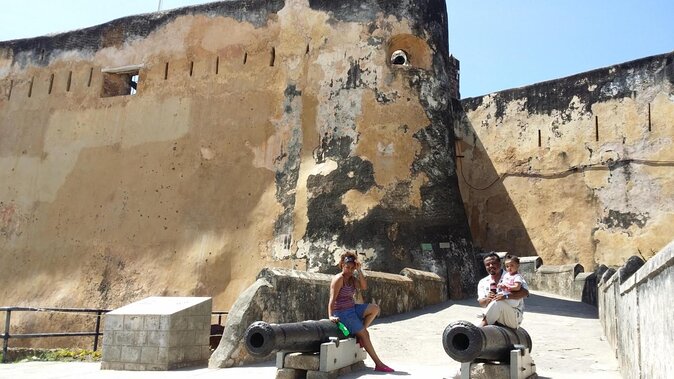
- Fort Jesus UNESCO site (Portuguese, 1593): You get the big picture before you start seeing fragments around town
- Swahili Old Town and Arab architecture: You’re walking where the city still speaks in old building styles
- Mackinnon Market plus the Spice Market feel: You see ingredients up close, not just photos
- A Hindu temple stop: It shows how many faiths share space in Mombasa
- Pembe Mbili and Four Elephant Tusks: Strong landmarks that help you orient your last minutes of the walk
- Small group, tuk tuk transport: Easier control of time and comfort over a half-day route
Mombasa itineraries, short ones and long ones
Why Fort Jesus and Old Town belong on your Mombasa “must”
Mombasa can be hit-and-run if you only look at the waterfront. This tour gives you a more grounded route: first the fort that explains centuries of trade and defense, then the neighborhoods where you see how people live now. The best part is that the history is not stuck in a textbook. It’s tied to street corners, market smells, and the kind of architecture you notice only when someone points it out.
There’s also a smart rhythm here. The day starts with a museum-style intro so you’re not wandering into confusion. Then you switch gears into Old Town walking, where local greetings and small details matter more than seeing ten sites in ten minutes.
If you like travel that feels real (not just a checklist), you’ll fit this tour well. It’s also a good choice if you want an efficient half-day, since the total time runs about 3 to 4 hours.
Fort Jesus Museum: the 40-minute setup that makes the rest click
Your tour begins at Fort Jesus Museum, right on Nkurumah Rd. You’ll get a brief history of Fort Jesus and the Old Town, designed to give you something to hang everything on. The fort was built by the Portuguese in 1593 and it’s classified as a UNESCO World Heritage site (since 2011), so you know you’re starting with a serious piece of the story.
Fort Jesus is more than an old wall. It’s a reason Mombasa became strategically important. When someone explains that early on, you’ll notice the fort as a hub of influence, not just a structure to photograph.
Practical note: the Fort Jesus admission is not included in the tour price. Plan for that extra cost so you don’t lose time at the start. It’s also a good idea to bring cash you can use for on-site payment, since you don’t want your morning to stall over a simple fee.
Time-wise, expect about 40 minutes here. That’s enough to orient you without turning the rest of the walking into a second museum day.
Old Town streets and the Old Port view: walking where the city still talks
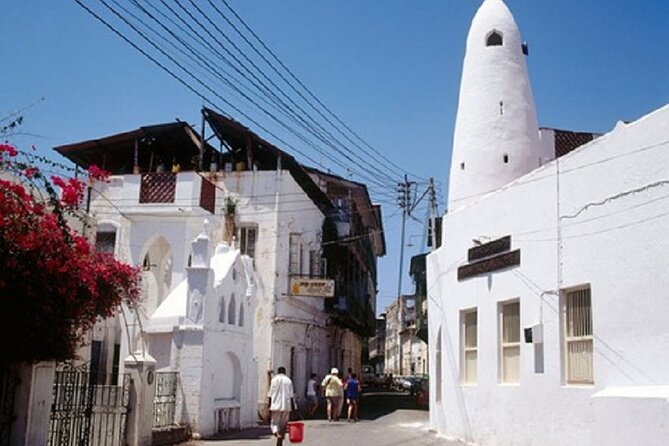
After Fort Jesus, you head into the Old Town on a guided walk through narrow streets. This is where you start appreciating Swahili culture and Arab architecture in the way it actually appears on the ground: close by, textured, and uneven. The tour includes time (about 40 minutes) to see the remains of the old historic Port of Mombasa, so you understand not only what existed, but why the port mattered.
This part also feels social. In the course of the walk, locals often greet the guide, which adds a human layer that makes the area feel less like a set and more like a living neighborhood. If you’re the kind of traveler who likes asking questions, this is also a good moment to do it, because the guide has context for what you’re seeing right now, not just what happened centuries ago.
Watch your footing. Old Town lanes are narrow and you’ll be moving for stretches. If you’re traveling with limited mobility, you might find it tiring. That said, with a small group size (max 10), the pacing is usually easier to manage.
Mackinnon Market and the Spice Market: shopping logic you can taste
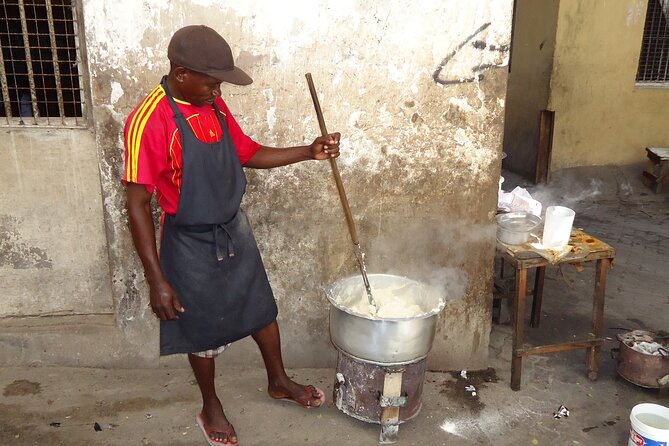
Mackinnon Market is next, with about 35 minutes to explore. You’ll see different types of legumes, fruits, and spices. This is one of those stops where the tour becomes immediately useful, because you learn how to recognize what you’re looking at. Spices and food basics in markets are rarely random. They connect to trade routes, local farming, and household cooking.
The experience also includes the Spice Market, built by the English in 1914. Even if you don’t treat it like a pure shopping stop, it’s a great place to understand the city’s trade identity. Spices are a shortcut to history here. When you see them stacked and sorted, you can picture why Mombasa attracted merchants for so long.
Value tip: if you want to bring something home, this is where you’ll have the clearest view of what’s available. Just keep your bag light and think about how you’ll carry it after the tour.
Also, markets can be hot. I like that the rest of the route is short enough that you are not trapped in a long market slog. Bring water if you can.
Old Town streets and the fort, further walks
Shri Cutch Satsang Swaminarayan Temple: faith in the same neighborhood
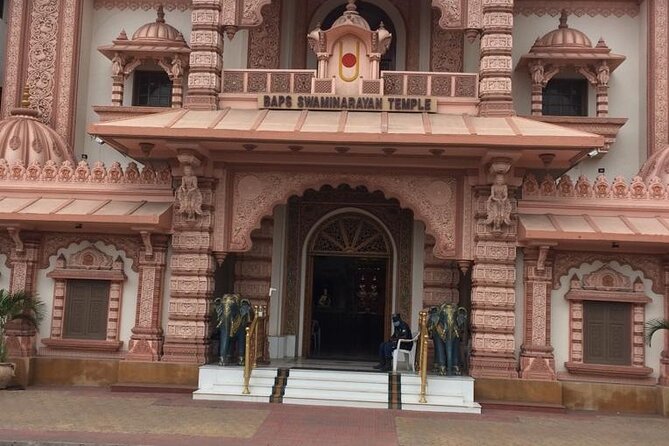
Next is a visit to the Shri Cutch Satsang Swaminarayan Temple, also about 35 minutes. This stop is free of charge and it broadens the story beyond forts and trade. Mombasa’s identity is not only Portuguese, Arab, or British. It’s also Indian and Hindu, and the city shows that in physical places of worship.
What makes this part valuable is balance. You’re walking through a historic port and commercial lanes, then you step into a religious space that reminds you people still use Mombasa’s old routes and old city fabric for daily life. Even if you don’t follow the religion, you’ll likely appreciate how the community structure shows up in architecture and routine.
Practical advice: wear something that feels respectful when visiting a temple. You don’t need to overthink it, but it helps you feel comfortable and it prevents awkward moments.
Pembe Mbili, Four Elephant Tusks, and the landmarks that anchor your route
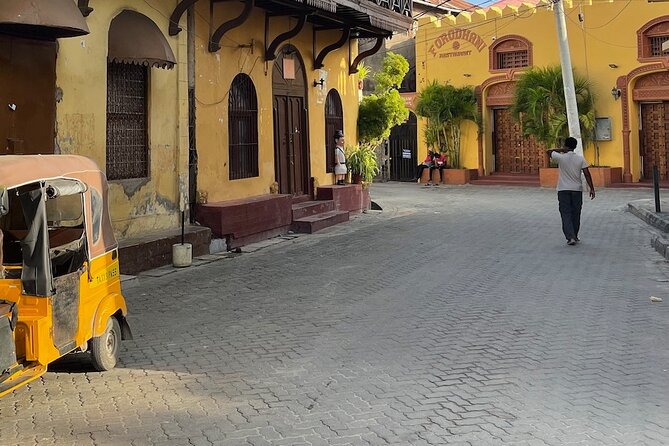
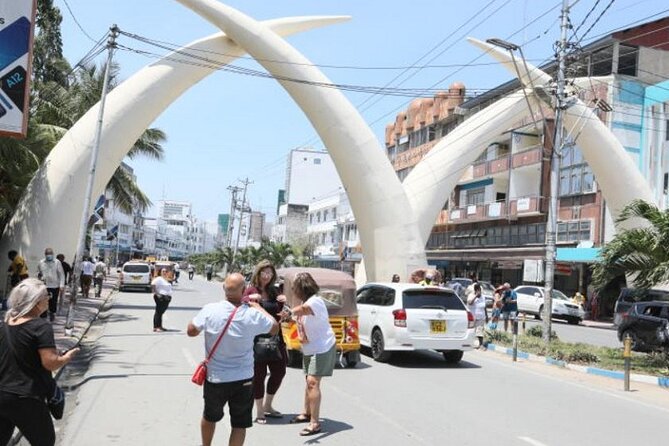
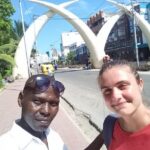
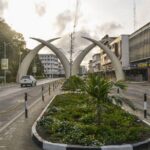
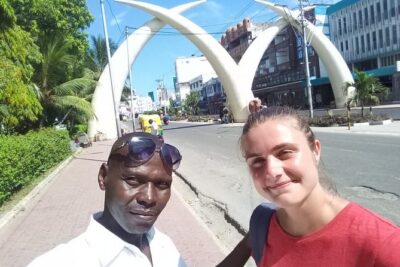
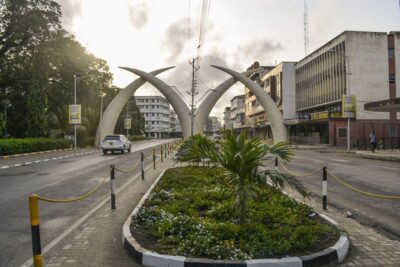
You’ll end in the area of Pembe Mbili and the Four Elephant Tusks. The tour’s meeting end point is the Four Elephant Tusks, opposite Uhuru Gardens on Moi Ave. The tusks are significant because they were erected in 1952 for the arrival of the Queen of England.
This ending matters more than it sounds. When you finish at a pair of huge, famous landmarks, it helps your photos make sense later and it gives you a clear reference point for where you are in the city. After an hour of narrow streets and market sights, that kind of orientation is a gift.
Expect about 30 minutes for the Pembe Mbili stop. It’s a short window, so make it count by slowing down for photos and for a quick look around the area before you head to your next activity.
Also, note the tour uses tuk tuk transportation. That helps you spend your energy on the walking sections you actually need.
The African Colonial Hotel and Karen Blixen context that adds depth
One of the quieter strengths of this tour is that it frames what you’re seeing with the British-era story. The experience highlights the African Colonial Hotel, built by the British in 1901, and it connects it to Danish writer Karen Blixen, who stayed there in 1914.
Even if you are not sitting inside the building, this kind of context changes how you interpret architecture and city change. Mombasa isn’t one layer. It’s a patchwork shaped by European visitors, port wealth, and local responses to outside power. When a guide points out these connections, your photos stop being random and start becoming a timeline.
This is exactly the kind of detail I want when I’m on a short, focused tour. It turns a half-day outing into something that stays with you after you leave.
Price and value: what $40 really covers
The price is $40.00 per person, and it runs about 3 to 4 hours. This is booked on average 36 days in advance, which usually signals steady demand. The tour includes transportation by tuk tuk and guide fees.
Fort Jesus admission is the only explicit extra listed: KSH 1,200. So your real cost is the tour price plus the museum entry. If you’re comparing options, don’t judge the $40 alone. The inclusion of tuk tuk and guided time makes a difference here, especially when you’re trying to cover both Fort Jesus and the Old Town without wasting energy on transit.
Group size is capped at 10. That’s important for value. In small groups, it’s easier to stop when you have questions, and it’s less likely you feel herded.
Overall, I see this as solid value if you care about context and you want a guided route through multiple parts of Mombasa in one go.
Practical tips that keep the day smooth
Here are the things that matter most for making the most of the route.
- Start point: Fort Jesus Museum at Nkurumah Rd. The tour begins at 9:00 am.
- End point: Four Elephant Tusks near Uhuru Gardens on Moi Ave (Pembe Za Ndovu area).
- Expect walking on narrow Old Town streets, then short stops. Comfortable shoes matter.
- Bring a way to cover Fort Jesus admission (KSH 1,200).
- If you’re visiting a temple, dress modestly enough to feel comfortable.
The guide, Omar Juma (French/English), also comes up in many comments for being patient and flexible with questions. That’s a big deal. You don’t just get facts, you get time to understand them.
Who this tour fits best, and who might skip it
This is a great match for first-timers who want a strong orientation to Mombasa fast. It’s also ideal if you like history but hate slow, museum-only days. The mix of Fort Jesus, Old Town walking, markets, a temple, and landmark tusks gives you variety in a short time.
You might consider a different option if you’re traveling with young kids, since it’s not recommended for children. Also, if you dislike walking on uneven, narrow streets, this could feel like too much effort in one half-day.
On the flip side, solo travelers often do well on this kind of guided route because you get local context without getting lost. And with a small group size, you’re not swallowed by a crowd.
Should you book this Fort Jesus and Old Town tour?
If your goal is to understand Mombasa, not just pass through it, I’d book this. The combination of UNESCO Fort Jesus, Swahili and Arab architectural cues in the Old Town, market stops like Mackinnon, plus landmark finishing at the Four Elephant Tusks creates a clear narrative in 3 to 4 hours.
I’d only hesitate if Fort Jesus admission is a hassle for you, or if you want something very kid-friendly. Otherwise, this is the kind of guided route that turns a few sights into a real sense of place.
FAQ
How long is the Fort Jesus and Old Town tour?
The tour lasts about 3 to 4 hours.
What does the tour cost?
It costs $40.00 per person.
Is the Fort Jesus museum admission included?
No. Fort Jesus admission is listed as KSH 1,200 and is not included.
What is included in the price?
The tour includes transportation by tuk tuk and guide fees.
Where does the tour start and when?
It starts at Fort Jesus Museum, Nkurumah Rd, Mombasa, at 9:00 am.
How many people are in the group?
The tour has a maximum of 10 travelers.
Is the tour suitable for children?
It is not recommended for children.
More Tour Reviews in Mombasa
Fort Jesus, Plus Old Town Streets

Mombasa, Other Routes Through It
Everything else we hold on Mombasa
- 2 Days Salt Lick Safari Tour★ 4.5 · 3 reviews
- Mombasa: Historical Guided city tour. Old town, Fort Jesus★ 4.2 · 3 reviews
- 5 Days Mombasa,Tsavo East, Taita Salt Lick, Tsavo West, Amboseli,★ 4.5 · 3 reviews
- Mombasa: Discovery Day Tour and Haller Park★ 4.1 · 3 reviews
- 7 Days Tsavo East, Taita, Amboseli & SanctuarySafari from Mombasa★ 5.0 · 3 reviews
- 3 Days (2 nights); Tsavo East & West Safari:★ 5.0 · 3 reviews
Mombasa City Tours, compared.
 ★ 5.0Walking Tour Through Old Town Mombasa and Fort JesusFrom $50393 reviews
 ★ 4.7Mombasa: Kisite Park Private Cruise with Breakfast and LunchFrom $163181 reviews
 ★ 5.0Mombasa City TourFrom $45170 reviews
 ★ 4.7Mombasa: Tusks, Fort Jesus, Old Town, Beach and City TourFrom $30137 reviews
 ★ 4.3From Mombasa/Mtwapa/Diani/Tiwi: Tsavo East Full-Day SafariFrom $200130 reviews
 ★ 5.02 Days Tsavo East National Park Tour From Mombasa/Diani (1 Night)From $50650 reviews
 ★ 4.8Mombasa: Guided Nature Walk Amongst GiraffesFrom $3848 reviews
 ★ 5.02-Day Safari in Taita Hills from MombasaFrom $39945 reviews
Appears in these lists