
REVIEW · AMBOSELI SAFARIS
Amboseli Wildlife Day Tour And Masai Village Visit
Kilimanjaro views start early. This one-day Amboseli trip balances big-cat hoping with the park’s signature elephant scenery, plus a cultural stop with the Masai community.
You get game drives designed around the classic Amboseli look, elephants under acacia trees, and the drama of the mountain looming over the plains. You also trade a late morning in the park for a hands-on Masai village visit with traditions, songs, and dance.
Here is the main thing to consider: this is a long day. You leave Nairobi around 5am, spend a full stretch on the road and in the park, and you will be back close to 7pm, so plan for fatigue, not just photo stops.
In This Review
- Key things to know before you go
- Leaving Nairobi at 5am, then Emali’s road to Amboseli
- The Kilimanjaro view: what makes Amboseli feel different
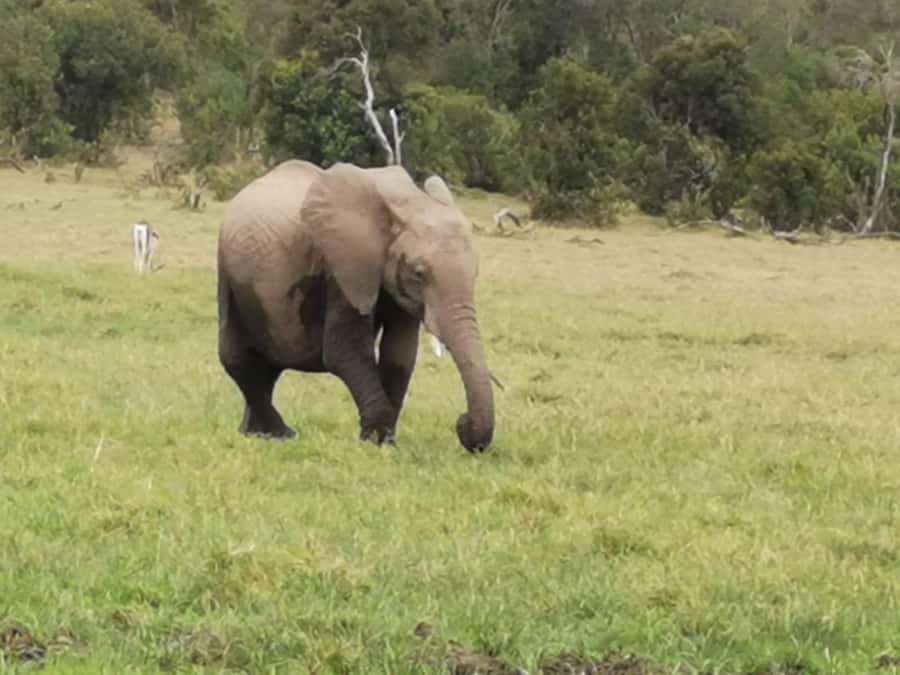
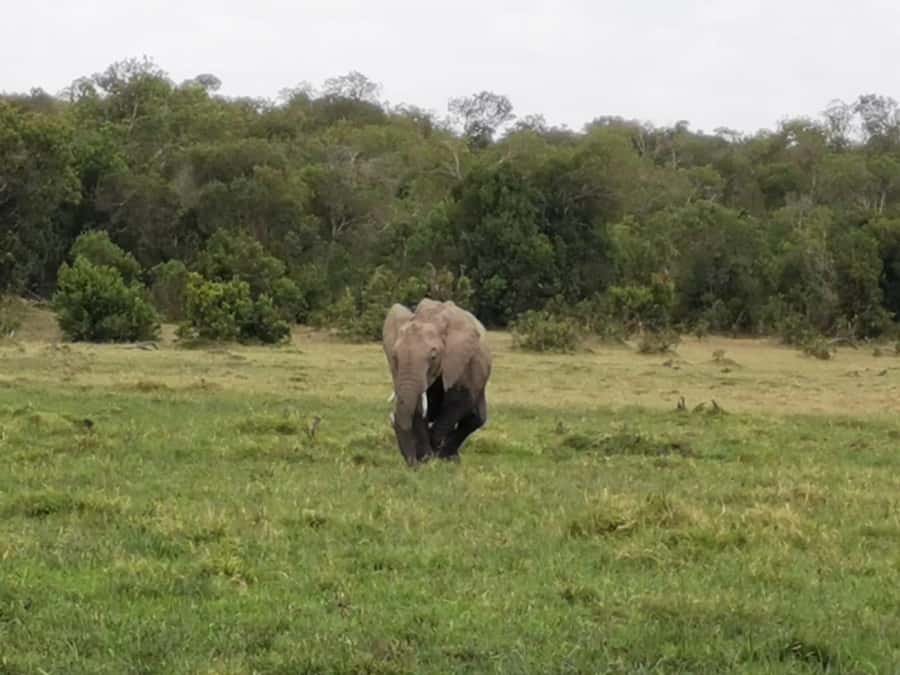
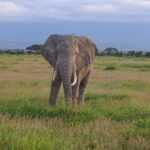
- Elephant families under acacia trees: the main wildlife payoff
- Lions, leopards, cheetahs, and the reality of big-cat chances
- Hippos and flamingos at the swamps, plus birdwatching focus
- Observation Hill: turning your drive into a skyline moment
- The lunch at Kibo Super Lodge and resetting before Masai culture
- Masai village visit: traditions, fire-making, and dance you can join
- Open-roof van, long hours, and how to pace yourself
- Park fees, village fees, and whether the $162 price makes sense
- Who should book this Amboseli and Masai day trip
- Should you book it, or choose something else?
- FAQ
- What time is the pickup in Nairobi?
- What time do we start the game drive at the park?
- When do we return to Nairobi?
- Is the safari vehicle open-roof?
- What is included in the tour price?
- Are park fees and the Masai village visit fee included?
- Is the tour refundable if I cancel?
Key things to know before you go
- Early start, early rewards: Pickup is set for 5am and you reach the gate by about 8:30am for game drives.
- Kilimanjaro is the star of the show: The view of Africa’s tallest mountain is built into the rhythm of the day.
- Elephants and acacia shade: You focus on elephant families sheltering around large acacia trees.
- Swamps bring hippos and flamingos: Amboseli’s groundwater-fed areas are where you look for hippos and flamingos.
- Observation Hill for scale: A central hill stop is meant for the wide park view.
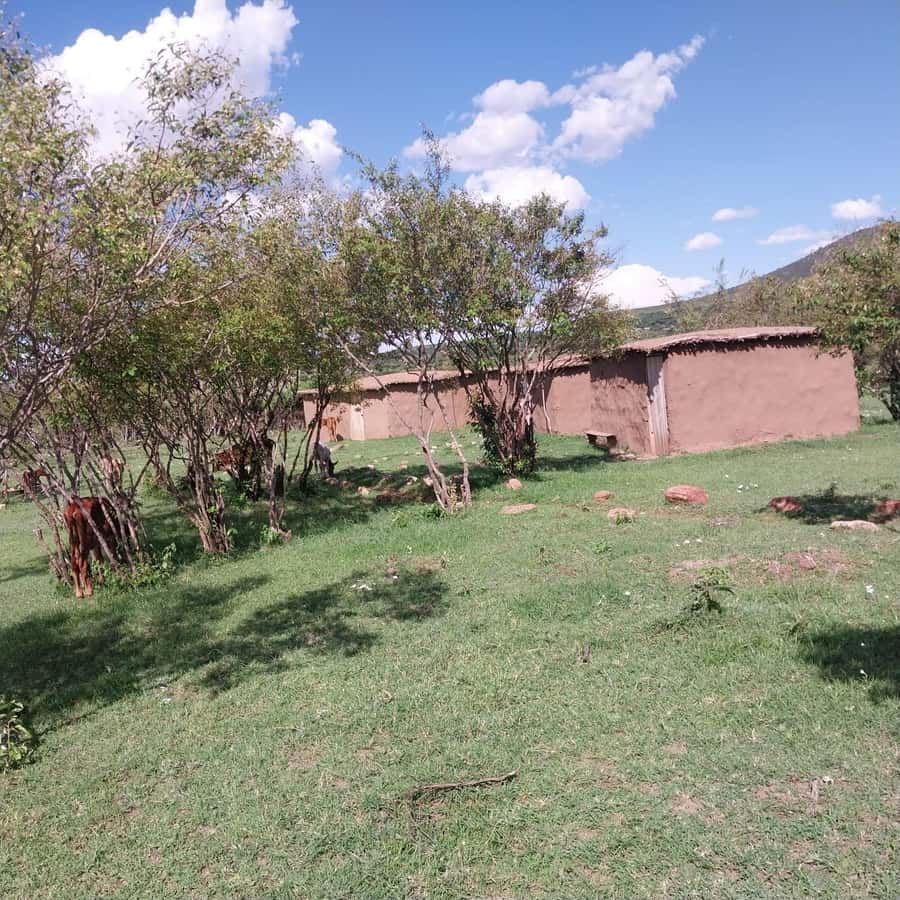
- Masai village adds culture, not just photos: You can join in traditional dance and learn about daily life.
Amboseli departures we also sat down with
Leaving Nairobi at 5am, then Emali’s road to Amboseli
This day tour is all about momentum. Your driver/guide picks you up from your Nairobi location at 5am, then you head out in an open-roof tour van. The open sides are part of the experience, since Amboseli is a long-view kind of place, not a quick-stop scenery parade.
You also have a stop in Emali town before continuing on. That break matters more than it sounds. It helps break up the long ride so you can arrive at the park gate ready to start your game drive, not still thinking about breakfast and sleep.
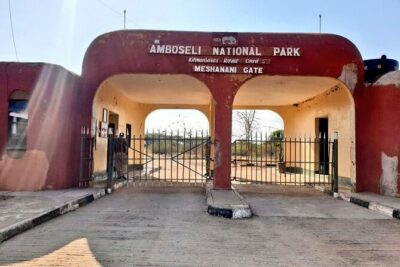
By about 8:30am, you’re ready at the gate to begin driving in the park. That timing is the practical sweet spot for Amboseli. Morning light often makes it easier to spot animals against the darker shapes of trees and the lighter tones of the landscape, and it gives you enough time to chase the best mountain views before the day heats up.
The Kilimanjaro view: what makes Amboseli feel different
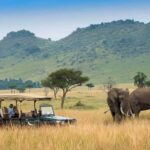
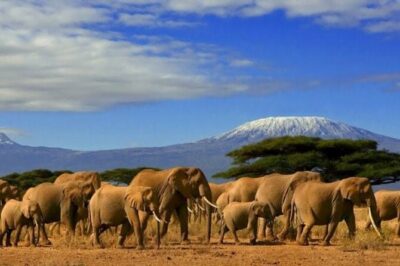
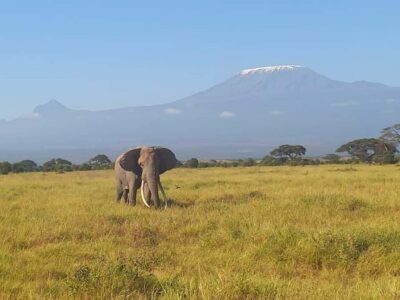
If you come for anything, it should be the Kilimanjaro perspective. Amboseli is famous for having Africa’s tallest mountain close enough to shape what you see and where you look. The day is designed so the mountain is not just a distant backdrop. It shows up as you drive, as you stop, and as you scan for wildlife near its shadows.
On clear days, the mountain can look almost staged, with animals crossing the plains and the slope behind them. On cloudier days, you might not lose the mountain completely. You may still get a visible outline and even snow near the upper area, which can feel like a win in its own right.
One thing to keep your expectations realistic: you can’t force the weather. If you are the type who needs a crisp, postcard summit shot, you should treat that as a possible bonus. The point of Amboseli is the constant sense of scale, and that usually comes through even when conditions are less than perfect.
Elephant families under acacia trees: the main wildlife payoff
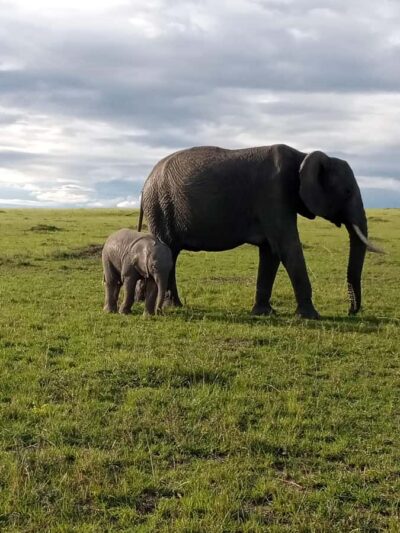
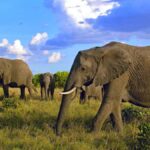
Amboseli’s elephant story is not about one lucky sighting. It’s about the way the park organizes itself around big trees and the water systems fed by the mountain. Elephants often take shelter in the shade of large acacia trees, so your game drive isn’t only about scanning the horizon. It is also about watching the areas that look calm and shaded.
This is where the park can feel more intimate than some other big safari destinations. You may not see massive, constantly moving herds all at once. Instead, you might encounter several elephant groups, each with its own patch of activity. That can still be spectacular, especially when you see family behavior, small movements, and the way elephants interact with the landscape.
If you love wildlife photography, elephants near acacia shade are a strong target. The trees create visual structure, and the mountain gives you a sense of place you do not get in parks where the horizon is flat and empty.
Lions, leopards, cheetahs, and the reality of big-cat chances
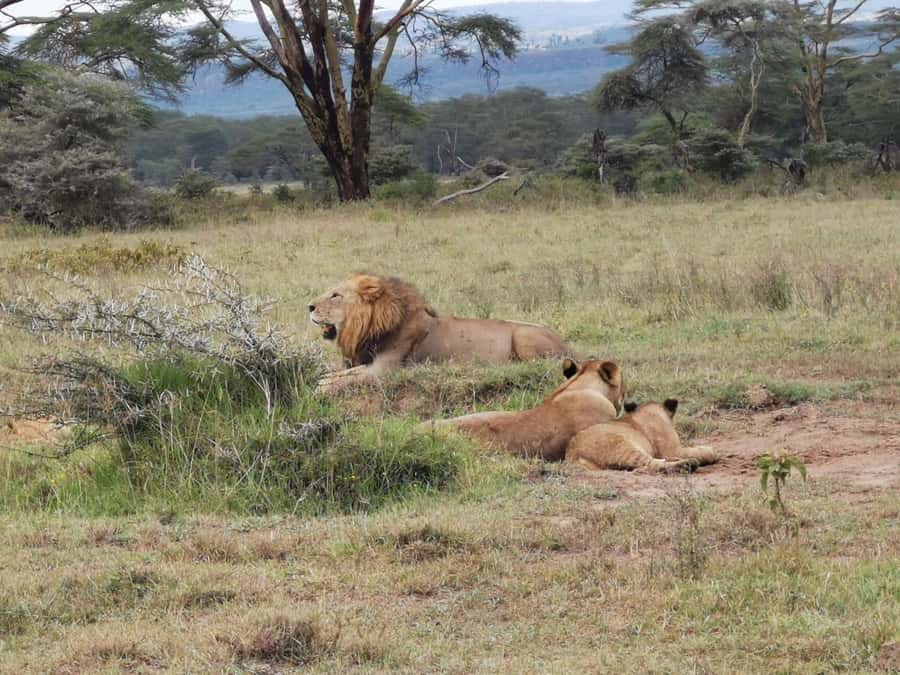
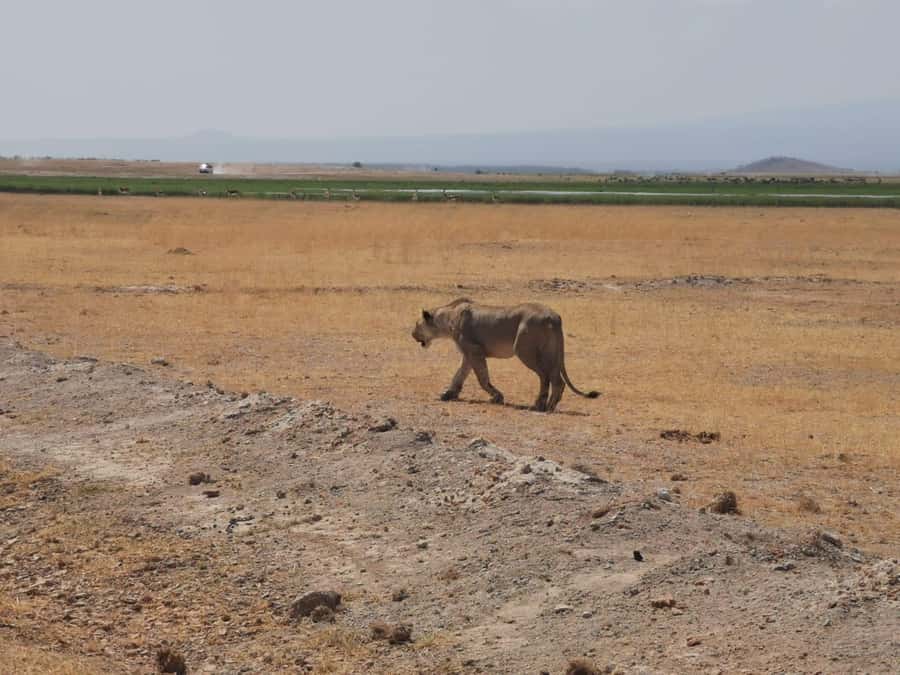
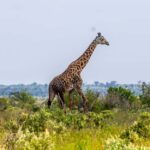
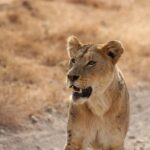
The itinerary aims for the big predators you hope for on safari: lions, leopards, and cheetahs, plus buffalo and giraffes. That’s a fair wish list for Amboseli, and it’s worth being excited about. But you should go in with the mindset that big cats are always variable.
Even when the park is beautiful and the day is well-run, predator sightings can come down to time of day, animal movement, and luck. For that reason, I recommend you treat Amboseli as an elephant-led safari with big-cat opportunities, not a guarantee of leopard or cheetah sightings.
If you specifically want big cats as your top goal, this tour is still a good option, but it is smart to be flexible about what you will actually see. When the day delivers, it is great. When it doesn’t, you still get a strong wildlife core thanks to elephants, giraffes, and birdlife.
Maasai homestead visits reviewed elsewhere on this site
Hippos and flamingos at the swamps, plus birdwatching focus
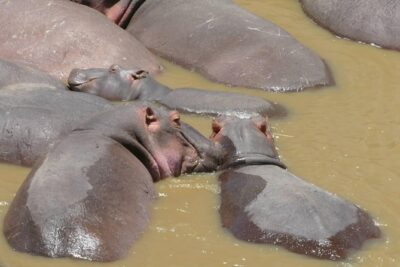
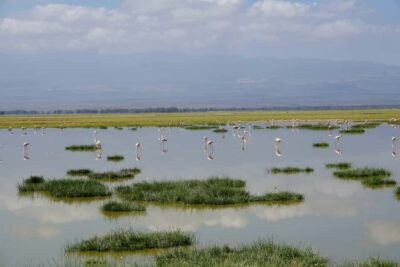
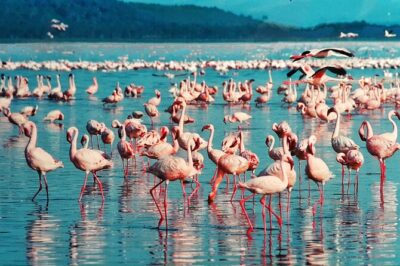
One of Amboseli’s most distinctive tricks is water on the ground, fed by underground flow from the mountain. That is why you look for hippos and flamingos in the swamp areas. It’s a very different scene from the classic dry-plains safari look, and it adds a sense of variety to the day.
Even if you are not a dedicated birder, you’ll feel the park’s biodiversity. The drive can include the chance to spot many bird species, with the park home to more than 300 bird species. That means you’re not only checking for mammals. You can also enjoy how the landscape sounds and moves, especially around swamp areas and habitat edges.
In practice, this is one of those safari bonuses that makes the day feel fuller. A wildlife day with elephants and birds still works, even if one or two of the higher-risk predator targets do not show up.
Observation Hill: turning your drive into a skyline moment
A key stop comes at the observation hill in the center of the park. The purpose is simple: the view. You look out over the park and back toward Mount Kilimanjaro, which helps you understand the geography you’ve been driving through all morning.
This is the moment when the day shifts from spotting to interpreting. Once you see the layout, you often realize why animals were where they were. You can also judge distances and how the shadows fall across plains and trees.
If you’re someone who likes learning while you travel, this is a great pause. The driver/guide can point out what you’re seeing in relation to your earlier sightings. And even if you are only there for photos, the observation hill stop helps you get at least one wide shot that feels like a real sense of place.
The lunch at Kibo Super Lodge and resetting before Masai culture
At about 1:30pm, you exit the park and break for lunch at Kibo Super Lodge. This is a useful timing choice. It prevents the day from turning into nonstop driving and also gives you a proper reset before the cultural portion.
Keep in mind that food and drinks are not included in the tour price. So if you want anything beyond basic meals, you’ll be choosing from what the lodge offers.
This lunch window also helps you think about the day like a whole. After a long morning of wildlife searching, you’ll be more relaxed for the Masai village portion. That matters, because the village visit is where the tour switches from silent observation to interaction.
Masai village visit: traditions, fire-making, and dance you can join
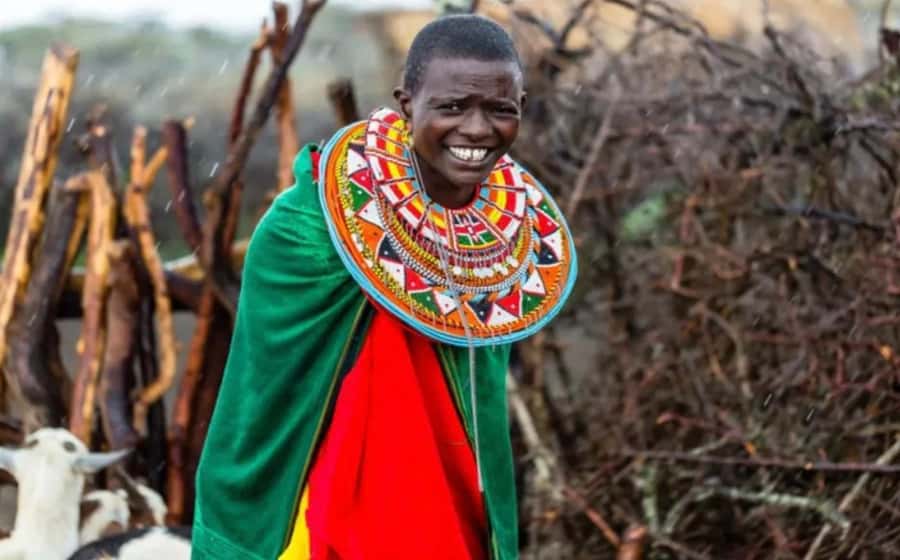
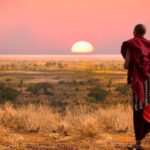
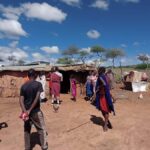
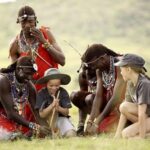
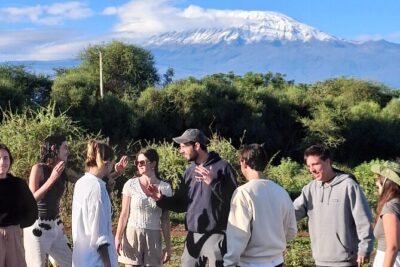
The Masai village stop is built around cultural learning, not just a quick photo. You visit to interact with the Masai community, learn about traditions and activities, and join in traditional dances.
From the structure of the experience, you should expect several demonstration style moments. These can include seeing housing and fire-making demonstrations, followed by song and movement where visitors are invited to participate. It is lively, and it can be a fun change of pace after wildlife drives.
One practical point: the village visit typically includes a shopping time with multiple stalls. If you are not excited about souvenir buying, you can still enjoy the demonstrations, but you may want to decide in advance what you do and do not want to spend. It can move from cultural interaction to vendor attention fairly quickly, with groups of stalls and lots of offers to look closer and buy.
Also, your personal experience here can depend on how your group is arranged. If you end up without a lot of people around, you may feel more direct attention during shopping time. That can be awkward if you would rather just watch, so bring a calm mindset either way.
Open-roof van, long hours, and how to pace yourself
This is the big logistics truth of the day. Pickup is at 5am. You drive, you game drive, you stop for lunch, you visit the village, then you drive back through the Mombasa road. Expect arrival in Nairobi around 6:30pm to 7pm.
A few implications for how you’ll feel:
- Your body needs endurance more than your camera needs extra lenses.
- The day is packed, so bathroom and snack timing is not a free-for-all. You will rely on the scheduled pauses like the Emali town stop and the lodge lunch.
- The open-roof van is part of the fun, but it also means you will be exposed while driving. Plan to be comfortable sitting and watching for long stretches.
If you hate rushing, this may not be your ideal format. But if you like full-day safari value, it makes sense. You get wildlife plus culture without needing an overnight.
Park fees, village fees, and whether the $162 price makes sense
The stated price is $162 per person, but it is not the full cost of everything in the day. Two fees are specifically listed as not included:
- Park fee: $90 per adult, $45 per child
- Masai village visit: $30 per person
So, the real total depends on age and how you plan to spend on meals and souvenirs. Food and drinks are also not included, and wine and beers are not included either.
Here is the value logic: you are paying for transportation in an open-roof van, a professional driver/guide, game drives, pick up and drop off in Nairobi, plus the Masai village visit itself. Those are the pieces that cost money locally, and they are hard to replicate independently in a single day without your own vehicle and local arrangements.
For many people, the value comes from the one-day convenience. You do not have to organize a route, hire a guide for game drives, or coordinate a cultural visit on top of the park day. You also get a morning start that is designed to work with game drive timing.
Just make sure you budget for the extras so you are not surprised later. When the park and village fees are added, the day becomes a bigger spend than the headline rate suggests.
Who should book this Amboseli and Masai day trip
This tour is a strong fit if you want:
- A Kilimanjaro-focused safari experience in a tight time window
- An elephant-led day with opportunities for predators
- A cultural stop with Masai traditions and participatory dance
- A single-day itinerary that returns to Nairobi the same evening
It is less ideal if you:
- Need guaranteed big-cat sightings (those are always unpredictable)
- Have very limited stamina for early departures and late returns
- Know you dislike shopping stops in cultural visits
If you are comparing safari destinations, it helps to think of Amboseli as an elephant, mountain, and bird paradise, with big cats as a bonus rather than the only target.
Should you book it, or choose something else?
I think you should book this tour if Kilimanjaro views and elephant scenery are high on your list, and you’re happy with a full-day format that moves from wildlife to culture. The observation hill stop and the Masai village interaction give the day shape, so it is not only about driving slowly and hoping for sightings.
Skip it, or at least reconsider, if you are the type who gets discouraged by variable animal luck, or if you dislike long travel days with limited breaks. This experience can be amazing, but it is not a relaxed half-day. It is a well-structured sprint through the best parts of Amboseli plus a meaningful Masai visit.
If you do book, go in with two priorities: watch for the elephants and take the mountain seriously. The rest is icing.
FAQ
What time is the pickup in Nairobi?
Your driver/guide picks you up at 5am from your Nairobi hotel or apartment.
What time do we start the game drive at the park?
You are expected to be at the park gate by 8:30am to start the game drive.
When do we return to Nairobi?
You’ll begin the journey back at about 3:30pm and arrive in Nairobi around 6:30pm to 7pm.
Is the safari vehicle open-roof?
Yes. Transport is provided in an open-roof tour van.
What is included in the tour price?
Included are a bottle of water, transport in an open-roof van, a professional driver/guide, Nairobi pick up and drop off, game drives, and the Masai village visit.
Are park fees and the Masai village visit fee included?
No. Park fees are $90 for adults and $45 for children, and the Masai village visit is $30 per person. Food and drinks are also not included.
Is the tour refundable if I cancel?
The activity offers free cancellation up to 24 hours in advance for a full refund.
More Tour Reviews in Kenya


Further Maasai Homestead Visits

Still Thinking Amboseli?

Everything else we hold on Kenya
- Shimba hills tropical rain forest day trip★ 4.6 · 3 reviews
- From Nairobi: Day Tour to Mount Longonot (Private)★ 4.6 · 3 reviews
- 4 Days wildebeest lake nakuru masai mara safari★ 5.0 · 3 reviews
- From Nairobi: Masai Mara 3-day Camping Safari by Jeep★ 4.0 · 3 reviews
- 12 Days wildebeest migration Masai Mara Nakuru Uganda gorilla trekking safari★ 4.5 · 3 reviews
- 12 Days Samburu Ol-pejeta lake Nakuru Masai Mara lake Naivasha Amboseli safari★ 5.0 · 3 reviews
Amboseli Safaris, compared.
 ★ 4.5Nairobi: Day Tour to Amboseli National Park & Maasai VillageFrom $75310 reviews
 ★ 5.0Day Tour to Amboseli National ParkFrom $310222 reviews
 ★ 5.0Amboseli Day Tour from NairobiFrom $19084 reviews
 ★ 4.4Day Trip: Amboseli National Park & Maasai Village – NairobiFrom $10069 reviews
 ★ 5.06-Days Masai Mara, Nakuru & Amboseli Group Safari on LandcruiserFrom $1,22056 reviews
 ★ 4.5DAY TRIP AMBOSELI NATIONAL PARK FROM NAIROBI BUDGET SAFARI.From $17052 reviews
 ★ 5.0Private Day Tour Amboseli National Park, View Mt. Kilimanjaro 4*4From $19851 reviews
 ★ 5.07 Days Masai Mara / Lake Nakuru / Lake Naivasha / AmboseliFrom $1,94049 reviews
Appears in these lists