
REVIEW · MOUNT KENYA TREKS
Mount Kenya Trek
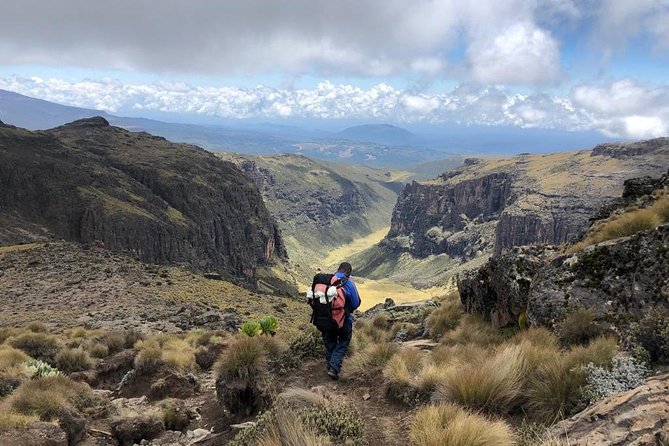
Mount Kenya tests you, then rewards you fast. This five day trek starts in Nairobi and climbs through forest to heath land from Sirimon Gate, then sets up your big morning for Lenana sunrise.
I like the care of the team, especially the hands on guiding style people credit to leaders like Michael, Peterson, and Julius Kinuthia. I also like the food plan, including vegan meals prepared by chef Steven, so you are not stuck guessing what you will eat at camp.
One consideration is the early starts and steep climbing, including a 3am push on stony ground on Day 4. If you have only light hiking experience, you will feel it, even with good guidance.
In This Review
- Key highlights you will care about
- Mount Kenya in 5 days, what you are signing up for
- Day 1: Nairobi to Nanyuki lunch, then Sirimon Gate at 2,440m
- Day 2: Old Moses area, Ontulili River, and Mackinders Valley views at 4,200m
- Day 3: acclimatization day to Kami Hut and Hauseberg Lakes
- Day 4: 3am start, stony quarry climb, Lenana sunrise, then long descent
- Day 5: 15km descent to forest clearance, then 4×4 to Chogoria and back to Nairobi
- Guides, food, and the small-group feel that keeps things sane
- Price and value: $840 per person, and what you actually get
- Practical tips from real trail conditions, waterproof shoes matter
- Should you book the Mount Kenya trek?
- FAQ
- How long is the Mount Kenya trek?
- What is the meeting time for departure from Nairobi on Day 1?
- How big is the group on this trek?
- Do I get a mobile ticket and pickup?
- Are admission tickets included?
- What fitness level do you need?
- What are the main stops on the route?
- What is the cancellation policy?
- What is included on Day 5?
Key highlights you will care about
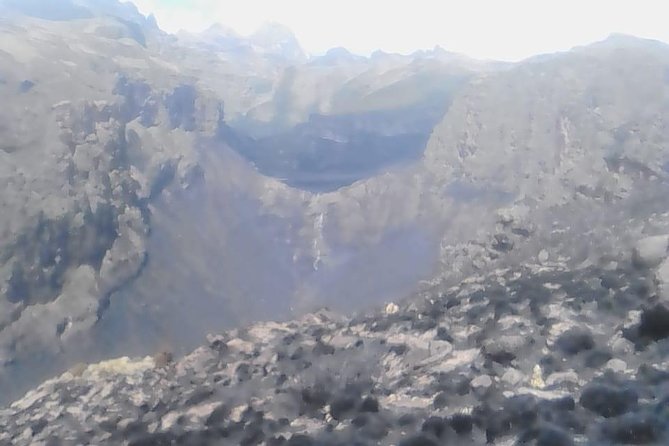
- Sirimon Gate route: forest uphill that turns into heath land, with camp stops at increasing altitude
- Shipton Camp at 4,200m: a key high base where the trekking rhythm builds day by day
- Smart acclimatization: the Day 3 circuit to Kami Hut and Hauseberg Lakes
- Lenana sunrise timing: a short, tough pre-dawn climb to reach the summit area for sunrise
- Caring small team: groups capped at 12 travelers, with guides and cooks who keep things running
- Waterproof shoe advice: the trek can get swampy, so dry feet matter
Chogoria, Sirimon, Naro Moru. Longer routes up
Mount Kenya in 5 days, what you are signing up for
This trek is a classic “climb high, sleep higher, adjust, then go for the sunrise” format. Your days are built around altitude changes, not random wandering, and that matters when the air gets thin.
You should expect a steady mix of hiking and camp life at specific altitudes. Day 1 starts at about 2,440m at Sirimon Gate, and by Day 2 you are up around 4,200m at Shipton Camp. Day 4 brings the steepest early morning effort, then a long descent to a lower camp before you finish.
If you want a gentle stroll with scenic stops every ten minutes, this is not that. If you want real mountain effort with clear goals each day, you will like this structure.
Day 1: Nairobi to Nanyuki lunch, then Sirimon Gate at 2,440m
The day begins with an early Nairobi departure at 8:00am. You drive about 4 hours to Nanyuki town for lunch, then continue roughly 1 hour to Sirimon Gate, which sits at 2,440m.
From the gate, you follow the main track uphill. The forest portion gives way to heath land after about 3 hours, which is a nice change in terrain and a good sign you are climbing into a more open, mountain-feeling zone. About 3.5 hours from the gate, you reach Judmier Camp at 3,300m for dinner and overnight.
What I like about Day 1 is that it sets your pace without pretending it is easy. You start with enough time in the vehicle to get your bearings, then ease into real elevation work. The drawback is that you still finish the day at camp, so you do not get a “late start, early rest” kind of schedule.
Day 2: Old Moses area, Ontulili River, and Mackinders Valley views at 4,200m
After breakfast, the ascent continues. There is a fork where you go left at the junction, and within about an hour from Old Moses Camp the trail crosses the Ontulili River.
Soon after, you contour through moorland and cross Liki North. The day ends at Mackinders Valley, where you get panoramic views up the valley toward the main peaks, before dinner and overnight at Shipton Camp at 4,200m.
This is a day where you feel the altitude, even if the hike is not the steepest of the whole trip. Moorland can also mean more exposure, and that is why your early pacing matters. The bright side is the payoff: those wide valley views are the kind of scenery that makes you forget you are counting breaths.
If you are prone to rushing, resist it today. Your body will thank you on Day 3.
Day 3: acclimatization day to Kami Hut and Hauseberg Lakes
Day 3 is your acclimatization day, and it is one of the most valuable parts of the whole itinerary. You walk to Kami Hut, then continue down to the Hauseberg Lakes area, including Hauseberg Tarn and Nanyuki Tarn. After time near the lakes, you walk back to Shipton for dinner and overnight.
This is not a rest day in the couch sense. It is a rest day in the smart mountain sense: you are getting movement at altitude, but you are also giving your body a chance to adjust before the summit morning.
I like how this day uses the terrain to teach your lungs what is coming. Going down toward the lakes can feel like a break from the climb, while still keeping you active enough to stay loose. It also means you are not hiking hard every single day, which helps you stay confident on the 3am start later.
Other Nairobi bookings that survived the same scrutiny
Day 4: 3am start, stony quarry climb, Lenana sunrise, then long descent
Day 4 is the big one. You leave at 3:00am and hike up a steep, stony quarry that cuts through a cliff clearing. You arrive around 6:30am, after about 3 hours, at the Lenana area.
Then comes the reason people put up with pre-dawn hiking. You get a sunrise moment after reaching Lenana. After sunrise, you descend to Mintos hut, about 2 hours, for breakfast, then continue further down for several hours to Mount Meru Bandas at 2,950m for dinner and overnight.
This day is not just physical, it is mental. The early start demands you trust the process, because you are working in the dark and on rough ground. Your reward is timing and views, not just distance.
The one drawback is the mix of steep uphill and then a long downhill that can be hard on knees and ankles. Go slow early, and protect your legs on the descent. If your footwear grip is weak, this is where it will show.
Day 5: 15km descent to forest clearance, then 4×4 to Chogoria and back to Nairobi
The final day is a recovery-and-finish day. You descend for about 2 hours over roughly 15km to a forest clearance where you catch a 4×4 transfer vehicle. From there you connect with your transfer back to Nairobi, with breakfast and lunch included along the way.
Even though the hiking time is shorter than Day 4, the distance and the downhill feel can still take energy. A 15km descent is long enough that you want good trekking technique, especially if it has been wet.
Day 5 also gives you a satisfying sense of closure. You stop climbing, transition back to vehicle travel, and roll into Nairobi after all that altitude work.
Guides, food, and the small-group feel that keeps things sane
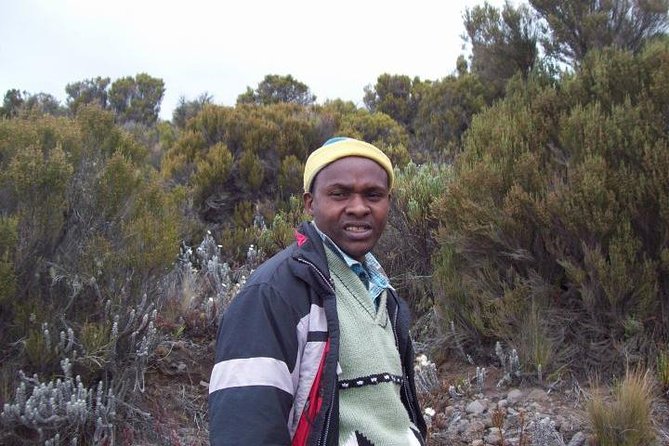
What makes this trek feel good is the people running it. The trip is designed with dedicated guides who focus on keeping you looked after and satisfied. In particular, names that come up for excellent support include Michael and Peterson, and another guide called Julius Kinuthia, who is credited with sharing learning about wildlife and Kenya as a whole.
You also get a team approach that includes a chef. Chef Steven is specifically praised in connection with the vegan meals, which is a big deal on mountain trips where hunger can make everything worse. Having meals that are planned, timed, and taken seriously helps you keep your energy up without turning dinner into a mystery.
And you are not lost in a huge crowd. This trek caps at 12 travelers, which usually means you can keep track of who is where, ask questions easily, and keep your pace group-friendly. It also supports the vibe of real teamwork when the trail gets steep.
If you care about communication, you should feel comfortable here. Efficient coordination shows up in how people describe their experience, from getting moving on schedule to keeping the day organized.
Price and value: $840 per person, and what you actually get
At $840 per person, this is not a budget day hike. But it also is not just a “walk to a view” package. You are paying for multiple real components that add up: the guided itinerary across several altitude zones, meals including breakfast and lunch on the last day, dinner and overnight on the mountain camps each night, and an admission ticket included each day.
You are also paying for the big operational stuff that matters at altitude: route planning, timing, camp logistics, and the early start on summit day. Those hours start early, and they can only happen with a team that knows the terrain.
Another value point is that pickup is offered and you get mobile ticketing. That reduces hassle before you even start hiking.
So the value logic is simple. If you want a structured climb with guiding, camp support, and a sunrise push, $840 starts to feel like a fair price. If you want to DIY and only pay for permits, you could spend less, but you are also taking on risk and complexity that this kind of team removes.
Practical tips from real trail conditions, waterproof shoes matter
Even with good guiding, the mountain hands you challenges. One clear lesson from experience on this route is that parts of the trek can feel swampy. That is why waterproof shoes show up as a must, not a nice-to-have.
Here are a few practical things I would treat as non-negotiable for this trek:
- Bring footwear with real grip, and keep it waterproof if you can. Wet trail plus steep sections equals tired ankles.
- Expect altitude fatigue, especially around Shipton Camp at 4,200m and during the early push to Lenana.
- Keep your pace controlled on uphill days. Rushing steals oxygen and makes the day feel harder than it needs to be.
Also, plan your mindset for Day 4. A 3am start on stony ground is mentally demanding. If you handle early mornings poorly at home, practice an early routine before you go. It will help your calm when the headlamp hours begin.
Finally, remember that this is a moderate fitness trek. That means you should prepare for endurance and uneven ground, not just hills on a treadmill.
Should you book the Mount Kenya trek?
Book it if you want a guided Mount Kenya route that handles altitude thoughtfully, with an acclimatization day and a summit day timed for sunrise. You should also book if you like having your meals organized and if you want vegan-friendly options that are taken seriously, with chef Steven involved.
Skip this trek, or talk to the operator first, if your hiking experience is very limited. The combination of early starts, steep sections, and a long downhill on Day 5 can feel punishing if your fitness is not ready.
If you like small-group travel, you will appreciate the cap of 12 travelers and the way the guides keep things running. And if you want the kind of mountain day where the scenery has a clear rhythm, from Sirimon Gate to Shipton Camp to Lenana, this itinerary gives you that.
FAQ
How long is the Mount Kenya trek?
It is about 5 days.
What is the meeting time for departure from Nairobi on Day 1?
The itinerary leaves Nairobi at 8:00 AM on Day 1.
How big is the group on this trek?
The trek has a maximum of 12 travelers.
Do I get a mobile ticket and pickup?
Pickup is offered, and mobile ticketing is included.
Are admission tickets included?
Yes. Admission tickets are included during the trek days listed.
What fitness level do you need?
You should have a moderate physical fitness level.
What are the main stops on the route?
The itinerary includes Sirimon Gate, camps including Judmier Camp, Shipton Camp, and Mount Meru Bandas, and it ends with a transfer from the forest clearance area to Chogoria Village and then back to Nairobi.
What is the cancellation policy?
You can cancel for free up to 24 hours in advance for a full refund.
What is included on Day 5?
Day 5 includes breakfast and lunch, plus the 4×4 transfer connection to Chogoria Village and then the vehicle transfer back to Nairobi.
If you want, tell me your hiking background and whether you prefer sunrise goals or more relaxed days, and I will help you judge if this pace fits you.
Kenyan Climbing and Walking Days

More Tour Reviews in Nairobi






Higher Up Mount Kenya


Everything else we hold on Nairobi
- 7 Days Private 4 star lodges Safari by LandCruiser from Nairobi★ 5.0 · 3 reviews
- 5 Days/4 Nights Kenya Safari★ 4.5 · 3 reviews
- Safari Park Hotel Show & Dinner Experience In Nairobi Tour★ 3.6 · 3 reviews
- Day safari to Olpejeta Rhino conservancy★ 5.0 · 3 reviews
- 7 Days Breathtaking Kenya Wildlife Private Safari★ 5.0 · 3 reviews
- Overnight Amboseli National Park Safari from Nairobi★ 5.0 · 3 reviews
Mount Kenya Treks, compared.
 ★ 5.0Climbing Mount Kenya 5 Days Via Chogoria RouteFrom $99044 reviews
 ★ 5.0Samburu/ Aberdare/ Lake Nakuru/ Masai Mara 7 Days SafariFrom $1,93537 reviews
 ★ 5.07-Days Kenya Safari Samburu, Aberdare, Lake Nakuru, & Maasai MaraFrom $4,99029 reviews
 ★ 5.0Conquer Mt Kenya in 4 Days Sirimon to Chogoria Route AdventureFrom $1,20016 reviews
 ★ 5.04-Day Mount Kenya Trekking with Pick UpFrom $94114 reviews
 ★ 4.54 Days Mt Kenya Climb, Chogoria Route up and out Sirimon routeFrom $84011 reviews
 ★ 4.2Mt Kenya: Full-day hiking tour from NairobiFrom $25510 reviews
 ★ 5.05 Days Mount Kenya Climbing Via Chogoria Sirimone RouteFrom $1,6007 reviews
Appears in these lists