
REVIEW · ELEPHANT ORPHANAGE TOURS
From Nairobi: David Sheldrick Elephant Orphanage Tour
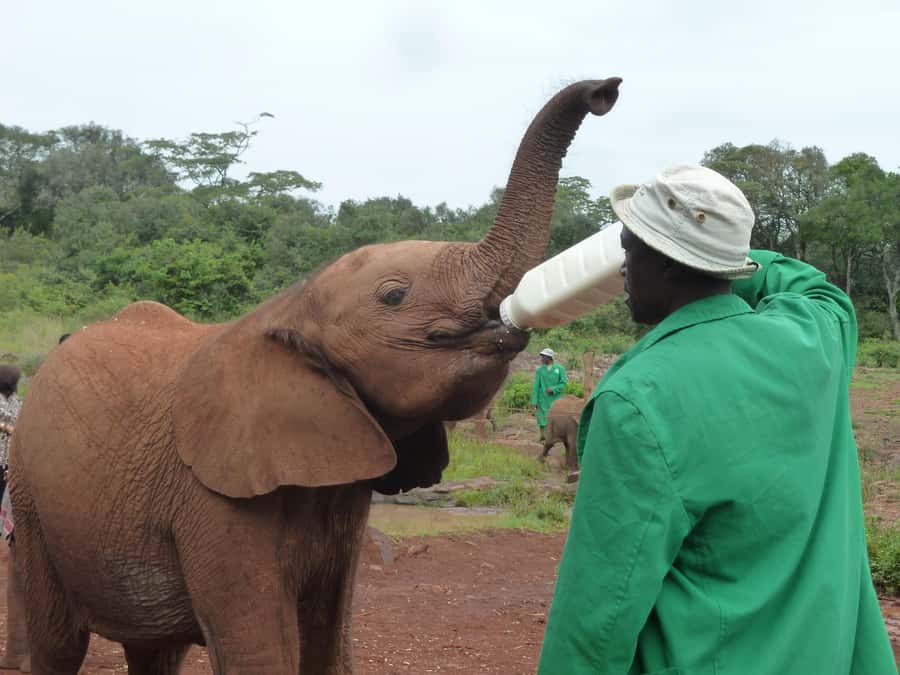
Elephants come right up to the fence. This Nairobi tour of the David Sheldrick Wildlife Trust shows you daily elephant milk feedings up close and pairs it with live explanations from the staff about rescue and rehabilitation. You walk the center in an open viewing area while keepers bring out the youngest calves first, then the 2 to 3 year olds.
One possible drawback is timing. The road trip can include extra stopovers for shopping on the way in or out, and that can cut into the focused 11am to 12pm orphanage window, or make it feel rushed.
In This Review
- Key things to know before you go
- David Sheldrick Elephant Orphanage, what you are really seeing
- Timing in Nairobi: 9:30 pickup and the 11am to 12pm feeding window
- What happens at the rope-fenced viewing area
- The rescue backstory you hear from the keepers
- Your guide and group size: what small means in practice
- The drive with GRACEPATT SAFARIS: expect a van ride plus time
- Price and the real cost: $69 plus mandatory park access
- What to do once you arrive: photos, calm, and attention
- The possible “shopping stop” snag, and how to avoid it
- Who should book this tour, and who should skip it
- Should you book this tour?
- FAQ
- What time is pickup in Nairobi?
- How long is the elephant orphanage visit?
- How much time do I spend in the van?
- What is included in the $69 per person price?
- Is the Nairobi National park fee included?
- Is there a conservation donation I need to pay?
- Is lunch included?
- Can I add the Giraffe Center?
- Is the tour wheelchair accessible, and is it in English?
Key things to know before you go
- Small group (up to 8 people) means easier viewing and less shoulder-to-shoulder crowding
- 9:30 am Nairobi hotel pickup sets you up for the daily feeding schedule
- 11am to 12pm on-site walk-through with a rope fence and keepers holding giant milk bottles
- Rescue stories are part of the show including poaching, wells, and human-wildlife conflict
- You might get close enough to touch briefly when calves are near and keepers guide the interaction
Further bookings at the elephant nursery
David Sheldrick Elephant Orphanage, what you are really seeing
This is not a zoo-style “walk and browse” experience. You are watching a rehabilitation routine, led by keepers who care for orphaned elephants and track what each calf needs to grow strong enough to move forward in the program.
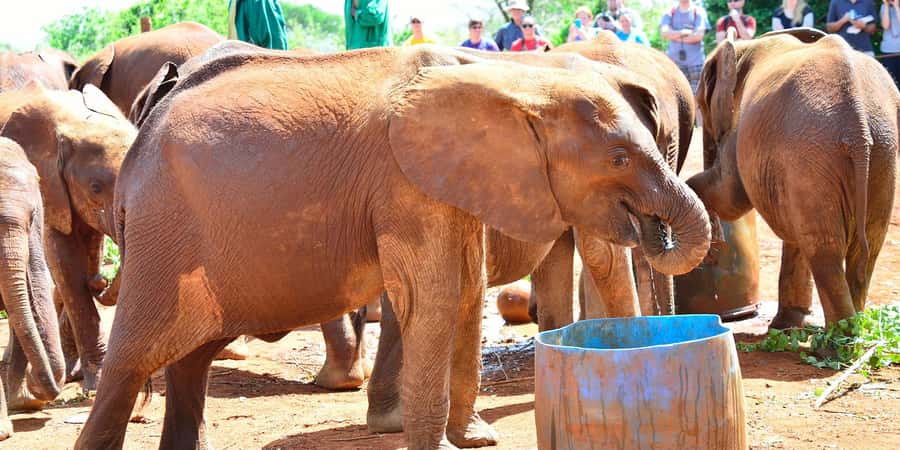
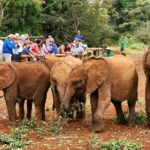
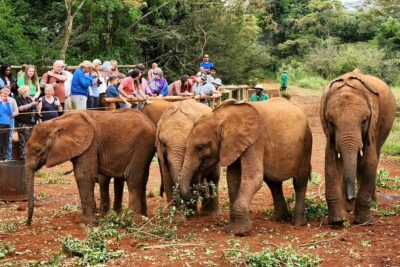
The viewing setup matters. You stay in an open space behind a rope fence, so the elephants can come trotting out of the bush to greet their keepers. Then you get that short, high-impact moment when the youngest calves rush in for milk, water play, and gentle nudges and hugs from staff.
Timing in Nairobi: 9:30 pickup and the 11am to 12pm feeding window
The day starts with pickup within Nairobi at 9:30 am. The drive from the city takes about 2 hours by van, and that is where real value lives: your guide gets you there on time for the feeding cycle.
On-site, the walk-through is scheduled 11am to 12pm, and that is why punctual departure is your best friend. The youngest elephants usually take the spotlight first, with about 10 to 15 minutes dedicated to milk feeding and immediate play afterward. After that, the focus shifts to the next age group, typically 2 to 3 year olds, some of which feed themselves and others still need bottle assistance.
If the vehicle makes extra, unscheduled stopovers, you can feel it fast. Your best plan is to head out ready, bring water, and ask your driver to prioritize the orphanage timing over detours.
What happens at the rope-fenced viewing area
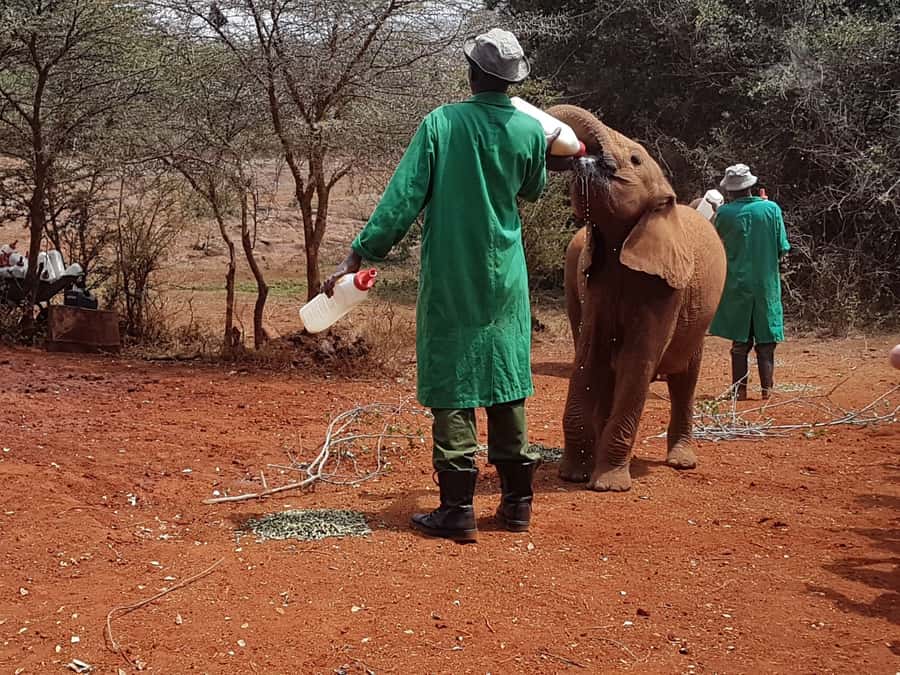
Once you arrive at the David Sheldrick Wildlife Trust, you do a guided walk-through of the little center in an open space. The rope fence keeps a safe distance, but it does not block the close-up experience, especially when the youngest calves come right out of the bush.
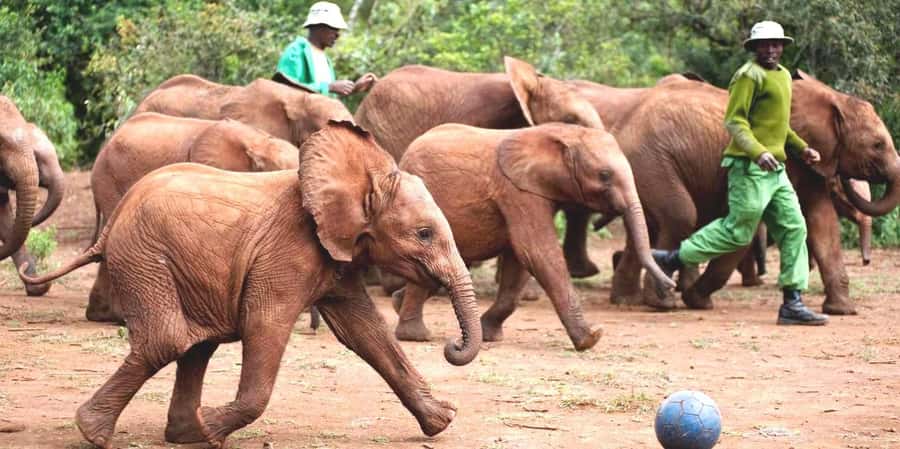
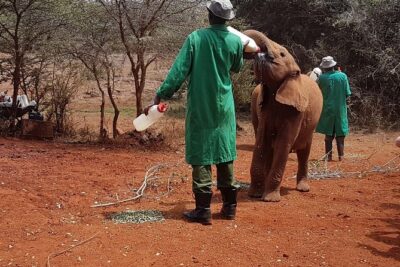
You will see the keepers ready with giant milk bottles. The calves trot in, slurp and swallow, and then you watch them wind down into play with water while keepers encourage contact and comfort. This is also when photos are easiest, because the elephants are active, not posing like a museum display.
Then the pattern repeats as the age group changes. The next set of calves may hold the bottles in their trunks and close their eyes like they are savoring every mouthful. You are not just watching cuteness, you are watching a routine built around feeding, conditioning, and human-assisted care.
The rescue backstory you hear from the keepers
The best part of the guided explanation is that it turns “baby elephant” into a real conservation story. You learn how old each calf was when it arrived, where it was rescued from, and what put it in trouble in the first place.
The common causes are straightforward and heavy:
- mother poached
- falling into wells
- human-wildlife conflict
Hearing those reasons changes how you see the interaction. The milk bottles are not just adorable. They represent the step between a dangerous origin and a supported recovery.
Your guide and group size: what small means in practice
This tour is built for a small group, limited to 8 participants, and you have a live guide in English. That matters because the feeding moments are short. When the group is smaller, you spend less time craning around other people and more time watching the keepers and calves close up.
One guide name that comes up is Stephen, described as prompt, polite, and very informative, with good driving skills through Nairobi traffic. Another person you might hear about is the driver Martin, who was willing to adjust stops when guests asked him to keep things focused.
If you care about clean timing, this is where you should speak up early. Tell your guide at pickup that you want to protect the 11am to 12pm window. In a small group, your request has a better chance of being heard than in a big coach situation.
The drive with GRACEPATT SAFARIS: expect a van ride plus time
The van ride time is part of the experience design. The plan includes 2 hours in the vehicle, and then you return back to Nairobi afterward.
This is also where you should manage expectations. The tour is short on paper, but the logistics are not. Nairobi traffic can be unpredictable, and routes can include stops along the way, including art or craft center style stopovers that can feel unnecessary if your priority is the orphanage only.
If you want maximum elephant time, plan your morning buffer carefully. Wear comfortable shoes for the on-site walk-through, and be ready for a schedule that is sensitive to traffic.
Price and the real cost: $69 plus mandatory park access
The listed price is $69 per person for the one-hour experience. It includes hotel pickup and drop-off within Nairobi, an elephant orphanage entry ticket, and entry fees for the orphanage.
But the full bill can grow, because you still pay for mandatory access. The Nairobi National park fee is listed as $85 per person, and it is required to access the orphanage area. On top of that, one key cost comes up that is not included in the base tour materials: a conservation donation of $45 USD cash per person. In practice, that means you should arrive prepared with cash for the donation, not just cards.
Then there are optional add-ons. A separate optional Giraffe Center visit is listed at $25 per person.
So is it good value? I think it can be, if you treat it like a timed, guided conservation visit rather than a cheap outing. You are paying for transport that gets you to the right moment, a small group, and an on-site explanation timed to the feeding schedule. If you would rather travel independently, you can compare costs by buying entries directly, but for many first-time visitors, the “someone handles the entry” convenience is the real win.
What to do once you arrive: photos, calm, and attention
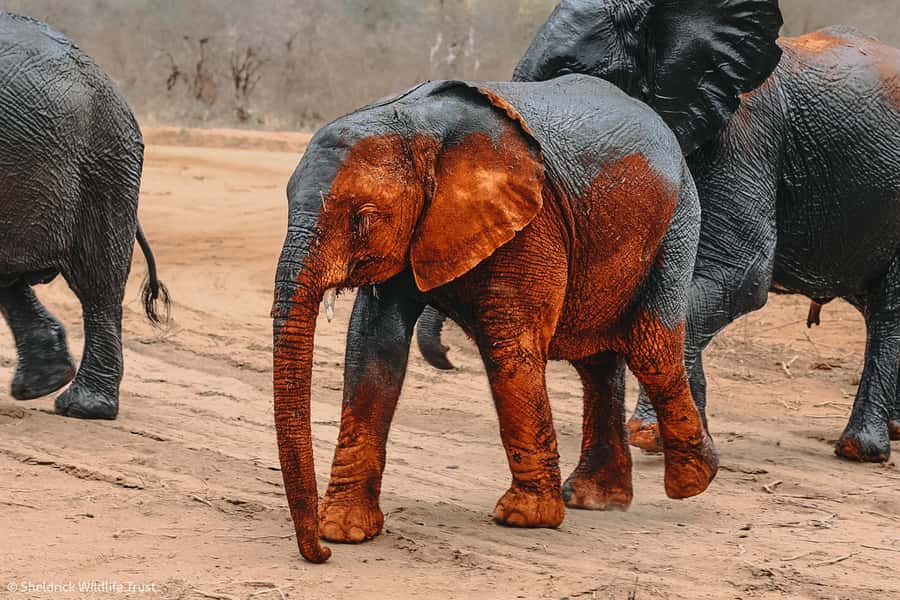
This is a close encounter, but it is still wildlife care, not a personal photo shoot. Keep your voice low, keep your hands to yourself, and focus on watching the keepers as they guide interactions. The elephants come out to feed and play, then they leave when the routine moves on, so being ready to look matters more than setting up the perfect shot.
Also, plan around the fact that not everything happens at once. The youngest calves have their feeding and then transition into water play, and after that you shift to the next age group. If you miss the first set because the car arrived late or you drifted to get more photos, you will feel it immediately.
The possible “shopping stop” snag, and how to avoid it
One frustration that can pop up is the inclusion of extra stopovers en route. Some people were surprised by additional art and craft center stops, and those can steal time from the exact orphanage window you paid to experience.
Here is how I would protect your day:
- When you meet your guide, ask for a direct run to the orphanage and back
- If a stop is offered, decide on the spot whether it is worth trading minutes from the feeding window
- Keep your expectations realistic, because schedules can compress fast with Nairobi traffic
If you want a pure elephant focus, treat this as a priority outing, not a flexible “wander around” day.
Who should book this tour, and who should skip it
This fits best if you want a guided, close-up look at elephant care without the hassle of planning the timing yourself. It also works well for visitors who like compact experiences, because the on-site viewing is tightly scheduled and efficient.
It is a good choice for families who handle structured activities well. You are not going to spend the whole day in transit, but you should still plan for a morning start and a drive time component.
I would be cautious if you hate any chance of detours, even short ones. If you are the type who needs every minute to be exactly as planned, you may find the road trip stops frustrating, especially if you are sensitive to being late for the timed feeding.
Should you book this tour?
I think you should book if you want two things: close views of young elephants during the milk feeding routine, and a guided explanation of why these calves ended up needing help. The small group format and the emphasis on keeper-led care make it feel purposeful, not random.
Book it with a plan for cost surprises. Bring enough money for the $85 park fee and the $45 USD cash conservation donation. If you do that, the base $69 becomes part of a bigger, well-timed conservation visit rather than a mystery.
Finally, protect your schedule. Ask early for minimal detours, and treat the orphanage window as the main event. If you do, you will get the best of what this experience is designed to deliver.
FAQ
What time is pickup in Nairobi?
Pickup is at 9:30 am within Nairobi, from your hotel or home.
How long is the elephant orphanage visit?
The tour visit window at the David Sheldrick Wildlife Trust runs 11am – 12pm, and the overall activity duration is listed as 1 hour.
How much time do I spend in the van?
The van portion is listed as 2 hours.
What is included in the $69 per person price?
The price includes Nairobi hotel pickup and drop-off, an elephant orphanage entry ticket, and the elephant orphanage entry fees.
Is the Nairobi National park fee included?
No. You need to pay an additional $85 per person for Nairobi National park, which is mandatory to access the elephant orphanage.
Is there a conservation donation I need to pay?
A conservation donation of $45 USD cash per person is mentioned as required and not included, so you should come prepared with cash.
Is lunch included?
No. Lunch is not included, but it is available for purchase.
Can I add the Giraffe Center?
Yes. An optional visit to the Giraffe Center is listed at $25 per person.
Is the tour wheelchair accessible, and is it in English?
Yes, it is wheelchair accessible, and the live tour guide provides English.
More Tours in Nairobi



More Tour Reviews in Nairobi


Back at the Elephant Nursery



Everything else we hold on Nairobi
- 7 Days Private 4 star lodges Safari by LandCruiser from Nairobi★ 5.0 · 3 reviews
- 5 Days/4 Nights Kenya Safari★ 4.5 · 3 reviews
- Safari Park Hotel Show & Dinner Experience In Nairobi Tour★ 3.6 · 3 reviews
- Day safari to Olpejeta Rhino conservancy★ 5.0 · 3 reviews
- 7 Days Breathtaking Kenya Wildlife Private Safari★ 5.0 · 3 reviews
- Overnight Amboseli National Park Safari from Nairobi★ 5.0 · 3 reviews
Elephant Orphanage Tours, compared.
 ★ 4.5Elephant Orphanage and Giraffe Center Tour with OptionsFrom $35457 reviews
 ★ 4.6Nairobi National Park, Elephant Orphanage and Giraffe CentreFrom $40365 reviews
 ★ 4.5From Nairobi: Elephant Orphanage and Giraffe Center Day TripFrom $90235 reviews
 ★ 4.5Elephant Orphanage & Giraffe Centre TourFrom $95225 reviews
 ★ 5.0Half day tour to Elephant orphanage & Giraffe Centre NairobiFrom $95130 reviews
 ★ 4.5Nairobi: National Park, Elephant Orphanage & Giraffe CenterFrom $23113 reviews
 ★ 4.5Giraffe Centre, Elephant Orphanage, and Bomas of Kenya Day Tour from NairobiFrom $11596 reviews
 ★ 5.0Giraffe Center, Elephant Orphanage, Beads Center & Bomas of Kenya Tour NairobiFrom $13595 reviews
Appears in these lists