
REVIEW · NAIROBI NATIONAL PARK SAFARIS
6hrs of Birdwatching in Nairobi National park
Birds take center stage in Nairobi. This 6-hour park safari is built for spotting, listening, and learning across dry forest, wetlands, and grassland with a private guide in an open-roof safari van. Just plan for Nairobi National Park entry fees (and no lunch or snacks included).
I like how the route is structured to match habitat, not just random driving. You spend real time on the move and on foot, then you get a bird list after the session to help you remember what you saw. If you want the kind of day where the birds are the main show, this fits.
Guides like Benson, Diana, and Saidi are the big reason this experience works well, because they are serious about finding birds and confirming IDs. They also use practical tools, like showing you what the bird looks like and even playing bird calls when they can.
In This Review
- Key highlights before you go
- Six hours across Nairobi National Park’s main habitats
- Pickup, safari van ride, and how to set yourself up for better sightings
- Dry forest birding: where the “small and tricky” birds live
- Dams and wetlands: waterbirds, calls, and the good patience payoff
- Grassland ecosystems: scanning wide, spotting motion, and expecting surprises
- Picnic points, short walks, and turning the day into real birding time
- Wildlife sightings that don’t take over your day
- Bird identification, bird calls, and why the guide matters most
- Price, park entry fees, and how to judge value for your group
- Who this birdwatching safari is best for
- Should you book this Nairobi National Park bird safari?
- FAQ
- How long is the birdwatching session in Nairobi National Park?
- Where does the tour start?
- What does the tour include?
- Are Nairobi National Park entry fees included?
- Do I need to bring anything?
- What kind of vehicle is used?
- Is lunch included?
- Will I get information about the birds we see?
- What language is the live guide?
- Is the tour private and accessible?
Key highlights before you go
- Six hours focused on birding, with planned stops in different habitats
- Habitat-hopping route (dry forest, dams and wetlands, grassland) to increase your odds
- Real-time bird list support, with a list sent to you after the session
- Open-roof safari van viewing, plus short walks at designated picnic points
- Birding-first approach, while still giving you chances at wildlife like lions, rhinos, giraffes, zebras, and more
Small park, crowded operator list. See the remainder

Six hours across Nairobi National Park’s main habitats
Nairobi National Park is small enough that you can cover a lot of ground, but big enough to keep things interesting for hours. What I like most is that your birding day is organized around habitat types. That matters because birds do not show up randomly. They follow cover, water, open ground, and the specific food sources each area offers.
This tour runs for 6 hours inside the park after a pickup and a drive in. You are not just handed a pair of binoculars and hoped for the best. You have a guide who works the spots, checks likely areas, and helps you understand what you are looking at.
You will also get a sense of Nairobi National Park as a living edge between city and wilderness. It is one of the reasons birding here feels different from “deep remote safari” experiences. You can concentrate on behavior, calls, and habitat right away, without the day turning into a long, slow slog.
Pickup, safari van ride, and how to set yourself up for better sightings
Your day begins with an early pickup from your residence or hotel in Nairobi. Then you head to the park in a van, with travel time about an hour. You start early because birds tend to be more active in the morning, especially when you are trying to detect birds by sound as well as sight.
You ride in a safari van with an open roof, which is a big deal for birding. You get better angles for scanning treetops, reeds, and open grassland. It also helps with spotting small birds that are high up and easy to miss through glass.
If you prefer a different vehicle, you can use a safari Landcruiser for an extra $80 USD. That can be worth it if your group really cares about vehicle comfort and a more classic safari feel. Just know it is not included in the base price.
Bring what matters. You are specifically asked to bring your passport or ID card, which you should keep handy for park entry. And if you want the day to go smoothly, pack a few basics that make you comfortable during early hours and time in the sun, like sun protection and water.
Dry forest birding: where the “small and tricky” birds live
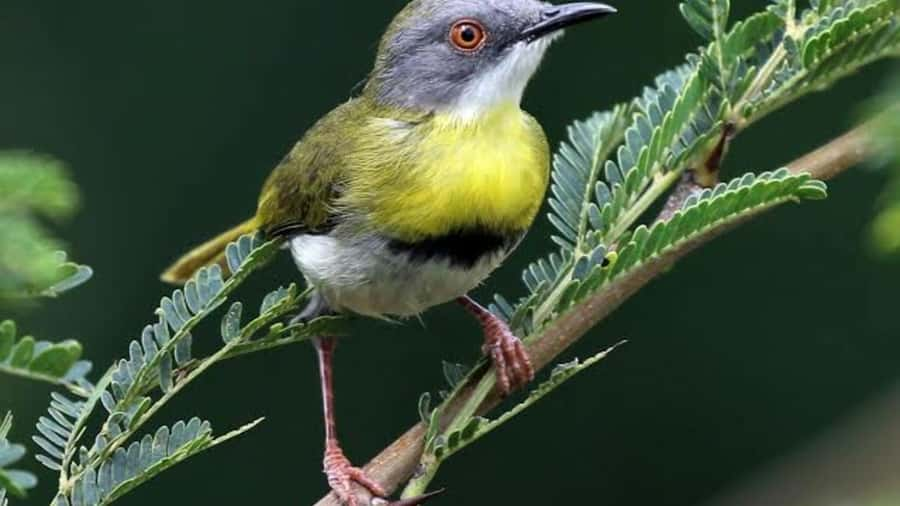
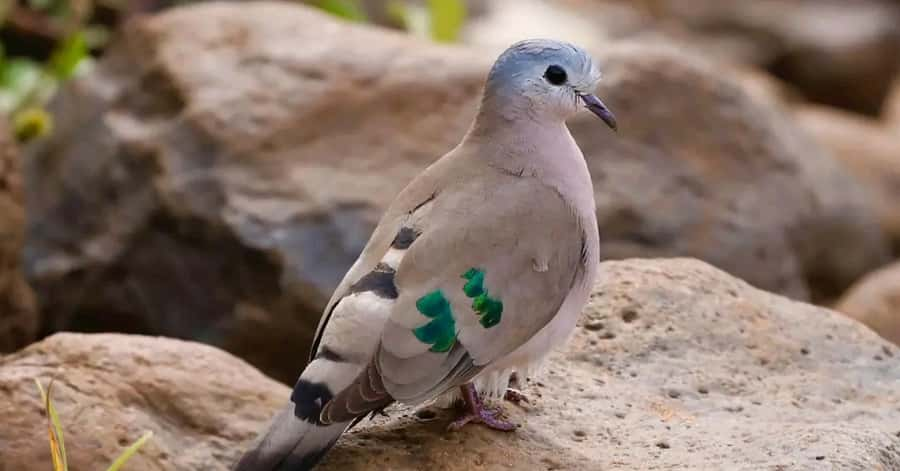
Once you are in Nairobi National Park, birding starts right away. The first habitat is the dry forest area. This is where a lot of songbirds and perching birds hang out, and it is often where birding beginners learn fastest, because the birds are close enough to study their shapes and colors.
This part of the route targets bird families such as Pycnonotidae, Turdidae, and Columbidae. Those names may look like bird geek code, but they point to real-looking groups you can recognize when you are paying attention. Think fruit-eaters, thrush-like singers, and pigeon or dove relatives, usually in the mid-story where branches break up the view.
The advantage of starting here is simple. Dry forest species can be active early, and your guide can use quick listening and scanning to locate them. A guide who is good at hearing faint calls makes a huge difference here, because many forest birds are not always easy to see at first glance.
One practical note: this habitat can be visually busy, with branches and shade. If you get flustered easily, focus on one job at a time. Watch for movement first, then identify the bird. That is how you keep the day fun instead of frustrating.
Dams and wetlands: waterbirds, calls, and the good patience payoff
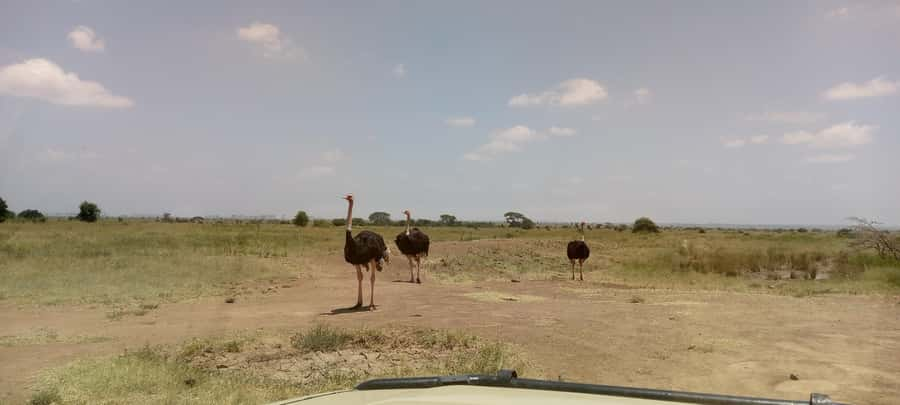
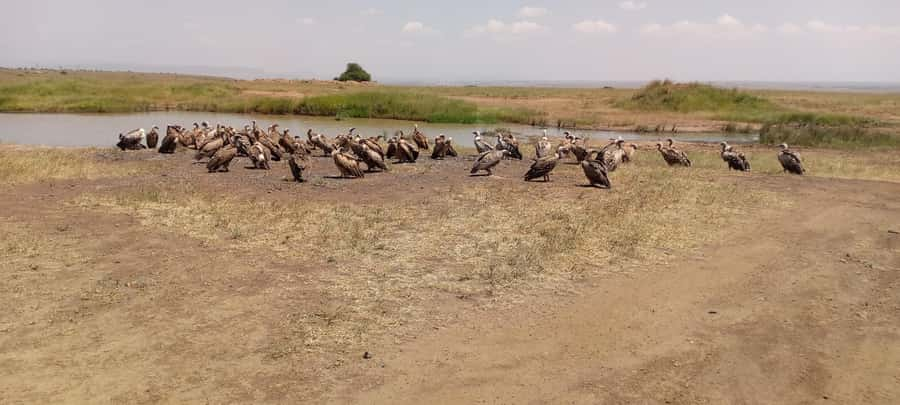
Next you visit dams and wetlands, where water changes the whole bird lineup. This is the stop that often feels like birding on fast-forward, because waterbirds tend to gather, and their activity can be obvious once you are positioned well.
Here you look for families such as Scolopacidae, Anatidae, and Ciconiidae, among others. Scolopacidae often includes shorebirds and waders, Anatidae includes ducks and related waterfowl, and Ciconiidae includes storks and their relatives. Even if you do not ID down to family level on the day, you will quickly notice the difference in behavior: standing, probing, calling, feeding, and more frequent group sightings.
Wetland birding is also where calls can guide you. If the guide hears something faint, the “hunt” can turn into a quick confirmation. In the field, that kind of skill is what turns a quiet patch of reeds into a real sighting.
This stop can also be a strong wildlife bonus. In Nairobi National Park, water sources attract more than birds. You might find other animals nearby, which can add variety to the day without stealing focus from birdwatching.
Grassland ecosystems: scanning wide, spotting motion, and expecting surprises
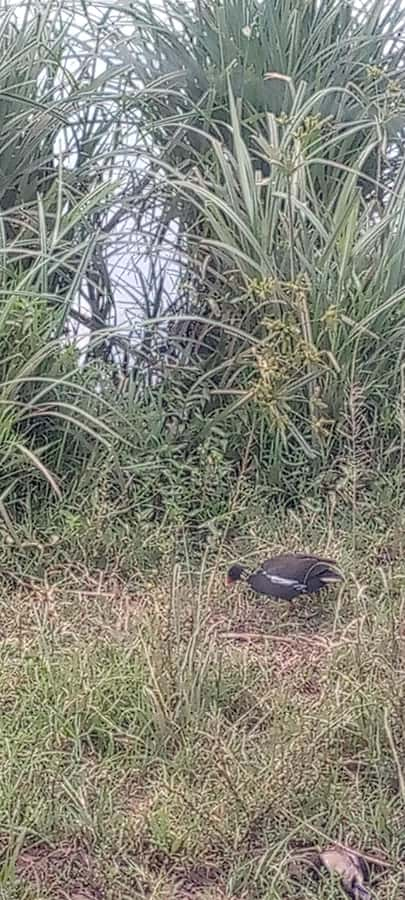
After wetlands, you move into the grassland ecosystem. This is a different style of birding. Forest birds reward careful eye work in tight spaces. Grassland birds reward steady scanning across open ground and an eye for silhouettes, posture, and quick movement.
This section highlights families like Otididae, Struthionidae, Ardeidae, Motacillidae, Laniidae, and Fringillidae. Otididae relates to bustards, Struthionidae includes ostriches, Ardeidae points to herons and egrets, Motacillidae includes wagtails and pipits, Laniidae includes shrikes, and Fringillidae points to finch-like species.
The big challenge here is that small birds can look like dots at first. That is where the open-roof vehicle helps again. You can scan up, across, and along the edges of grass clumps rather than only through a narrow window.
The grassland stop is also where you may get the most satisfying “found it” moments. One guide can hear a call, another can spot the movement, and then suddenly you are looking at a bird you would have missed entirely from the road. The best part is that once you start seeing the patterns, the whole day feels like it clicks.
Picnic points, short walks, and turning the day into real birding time
Between habitats, you will alight the vehicle at designated picnic points. This is not just for looks. It gives you chances to stretch your legs, handle toilet breaks, and keep your eyes fresh.
Those short walks help for two reasons. First, birds often respond to changes in your position. Second, you can slow down and watch how birds behave when you are not just scanning at vehicle level.
This tour keeps the pacing reasonable for a day that is bird-heavy. You get enough time in each habitat to look and listen, then you move on before the day gets dull.
If you know you will need frequent comfort breaks, this part of the structure is a clear advantage over a strict “drive only” experience.
Wildlife sightings that don’t take over your day
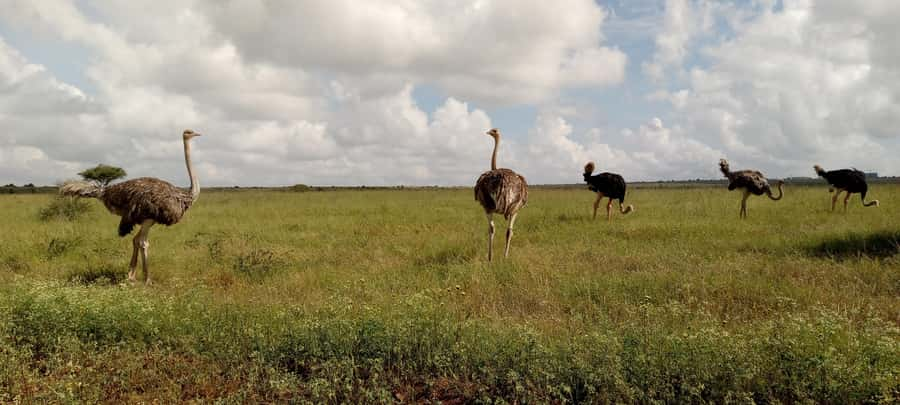
Even though the core focus is birding, Nairobi National Park is Nairobi National Park. That means you can also see animals that are not birds, and the sightings can happen while you are birding, not after.
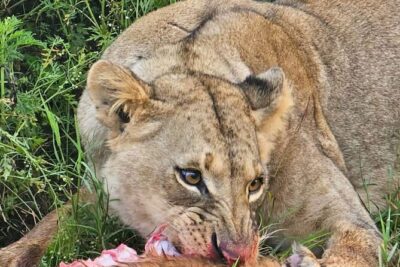
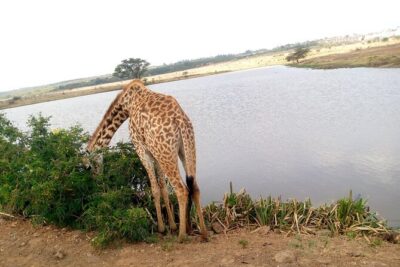
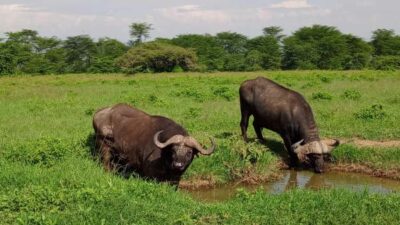
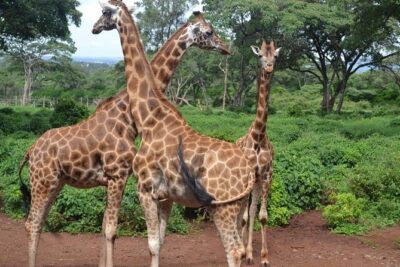
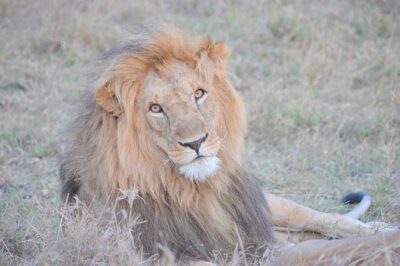
Based on what guides have managed on these days, it is possible to see animals like lions, rhinos, giraffes, zebras, and buffalos, along with other surprises. One important mindset: you are here to watch birds, so treat wildlife sightings as bonus moments. When you do that, the day stays bird-first and still feels alive.
Birding and wildlife also go together because animals change the scenery. Grazers can stir insects, which birds then follow. Predators can concentrate attention. The wildlife presence can make birds easier to find.
Bird identification, bird calls, and why the guide matters most
If you want value from a birding safari, your guide has to be more than a driver. The standout theme from the experience is that your guide is the real spotting engine, and the day is built around helping you identify what you see.
Guides like Benson are known for spotting and identifying everything they can find. Diana has a reputation for hearing faint sounds and spotting tiny birds far away while driving. Saidi is noted for using equipment and tools to show you the bird, playing bird calls when possible, and answering questions with detail.
That kind of support changes how you remember your day. You are not just adding random photos to your phone. You are building a mental map: what the bird looked like, what it sounded like, and where it was in the habitat.
At the end of the session, you also receive a bird list for the day sent to you after the safari. That matters more than people think. It helps you confirm IDs, review your best sightings, and plan what you might look for next if you continue birding in Kenya.
Price, park entry fees, and how to judge value for your group
The price is $450 per group, up to 7 people. That base price includes pickup and drop-offs, a private guide or driver, private van transport, and drinking water.
The main extra cost is Nairobi National Park entry fees, which are not included for non-residents. The entry fee is listed as $48 USD in low season and $60 USD during high season. You also need to plan for lunch and snacks, since those are not included.
So is $450 good value? For birding, it can be. You are paying for:
- A private van and private guiding
- Full 6 hours inside the park
- A structured route across three habitat types
- Bird-finding and identification help
- A bird list sent to you after the session
- Water during the safari
Your best “value test” is to compare how many people are actually in your group. Since the price is per group up to 7, the cost per person drops sharply as your group fills. If you are traveling as two or three people, it can still be worth it for the guide support and custom pace, but it is less budget-friendly.
Also consider the vehicle option. If you choose a Landcruiser, you add the $80 USD extra cost. That can help if you want a specific comfort or safari feel, but it is optional.
Who this birdwatching safari is best for
This is a strong fit if:
- You love birds or are actively learning birding in Kenya
- You want a guided day that focuses on habitat, not just random sightings
- You like structured time in the field, with short breaks at picnic points
- You want a private experience, with a guide who helps with ID and calls
It is also a smart choice if you are a photography lover who enjoys natural light and open roof viewing. Birds in grassland and wetland edges can be perfect for quick, sharp moments.
If you are not interested in birds at all, this might feel too focused. But if birds are your thing, the route makes sense.
Should you book this Nairobi National Park bird safari?
Book it if you want a guided, habitat-based birding day that goes beyond a drive-by. The combination of six focused hours, an open-roof safari van, strong guide spotting and identification, plus the bird list after the safari is exactly what turns birdwatching into a satisfying learning day.
I would skip it only if you are looking for a pure sightseeing safari where mammals take priority, or if you do not want to pay extra for park entry fees and to handle your own lunch and snacks.
If you do book, plan your day around comfort and birding. Keep your eyes ready, your questions handy, and your schedule flexible enough to enjoy the quiet parts. That is where the best bird moments often happen.
FAQ
How long is the birdwatching session in Nairobi National Park?
The activity lasts 6 hours inside the park.
Where does the tour start?
The day starts with an early pickup from your residence or hotel in Nairobi.
What does the tour include?
Pickup and drop-offs, a private guide or driver, private van transport, and drinking water are included.
Are Nairobi National Park entry fees included?
No. Entry fees are not included for non-residents, listed as $48 USD in low season and $60 USD during high season.
Do I need to bring anything?
You should bring your passport or your ID card, as it is required.
What kind of vehicle is used?
The standard vehicle is a safari van with an open roof. If you want a safari Landcruiser instead, there is an extra $80 USD cost.
Is lunch included?
No. Lunch is not included, and snacks are also not included.
Will I get information about the birds we see?
Yes. You will create a bird list for the day, and it will be sent to you after the session.
What language is the live guide?
The live tour guide is available in English.
Is the tour private and accessible?
It is a private group experience, and it is listed as wheelchair accessible.
More Tour Reviews in Nairobi



That Park on the City Boundary

Everything else we hold on Nairobi
- 7 Days Private 4 star lodges Safari by LandCruiser from Nairobi★ 5.0 · 3 reviews
- 5 Days/4 Nights Kenya Safari★ 4.5 · 3 reviews
- Safari Park Hotel Show & Dinner Experience In Nairobi Tour★ 3.6 · 3 reviews
- Day safari to Olpejeta Rhino conservancy★ 5.0 · 3 reviews
- 7 Days Breathtaking Kenya Wildlife Private Safari★ 5.0 · 3 reviews
- Overnight Amboseli National Park Safari from Nairobi★ 5.0 · 3 reviews
Nairobi National Park Safaris, compared.
 ★ 4.5Nairobi National Park Half-Day Game DriveFrom $36738 reviews
 ★ 4.5Safari Tour; Nairobi National ParkFrom $43594 reviews
 ★ 4.5Nairobi National Park 5-hour Guided Game Drive Free Pick upFrom $37367 reviews
 ★ 4.6Nairobi National Park, Elephant Orphanage and Giraffe CentreFrom $40365 reviews
 ★ 5.0Tour: Giraffe Center and Nairobi National ParkFrom $176299 reviews
 ★ 4.5Half-Day Nairobi National Park Safari from Nairobi with Free PickupFrom $44264 reviews
 ★ 4.7Nairobi National Park Full or Half-Day Tour with GuideFrom $185217 reviews
 ★ 5.0Nairobi National Park Daily Game drives.From $60205 reviews
Appears in these lists